Foil Highlights vs Balayage: Which is Better?
When it comes to professional hair coloring, two techniques often stand out: foil highlights and balayage. For busy professional women seeking natural-looking yet sophisticated results, understanding the differences between these methods is essential. In this guide, we’ll delve into the nuances of foil highlights and balayage, helping you decide which technique aligns best with your lifestyle and hair type.
Foil Highlights: Precise and Bold
Foil highlights are known for producing precise, uniform color results. This method involves sectioning strands of hair and wrapping them in foil after applying the color. The foil traps heat, intensifying the color development and ensuring a bright, bold finish. Foil highlights are ideal for those seeking a dramatic color contrast or a more noticeable lift from their natural hair color.
Application Process
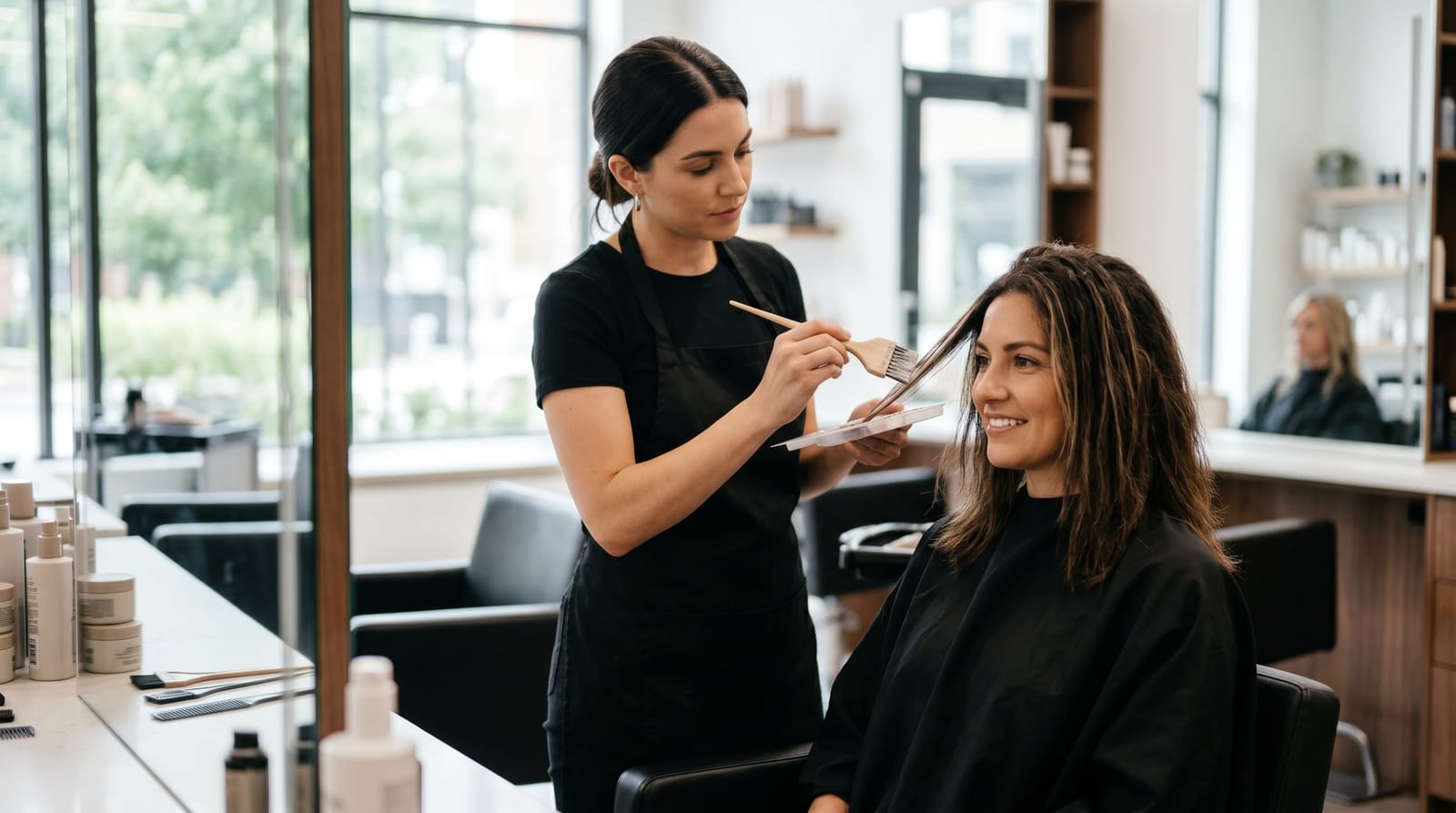
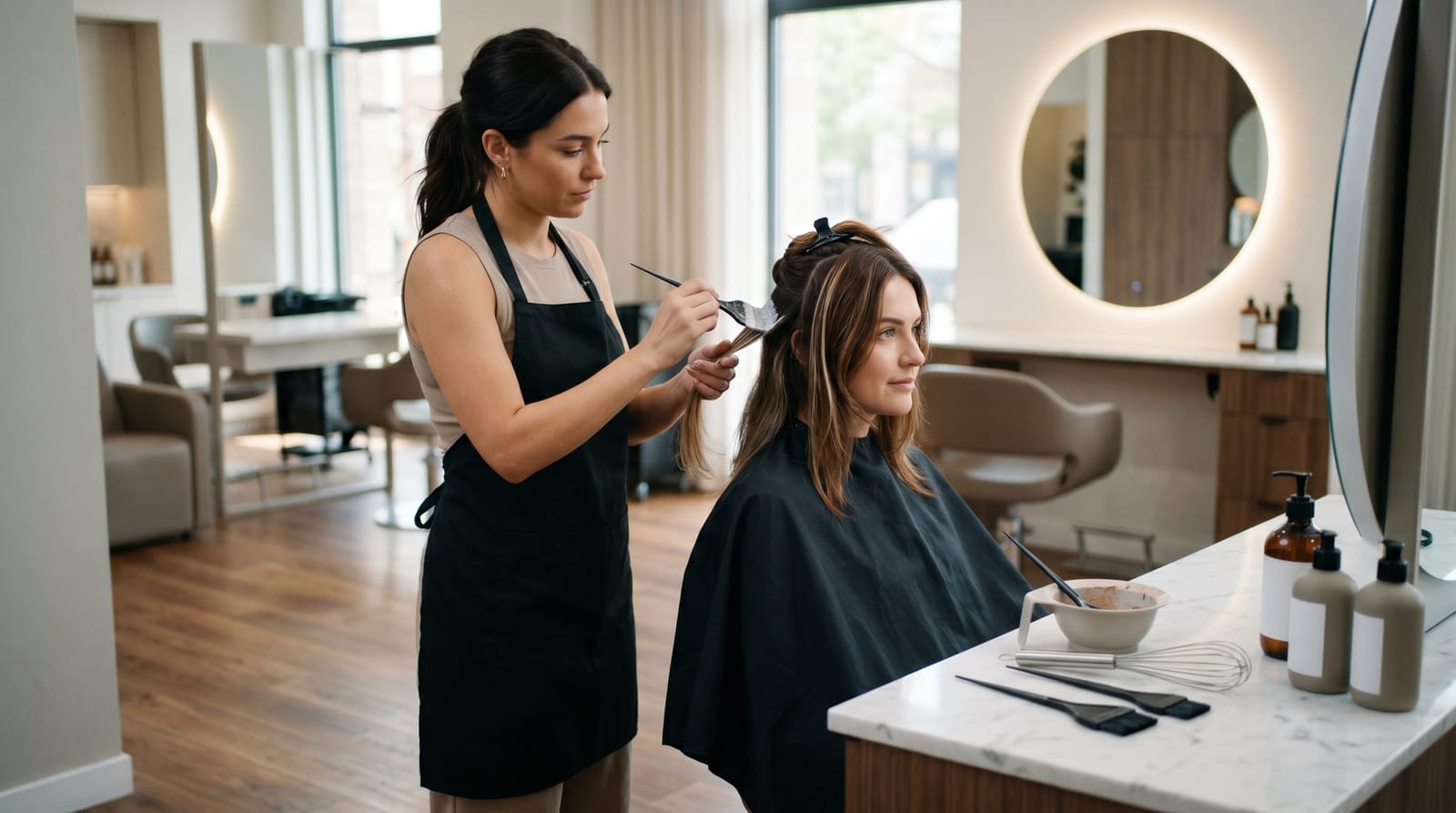
The process begins with a stylist selecting sections of hair to highlight. These sections are then painted with the chosen color and wrapped in foil to process. The precise placement allows for uniform results and is excellent for achieving specific color patterns, such as stripes or chunks.
Maintenance and Longevity
Foil highlights typically require more frequent touch-ups, approximately every 6-8 weeks, due to the distinct line of regrowth. This makes them suitable for individuals who regularly visit their salon and prefer consistently bold looks.
Balayage: Natural and Low Maintenance
Balayage, derived from the French word for “sweeping,” involves hand-painting color onto the hair for a more natural, sun-kissed effect. This technique is perfect for those who prefer a subtle transition of color and a softer regrowth line, resulting in longer intervals between salon visits.
Application Process
Unlike foil highlights, balayage does not use foils. The stylist paints color onto the surface of the hair in a sweeping motion, creating a customized and less structured pattern. This method allows for a gradual transition from darker roots to lighter ends, mimicking how the sun would naturally lighten hair.
Maintenance and Longevity
Balayage is favored for its low-maintenance appeal, as it typically requires touch-ups every 3-4 months. This makes it an excellent choice for busy professionals who prefer fewer salon visits and a natural-looking color.
Choosing the Right Technique for Your Lifestyle
When deciding between foil highlights and balayage, consider your lifestyle, hair type, and desired look. Foil highlights are great for those who enjoy a high-contrast, consistent color and are comfortable with regular salon appointments. In contrast, balayage suits those who desire a more natural appearance with less frequent maintenance.
Investment Considerations
Both techniques represent a significant investment in your appearance. Generally, balayage may have a higher initial cost due to its customized nature, but the longer intervals between touch-ups can offset this expense over time. Meanwhile, foil highlights might be less costly per session but require more frequent visits, increasing the long-term cost.
FAQ Section
What is the main difference between foil highlights and balayage?
Foil highlights use foils to create precise, uniform color, while balayage involves hand-painting for a more natural, blended look.
Which technique lasts longer?
Balayage typically lasts longer due to its softer regrowth line, requiring touch-ups every 3-4 months compared to 6-8 weeks for foil highlights.
Can both techniques be used on any hair type?
Yes, both techniques are versatile and can be adapted to suit various hair types and textures. Your stylist can recommend the best approach based on your specific needs.
Conclusion
Choosing between foil highlights and balayage depends largely on your personal style preferences and maintenance capabilities. For those seeking a bold, uniform look, foil highlights are ideal. Meanwhile, balayage is perfect for a natural, low-maintenance appearance. Consider consulting with a professional stylist to determine which technique best suits your hair type and lifestyle. For more insights into professional hair coloring, explore our Professional Hair Coloring Guide: Techniques, Trends, and Maintenance.
```