Highlights on Curly Hair: Techniques That Work With Your Curl Pattern
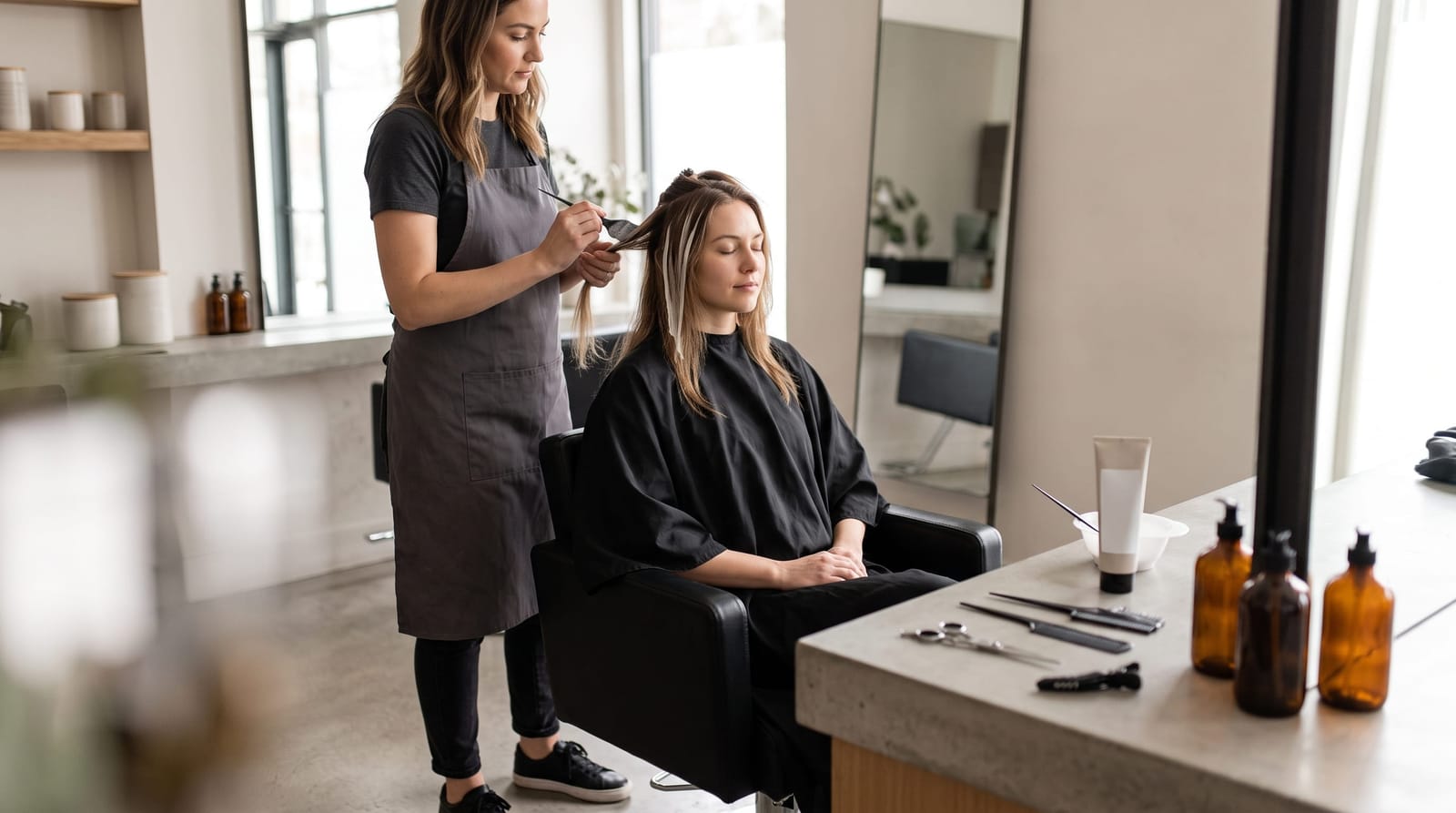
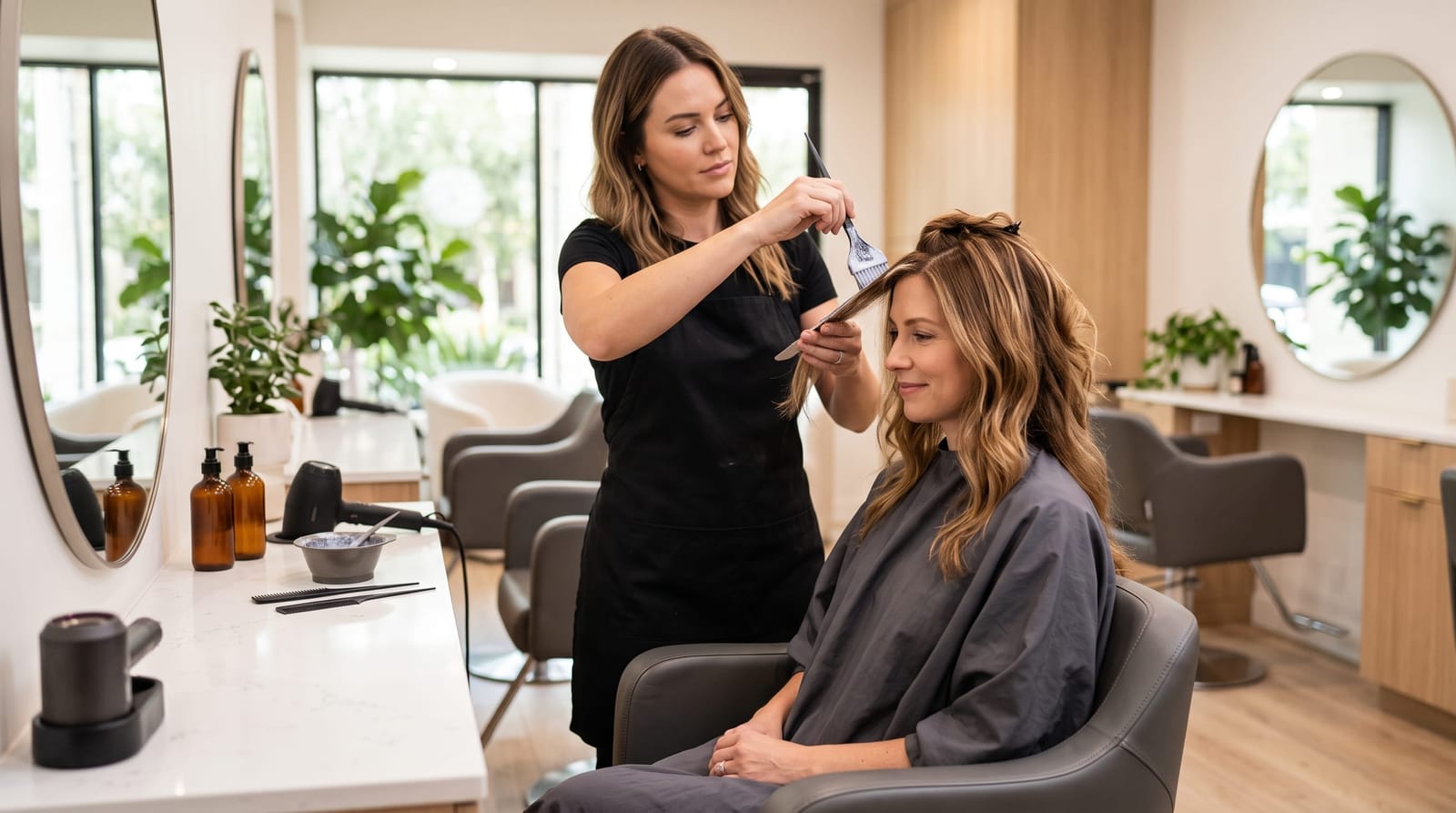
If you have naturally curly or wavy hair, you already know that what works for straight hair rarely translates perfectly to your texture. That's especially true when it comes to color. Highlights on curly hair require a completely different approach: one that respects your curl pattern, prevents over-processing, and delivers dimension that actually shows up beautifully once your curls spring back into shape. This guide compares the most effective highlighting techniques so you can walk into your next color appointment fully informed.
Why Curly Hair Responds Differently to Highlights
Curly and wavy hair has a naturally porous structure compared to straight hair, which means it absorbs color, and lightener, more quickly and unevenly. The tighter the curl, the more surface area is exposed, and the more carefully a colorist needs to monitor processing time. According to hair professionals who specialize in textured hair, over-processed curls can lose as much as 40% of their elasticity, which is what gives curls their bounce and definition.
There's also a visual consideration that many clients don't realize until they're sitting in the chair: highlights that look beautifully spaced on wet, stretched hair can appear in completely unexpected places once the hair dries and curls reform. A skilled colorist accounts for shrinkage, the way curly hair contracts significantly from its wet length, and places color based on how it will actually look when your hair is worn naturally.
This is why highlights curly hair clients receive should never be placed the same way they would be on someone with straight or fine hair. Placement, product selection, and processing time all require adjustment from the start.
Traditional Foil Highlights vs. Balayage on Curls: A Side-by-Side Look
When comparing highlighting methods for curly hair, two approaches come up most often: traditional foil highlights and balayage. Each has real advantages and real limitations depending on your curl type and the result you're after.
Traditional Foil Highlights
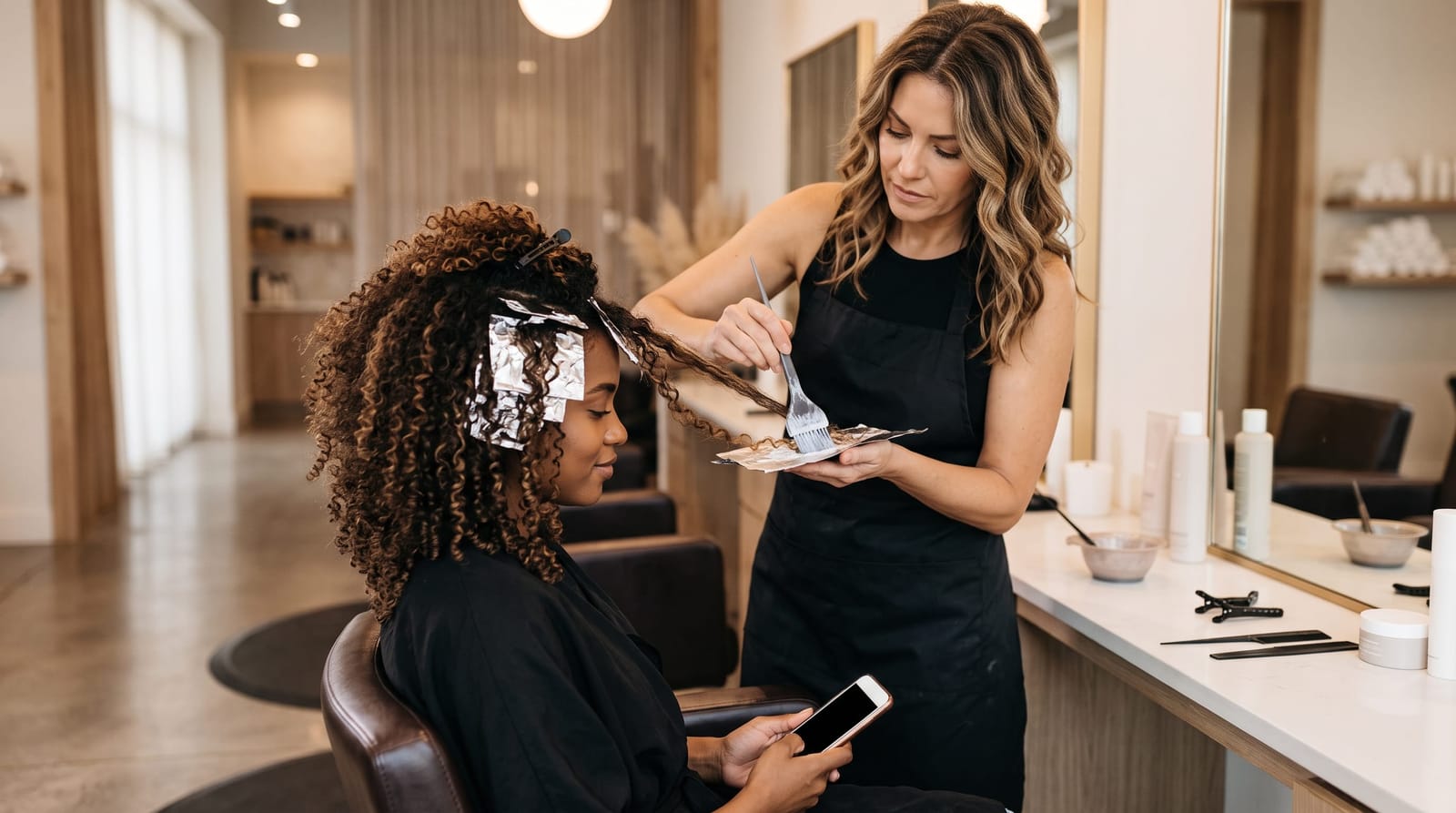
Foil highlights isolate sections of hair and apply lightener in a controlled, precise environment. On curly hair, this technique can:
- Create high-contrast, defined streaks of color
- Work well on looser wave patterns (Type 2A: 2C) where placement is more predictable
- Offer maximum lift for clients who want dramatic brightness
- Require very careful sectioning to avoid over-saturating curls
The challenge with foils on tighter curl patterns (Type 3A and beyond) is that the heat generated inside the foil accelerates processing faster than it would on straight hair. Without careful monitoring, this can lead to over-lightening or dryness. Foils also have a tendency to create a stripy, less blended effect once curls re-form, which can look unnatural on textured hair.
Balayage on Curly Hair
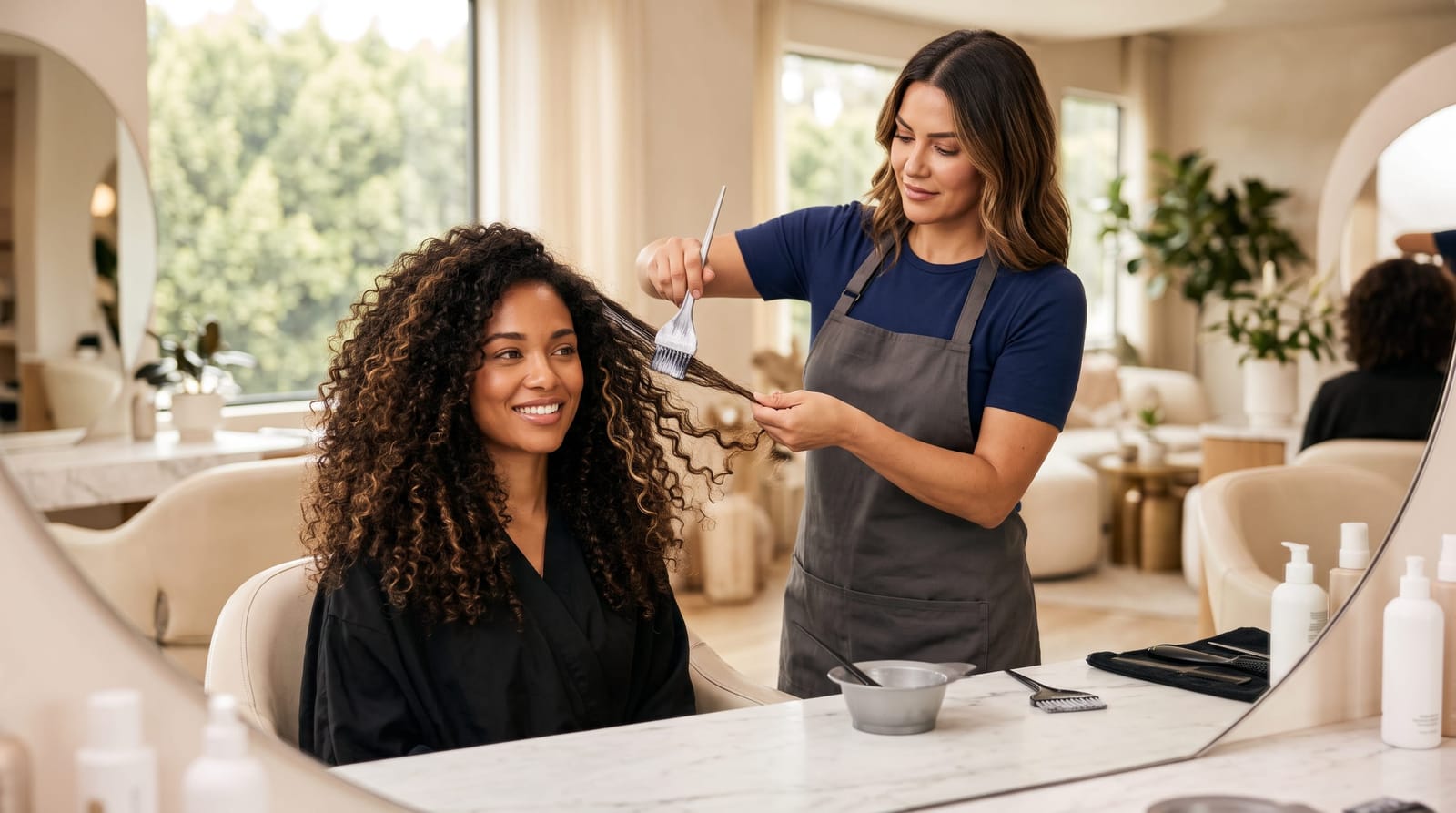
Balayage, a hand-painted freehand technique, was originally developed in France to mimic the way sun naturally lightens hair. On curly and wavy hair, it tends to produce significantly more natural-looking results because the color is applied to the surface of each curl rather than saturating the entire strand. Benefits include:
- Softer, more blended dimension that moves with your curl shape
- Less risk of hard lines or blocky color when curls dry
- Lower maintenance: balayage grows out gracefully without a harsh root line
- More flexibility for the colorist to work with your specific pattern
For wavy and loosely curly hair, balayage is often the most flattering and low-maintenance option. It's a cornerstone of the balayage hair color services offered at IlonaR Style, tailored specifically to each client's texture and natural movement.
The Pintura Technique: Designed Specifically for Curls
If balayage is the gold standard for waves, Pintura highlighting is considered the gold standard for tighter curl patterns. Pintura, meaning "painting" in Portuguese, was developed with Type 3 and Type 4 curls in mind. Rather than sectioning hair flat, the colorist works with each curl individually, painting lightener directly onto the outside of the curl coil where light would naturally hit it.
The results are distinctly different from foil or standard balayage:
- Color appears exactly where your curls catch the light
- Definition is enhanced rather than disrupted by the highlighting process
- Minimal overlap onto the inner curl, reducing the risk of over-processing
- Results look intentional and dimensional, never streaky or flat
Pintura works beautifully on clients with defined spiral curls who want brightness without sacrificing curl integrity. It does require a colorist experienced with textured hair: the technique demands an understanding of how each curl behaves individually, not just as part of a uniform section.
How to Avoid Over-Processing: What Your Colorist Should Be Doing
Over-processing is one of the most common concerns for curly clients considering highlights, and it's a legitimate one. Lightener left too long on porous or fragile curls can break down the hair's protein bonds, leading to frizz, loss of curl definition, and breakage. Here's what a careful, experienced colorist does differently:
- Conducts a porosity assessment first. High-porosity hair processes faster and may need lower-volume developer or shorter processing times: sometimes 15-20 minutes compared to 45+ on low-porosity hair.
- Uses bond-building treatments alongside lightener. Products like Olaplex or similar in-salon treatments are mixed into the lightener formula to protect curl integrity during the lifting process.
- Works in smaller, more deliberate sections. Rushing through a curly hair highlight service by taking large sections increases the risk of uneven results and over-saturation.
- Monitors processing time closely. Curly hair is not a "set and forget" situation. A skilled colorist checks frequently and removes lightener as soon as the desired lift is achieved.
- Finishes with a deep conditioning treatment. Lightener, even when used carefully, affects moisture levels. A professional in-salon treatment helps restore softness and re-establish curl pattern before you leave the chair.
The goal is always healthy, beautiful highlights, not just bright ones. When technique is thoughtful and intentional, you can have both.
What Highlights Look Like When Done Correctly on Curly Hair
The difference between a well-executed curly hair highlight and a poorly executed one is immediately visible once the hair dries. When done correctly, highlights on curly hair should:
- Look multi-dimensional and sun-kissed, not striped or flat
- Move naturally with the curl pattern rather than disrupting it
- Show the most brightness at the areas of the hair that naturally catch light: ends, face-framing layers, and the outer curl surface
- Retain curl definition, not reduce it
- Grow out softly without an obvious line of demarcation
Many curly-haired clients are surprised to find that the right highlights actually enhance their natural texture, adding visual depth and making each curl look more defined. The key is working with a colorist who understands that curly hair is not a straight-hair canvas: it's a three-dimensional, living structure that needs to be respected throughout the entire color process.
Frequently Asked Questions
Can I get highlights if I have tight Type 4 curls?
Yes, but the technique matters significantly. Pintura highlighting is generally the most appropriate method for Type 4 curl patterns because it works with the natural coil structure rather than flattening it. It's also important to choose a colorist experienced specifically with tighter curl textures, as the timing, product selection, and placement differ considerably from looser wave types.
How often do highlights on curly hair need to be refreshed?
Most clients with balayage or Pintura highlights return every 3 to 5 months for a refresh. Because these techniques don't create a hard root line, they grow out more gracefully than traditional foil highlights, making them a genuinely low-maintenance color option: one of the reasons they're so popular with busy clients who want beautiful hair without constant upkeep.
Will highlights make my curls frizzy or damage my curl pattern?
When highlights are applied with the correct technique, appropriate developer strength, and bond-protecting treatments, the risk of lasting frizz or pattern disruption is significantly reduced. The key is choosing a colorist who understands curly hair specifically. Improper application or over-processing is what causes curl damage, not highlighting itself, when done thoughtfully.
Should I come in with my curls already styled or with straight hair?
It's best to arrive with your hair in its natural curl state, unstyled or lightly diffused, without heavy products. This allows your colorist to see exactly how your curls behave and fall, which is essential for proper highlight placement. What your hair looks like when you wear it is exactly what should guide the color decision, not how it looks stretched or blown out.
The Right Technique Makes All the Difference
Highlights on curly hair are not a one-size-fits-all service, and the comparison between foil highlights, balayage, and Pintura makes that clear. Each technique has its place depending on your curl type, color goals, and lifestyle, but all of them require a colorist who genuinely understands textured hair. When the approach is right, the result is highlights that feel like they were made for your curls, because they were. To explore how balayage and blonding services are tailored to your specific texture and goals, visit the complete guide to balayage hair color at IlonaR Style.