Low-Maintenance Professional Hairstyles: Looks That Stay Beautiful All Week
The most useful low-maintenance professional hairstyles work with your natural texture, keep their shape between cuts, and give you an easy alternative when wearing your hair down takes too much effort. A textured bob, versatile lob, or thoughtfully placed long layers can all fit that brief. The right choice depends on how your hair dries, whether you need to tie it back, and how much daily styling you enjoy.
Color with softer regrowth can also reduce upkeep, but easy mornings and fewer salon visits are two different goals. A practical plan accounts for both. Looking polished throughout the week does not have to mean preserving one blowout for seven days. It can mean moving comfortably between loose hair, a simple refresh, and a polished pullback.
What Makes a Hairstyle Truly Low-Maintenance?
A cut is only easy if it suits the way you actually wear your hair. A sleek bob may need little attention on naturally straight hair but regular heat styling on curls. A short crop can simplify drying while needing frequent reshaping to maintain its outline.
Before choosing a style, weigh these four factors:
- Your natural texture: Look for a shape you like without having to straighten or curl it every morning.
- Your preferred length: If a ponytail is your reliable fallback, keeping enough length to secure the front and sides matters.
- Your styling routine: Air-drying, diffusing, and blow-drying each call for a slightly different approach to the cut.
- Your salon schedule: A precise outline, short fringe, or high-contrast root color can require more upkeep than a softer shape.
The goal is not a haircut that needs no attention. It is one whose everyday routine feels manageable.
Choosing a Cut That Works With Your Hair
The Textured Bob: Movement Without Excess Length
A textured bob usually sits around the chin or jaw, with softened ends that keep the outline from feeling too solid. On straight or gently wavy hair, this can create movement without needing to curl every section.
The amount of texture matters. Fine hair often benefits from keeping fullness at the ends rather than removing too much weight. Thick or curly hair needs a shape that accounts for volume and how much the hair lifts as it dries. A bob also offers less room for tying hair back, so consider whether tucking it behind your ears is enough for busy days.
The Modern Lob: Flexibility for Down Styles and Pullbacks
A long bob, or lob, falls around the shoulders or collarbone. It offers a useful middle ground if you want less length to manage without losing the option of a ponytail or low bun.
Keep the shortest layers long enough to stay in your usual pullback. Shoulder-length ends may turn outward where they meet clothing or shoulders. If you like that movement, it can become part of the style. If you prefer a consistently smooth outline, a little extra styling may be necessary.
Long Layers: Shape While Keeping Length
Long layers can redistribute weight and add movement to thick or heavy hair. They also preserve the flexibility of braids, buns, and ponytails.
More layering is not automatically easier. Short layers can escape an updo, and excessive weight removal can leave the ends looking thin. For curls, layer placement needs to account for the curl pattern and the finished dry shape. Keeping length also means there is still more hair to wash, dry, and detangle, even when the cut feels lighter.
Soft Crops and Shaggy Bobs: Easy Styling With a Maintenance Tradeoff
A soft crop can be quick to dry and shape with a small amount of styling product. Its tradeoff is that growth can change the silhouette more noticeably than it would on a longer cut.
A shaggy bob can make good use of natural waves, but fringe adds its own routine. A cowlick or an uneven wave at the hairline may need a separate refresh even when the rest of the hair looks ready. Longer, side-swept fringe offers more flexibility than a short, precise bang.
Color Choices That Make Regrowth Less Noticeable
Color affects appointment maintenance more than daily styling time. Softer contrast between your natural roots and colored lengths can make regrowth less obvious. It does not eliminate fading, changes in tone, or the upkeep involved in gray coverage.
Balayage and Lived-In Color
Balayage uses hand-painted color to create softly placed brightness. Placement away from the scalp and a gentle transition at the roots can make grow-out less noticeable than a strong, uniform contrast.
At IlonaR Style, we offer balayage with softer lines and intentional-looking grow-out. For a lower-upkeep result, the amount of brightness and its contrast with your natural color matter as much as the technique itself. Our guide to how long balayage lasts explores maintenance in more detail.
Root Blending and Richer Overall Color
A shadow root blends a deeper shade at the roots into lighter lengths. When that shade sits close to your natural color, it can soften the visible transition as hair grows.
For an overall brunette, red, or blonde shade, maintenance depends partly on how different the chosen color is from your natural roots. Covering gray and blending gray also create different expectations: uniform coverage may make new growth more noticeable, while blending allows some variation to remain.
Dimension Is Not the Same as Texture
Subtle highlights can make movement in a cut more visible by adding contrast. They do not create waves or replace styling. Choose color for the brightness, depth, or softness you want, and choose the cut for how you want the hair to behave.
Simple Styling Techniques to Use at Home
Refresh the Sections That Need Attention
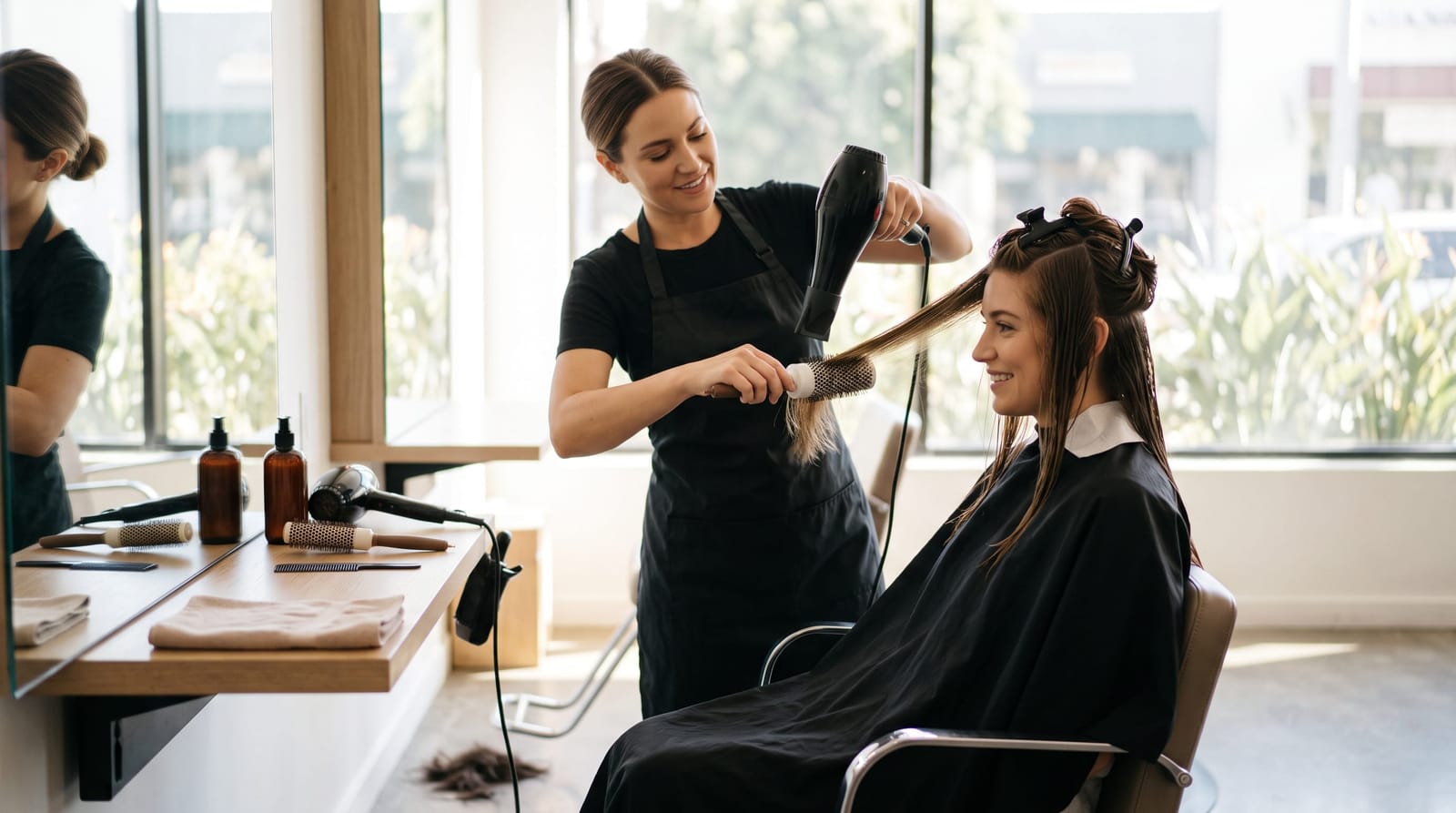
Rather than repeating a full blowout, focus on the fringe, parting, or face-framing pieces that have lost their shape. Lightly dampen those sections, then guide them into place with a brush and dryer. For a full wash-day blowout, working in manageable sections gives you more control than trying to dry all the hair at once.
Use the lowest effective heat setting and avoid rubbing wet hair vigorously with a towel. These are among the gentle hair-care habits recommended by the American Academy of Dermatology.
Work With Waves and Curls
A diffuser spreads airflow, making it useful for drying waves and curls without blowing them out of shape. Apply a styling product suited to your texture, then use gentle airflow and limit handling while the hair dries.
For a refresh between washes, start with the areas that need it rather than rewetting the whole head. A little water and a small amount of your usual styling product may be enough to reshape flattened pieces. Adding more product everywhere can leave the hair feeling coated.
Prepare Hair Before Bed
Overnight preparation can help preserve a style, but the method needs to match the finish you want. A loose braid on dry hair can introduce a soft bend. A loose, high gathering can help keep longer curls from being flattened. Neither is a substitute for restyling when the hair needs it.
If the ends look dry or flyaway, use a small amount of lightweight smoothing product there rather than at the roots. Start sparingly so the hair keeps its movement.
For more options on rushed mornings, our guide to 5 minute professional hairstyles covers simple ways to create a finished look.
A Flexible Styling Plan for the Week
Think of the week as a sequence of styling options, not a rule about how long to go without washing. Hair texture, exercise, humidity, and product use all affect how long a style feels fresh. Move through these stages at your own pace, and wash when your hair needs it.
Start With a Finish You Can Maintain
On wash day, choose a finish that works with your texture: a smooth blowout, defined curls, or an air-dried shape. Use enough product to support the style without layering on products that serve the same purpose.
If you prefer a straight finish, our silk press blowout guide explains that styling approach. A heat-styled straight finish on textured hair involves a different maintenance commitment from wearing natural curls, particularly around moisture and humidity.
Refresh Only Where Needed
As the style settles, adjust the parting, reshape the front, or smooth a few loose pieces. Dry shampoo can help absorb oil at the roots between washes, but it does not clean the hair or replace washing. Use it according to the product directions rather than continually layering it on.
If the lengths still look good, leave them alone. A targeted refresh takes less effort than trying to recreate the entire style.
Switch to a Comfortable Pullback
A low bun, ponytail, or half-up style gives longer hair a different polished finish. Keep the tension comfortable, and use pins to secure shorter pieces rather than pulling everything tighter.
For a bob that will not reach a ponytail, a side part, tucked sides, or a discreet clip can provide a similar change of pace. Having one reliable alternative makes a low-maintenance cut more useful throughout the week.
Plan the Cut Around Your Real Routine
Reference photos are most helpful when they show hair with a texture and density similar to yours. Alongside the look you like, identify what you want to avoid: daily straightening, fringe that needs constant attention, frequent root coverage, or a cut too short to tie back.
At IlonaR Style in Marina del Rey, we offer private, one-to-one hair services, including cutting, curly-hair styling, and color. The useful details to bring into a haircut conversation are how you normally dry your hair, which styles you rely on, and how often you prefer to maintain the shape and color.
For additional inspiration, explore our guide to professional hairstyles for women over 40. Let your texture, preferences, and routine guide the choice rather than treating age as a rule for length or style.
Whether you prefer a textured bob or a beautifully layered lob, the best low-maintenance choice is one you enjoy wearing in more than one way. A workable cut, manageable color upkeep, and a simple backup style can make polished hair a repeatable part of your week.