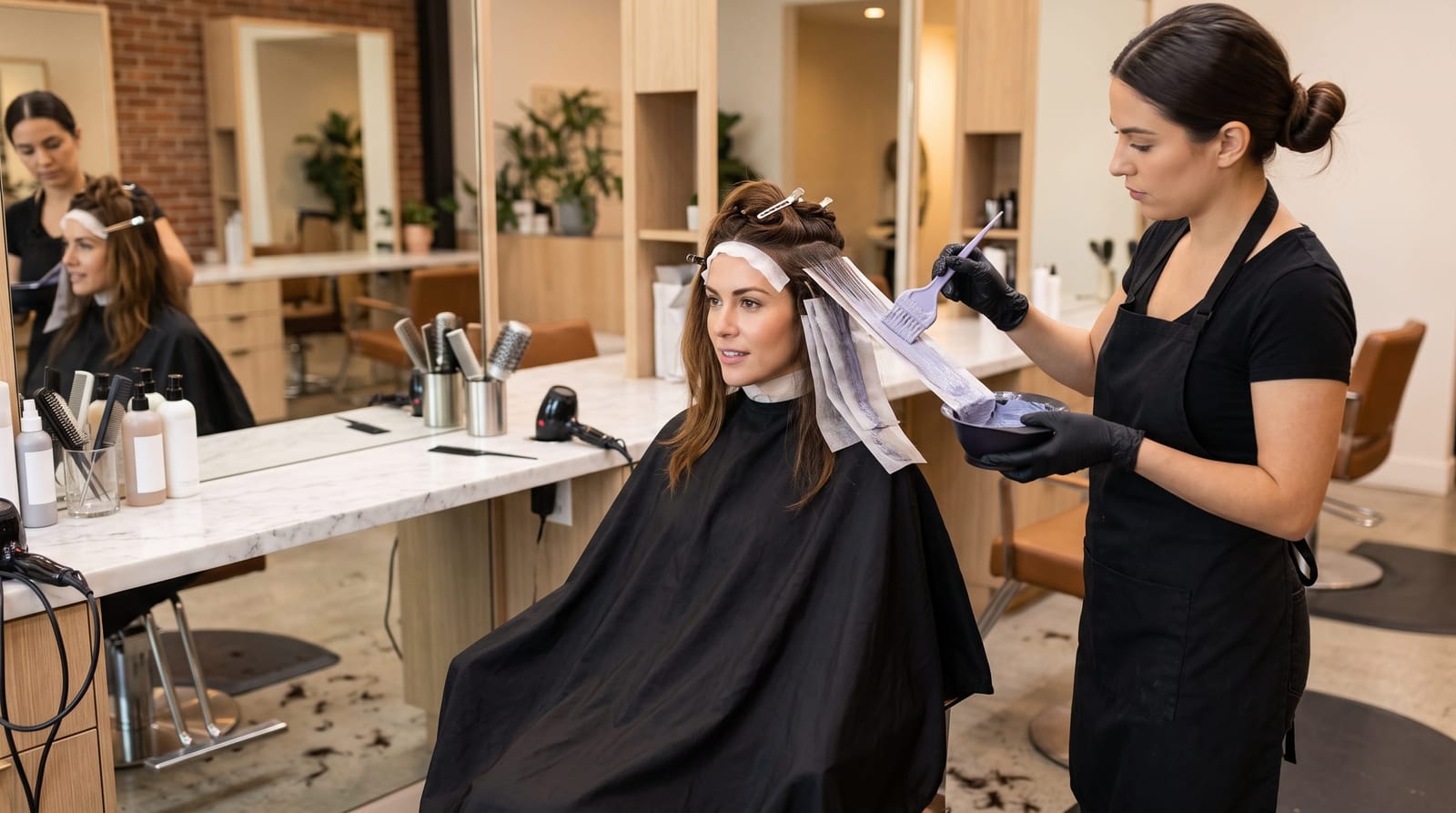
Partial Highlights vs Full Highlights: Which Is Right for You?
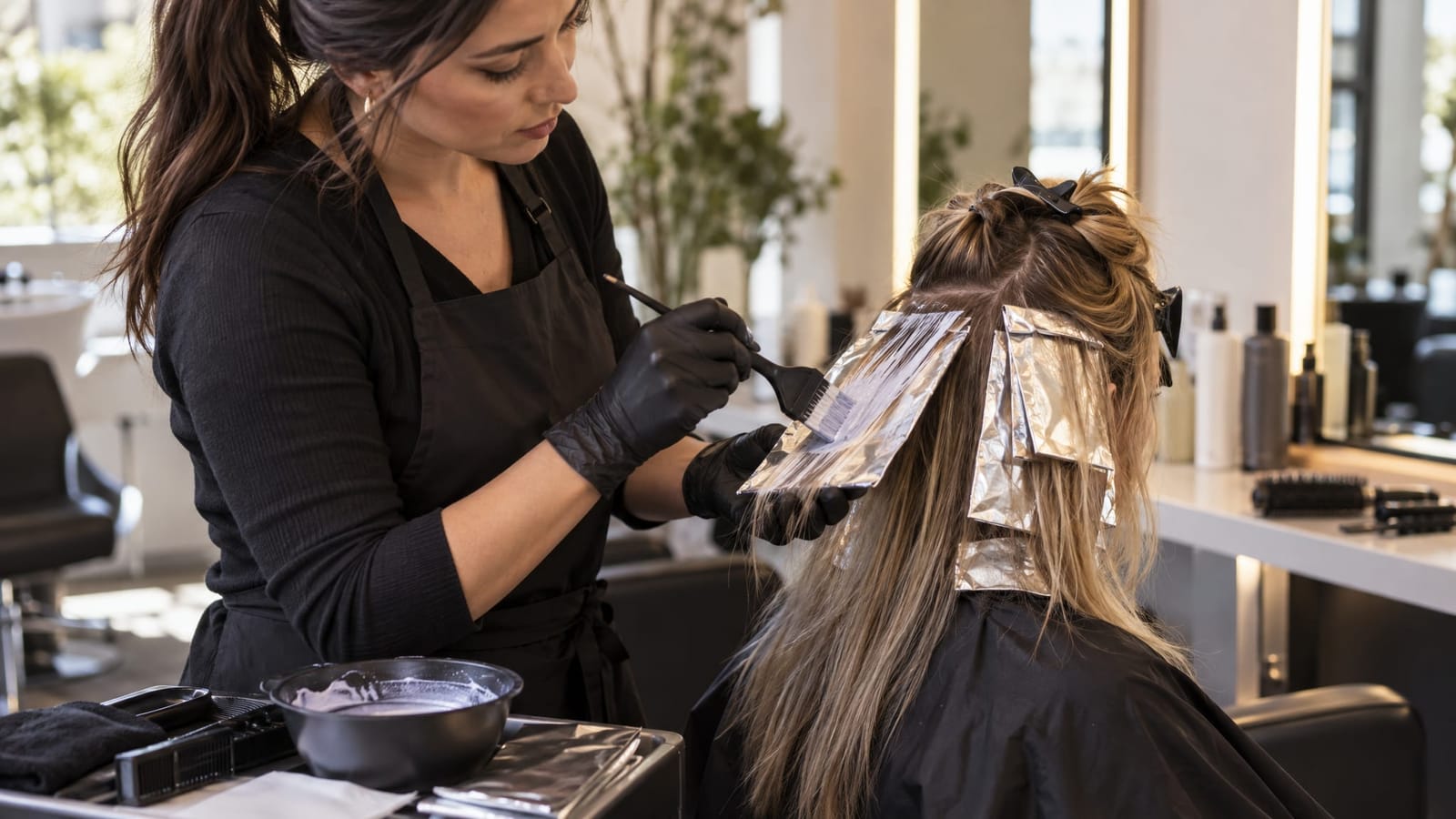
Choose partial highlights when you want brightness around your face and through the top of your hair while keeping more depth underneath. Choose full highlights when you want lighter pieces distributed throughout, including the sides and back. Neither option automatically means a subtle or dramatic result. The size, spacing, shade, and placement of the highlights determine that.
For polished, manageable color, the decision starts with where you want to see brightness, how you wear your hair, and how much of your existing color you want to change. It also helps to separate two different choices: partial versus full describes coverage, while foil highlights versus balayage describes technique.
Partial vs Full Highlights at a Glance
| What matters | Partial highlights | Full highlights |
|---|---|---|
| Typical placement | Selected areas, often around the face, part, and crown | Sections throughout the head, including the back and underneath |
| Overall effect | Targeted brightness with more existing depth retained | More widely distributed brightness and dimension |
| Best suited to | A focused refresh or a smaller change | A broader change or lighter pieces visible from more angles |
| Relative cost and time | Usually lower cost and less application time | Usually higher cost and more application time |
| Main tradeoff | Unhighlighted sections remain darker | More hair is included in the lightening service |
A full highlight does not mean every strand becomes lighter. Unlightened hair remains between the highlighted pieces, creating the contrast that makes dimensional color look dimensional.
Partial Highlights: Targeted Brightness, More Natural Depth
Where partial highlights work well
Partial highlights make sense when you like your overall color but want the areas you notice most to feel brighter. Placement around the face can create a noticeable change without extending lightness throughout the entire head. Fine pieces along the part can soften the appearance of a darker top layer.
For example, a brunette who usually wears her hair down and wants caramel accents around her face may get the visual change she wants from partial coverage. Keeping the lower layers darker can also make the lighter pieces stand out.
Partial highlights can refresh an existing highlighted look when the lengths still have enough brightness and the main change is concentrated near the part and hairline.
The limitation to consider
A partial service leaves some areas untouched. If your underneath layers are much darker, that contrast may become more visible in a ponytail, bun, or half-up style. It can look intentional and attractive, but it will not create the same distribution of brightness as a full service.
Your usual part matters, too. Placement designed around a side part may look different when you switch to a center part. Describing how you actually wear your hair helps make targeted placement useful beyond the salon finish.
Full Highlights: More Complete Coverage, Not Necessarily More Contrast
Where full highlights work well
Full highlights suit a goal that extends beyond the front and top. They allow lighter pieces to be placed through the back, sides, and lower sections, giving the color a more connected appearance as the hair moves.
This can be especially relevant if you wear your hair up often, change your part, or want to move toward an overall lighter look. A brunette seeking fine honey-colored ribbons throughout her hair may benefit from full coverage even if she wants the finished result to stay soft.
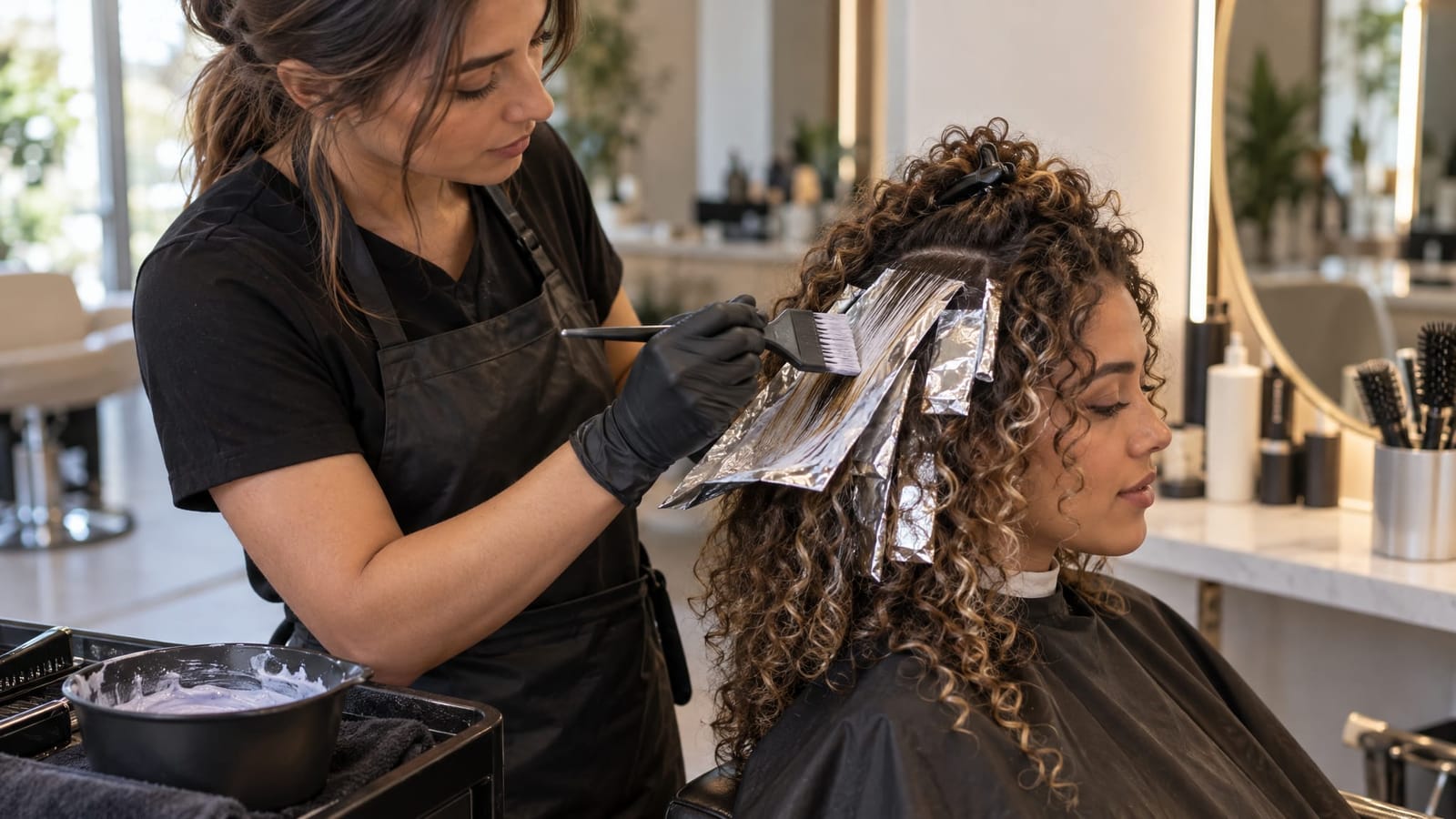
For curls, placement also needs to account for how the curls sit and separate. Brightness that looks evenly distributed on straightened hair may read differently in the natural curl pattern.
The limitation to consider
Full highlights involve working through more sections, so they generally require more application time. They also bring more of the hair into the lightening plan. Existing highlights, previous color, and the condition of the lengths all influence where additional lightening makes sense.
Choosing full coverage does not mean previously lightened ends need to be lightened again. Coverage and the treatment of each section are separate decisions.
Foil Highlights vs Balayage: A Separate Choice From Coverage
When comparing foil highlights vs balayage, you are choosing how brightness is created, not simply how much hair is included.
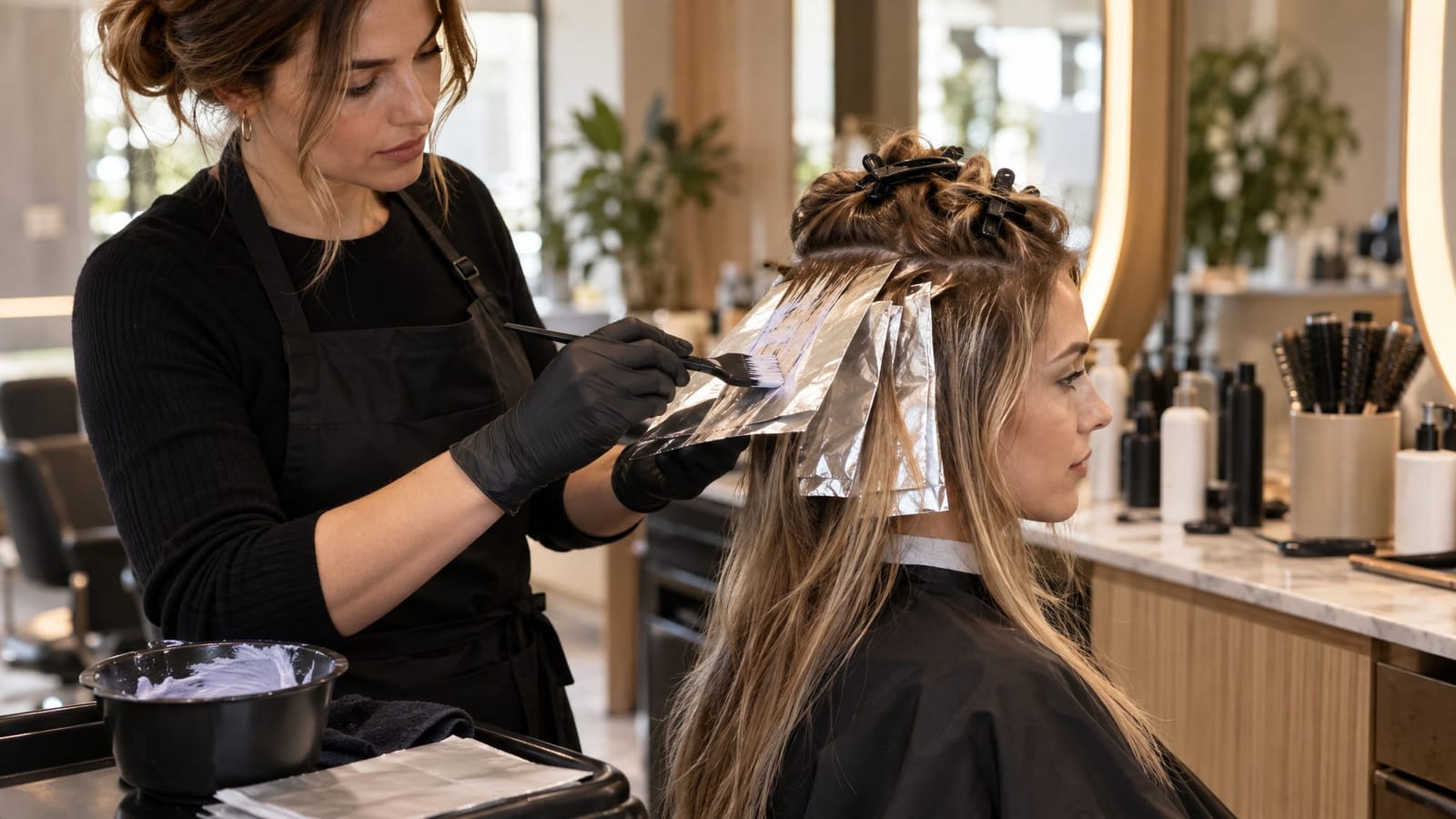
- Foil highlights: Selected strands are separated in foils, allowing controlled placement. Very fine sections can create a soft blend, while larger or more closely spaced sections can create stronger brightness.
- Balayage: Color is hand-painted onto selected areas, often with a softer transition near the roots and more visible brightness through the lengths and ends.
- Babylights: Very fine highlights designed to create delicate, closely blended dimension. They describe the fineness of the highlighted sections rather than a separate coverage category.
Foils are not automatically bold or high-maintenance, and balayage is not automatically the right choice for every low-maintenance goal. A finely woven foil highlight with a softly blended root can grow out gently. A high-contrast balayage look may still need tonal refreshing between lightening appointments.
If you want brightness close to the scalp, foils offer precise placement. If you prefer to keep more of your natural root visible and concentrate lightness farther down, balayage may better match that preference. The techniques can also be combined within a color design.
Highlights Alone vs Highlights Paired With Color
At IlonaR Style in Marina del Rey, we offer partial highlights, full highlights, partial highlights and color, and full highlights and color. Our menu also includes balayage, babylights, color touch-ups, and toner or gloss.
The useful distinction is whether you want to change only selected strands or also change the color surrounding them.
Choose highlights alone when the base already works
If you like your natural or existing base color, highlights can add dimension without changing it throughout. For example, a rich brown base with a few lighter ribbons may need targeted brightness rather than an overall color change.
Pair highlights with color when there are two separate goals
A combined service can address both the base and the lighter pieces. You might want a root color touch-up while maintaining brightness around the face, or a deeper brown background with lighter accents distributed throughout.
The comparison of partial highlights and color versus full highlights and color focuses on this two-part decision: where to place dimension and what to change around it.
Use toner or gloss for refinement, not extra coverage
A toner adjusts the tone of lightened hair, such as making blonde appear more neutral or warmer. A gloss can refresh tone and shine; the terms sometimes overlap. Neither replaces the placement work needed to add new highlights.
That distinction matters when the hair is already light enough but the shade no longer feels right. More lightening is not always the answer to a tonal concern.
Cost and Appointment Time: Compare the Whole Service
A full highlight service generally costs more than a partial service because it covers more sections and usually involves more application time and product. However, coverage is only one part of the comparison.
Factors that can affect the overall service include:
- Hair length and density: More hair can require additional sectioning and application work.
- Highlight detail: Closely spaced babylights can be more intricate to place than fewer, larger sections.
- Additional color work: Root color, a base-color change, or tonal refinement adds a separate task.
- Previous color: Uneven bands or an existing color correction goal can change the scope of the appointment.
For a meaningful cost comparison, compare the complete service rather than the words “partial” and “full” alone. A lower-coverage option is only a good fit if it addresses the areas you want changed.
Which Option Is Lower Maintenance?
Maintenance depends more on root contrast, placement, and your preferred finish than on coverage alone. Highlights placed close to the scalp create a different grow-out pattern from brightness that begins farther down the hair. A large difference between your base and highlighted shade also makes regrowth more noticeable.
A partial highlight can be an efficient refresh after a full service when the back and lower lengths still look balanced. It does not replace full coverage indefinitely if darker areas gradually become more prominent than you prefer.
Care between visits matters as well. Gentle washing, conditioning, and limiting unnecessary heat help maintain the feel and appearance of colored hair. When planning additional brightness, how highlights affect hair is an important consideration, particularly where the lengths are already lightened.
For a practical maintenance plan, distinguish between three needs: new brightness, root color, and a tone refresh. They do not always need attention at the same appointment.
The Best Choice Starts With What You Want to Change
Partial highlights are a strong fit when your goal is focused brightness and you enjoy keeping depth underneath. Full highlights make more sense when you want dimension throughout or lighter pieces visible in updos and from the back.
Before choosing, identify the areas that feel too dark, note your everyday hairstyle, and separate changes in brightness from changes in tone. Reference photos showing both the front and back are more useful than a face-framing image alone. Those details help turn a service label into a color plan that fits how you want your hair to look and how you prefer to maintain it.