Professional Curly Hairstyles: 10 Polished Looks for the Workplace
Professional curly hairstyles do not require straightening or flattening your natural texture. A defined wash-and-go showcases your curls, a half-up style keeps them away from your face, and a low chignon offers an easy way to restyle hair between washes. The best choice depends on your length, how much drying time you have, and whether you prefer your hair loose or secured throughout the day.
These 10 looks offer different levels of styling effort, from simple gathered styles to braids that benefit from practice. Polished does not have to mean slick or completely free of frizz. Natural volume and softness belong in a work-ready hairstyle, too.
Choose a Style That Fits Your Morning
Start by separating styling time from drying time. A bun or ponytail can begin with dry hair, while a wash-and-go needs enough time for curls to dry. A twist-out shifts preparation to the evening, but only works as planned when the twists are fully dry before you unravel them.
- For a quick restyle: Choose a half-up pineapple, low chignon, or curly ponytail.
- To wear your texture loose: Try a defined wash-and-go, twist-out, or side-parted curly finish.
- To keep hair away from your face: Consider an updo, braided ponytail, or braided crown.
- For shorter lengths: A defined side part or pinned front sections may be more practical than gathering all your hair.
The effort levels below describe the technique rather than a fixed completion time. Length, density, drying method, and familiarity with the style all affect your routine.
10 Work-Ready Curly Hairstyles
1. The Sleek Curly Updo
Styling effort: Easy | Best starting point: Dry curls
Gather curls into a high or mid-height bun, keeping the lengths loosely arranged rather than twisting them tightly. Smooth the surface with a small amount of gel if you prefer a sleeker finish, and leave a few face-framing curls free. Secure with a covered elastic and pins where needed. This is a useful option when the lengths still have texture but individual curls no longer look freshly styled.
2. The Defined Wash-and-Go
Styling effort: Moderate | Plan for: Washing, styling, and full drying time
Apply a curl cream, mousse, or gel to wet or damp hair according to the product directions. Work in sections so the product reaches more than the outer layer. To use the “praying hands” method, gently glide each section between flat palms, then scrunch upward to encourage your curl pattern. Air-dry or diffuse with low airflow and a lower heat setting. Limit touching while drying to help preserve the curl groups. Cream adds softness, while gel or mousse is useful when you want more hold.
3. The Low Curly Chignon
Styling effort: Easy | Best starting point: Dry hair that reaches the nape
A chignon is a bun positioned low at the back of the head. Gather your hair at the nape, loosely tuck or coil the lengths, and pin them in place. Unlike a French twist, which forms a vertical roll, this style keeps the shape low and compact. Leave the surface softly textured or smooth it lightly, depending on your preference. Crossing pins through the tucked sections can help secure the shape without tightening the entire style.
4. The Half-Up Pineapple
Styling effort: Very easy | Best starting point: Dry, loose curls
Gather the top section of your hair loosely at the crown with a soft scrunchie, allowing the ends to fall forward or around the gathered section. Leave the lower curls loose. This keeps hair away from your face while preserving volume and length. Adjust how much hair you gather: a smaller section creates a subtle lift, while a larger section keeps more hair contained. If the front pieces do not reach the crown comfortably, pin them back instead.
5. The Elongated Twist-Out
Styling effort: Moderate | Plan for: Advance preparation and complete drying
Divide damp, detangled hair into sections, then split each section into two strands and twist them around each other. Let the twists dry completely before unraveling; overnight preparation does not always leave enough drying time for dense hair or larger sections. Separate gently where the hair naturally divides. Smaller sections generally create a more detailed pattern, while larger sections give a looser finish. Choose this style when you want to vary your curl shape without heat stretching.
6. The French Braid into a Curly Ponytail
Styling effort: Moderate | Best starting point: Detangled hair with enough length to gather
Create a French braid along the top of your head, adding small sections as you work toward the back. Secure the remaining lengths into a low or mid-height ponytail and leave the curls loose. The braid keeps the front contained without requiring a completely smooth surface. If French braiding feels difficult, two simple front twists secured into the ponytail offer a similar balance of structure and texture.
7. The Slicked-Back Curly Ponytail
Styling effort: Easy | Best starting point: Dry or lightly refreshed curls
Choose your part, smooth a small amount of gel over the surface, and gather the hair into a ponytail. Use your hands or a soft brush on the outer layer rather than brushing through the curly lengths. A low placement creates a compact shape; a higher placement shows more volume. Aim for a comfortable hold rather than pulling tightly to remove every bump. Refresh only the ponytail curls that need attention.
8. The Wet-Look Style
Styling effort: Easy to moderate | Plan for: Product application and drying
For a glossy finish, apply a styling gel designed for a wet look to damp hair, following its directions. Shape a side part or gently direct the front away from your face, then let the style set with minimal handling. A little serum can add shine, but it does not replace a hold product. Start with less product on fine waves, where heavier layering can reduce volume. The finished look can appear wet even after the hair has dried.
9. The Side-Parted Curly Blowout
Styling effort: Moderate | Plan for: A full drying session
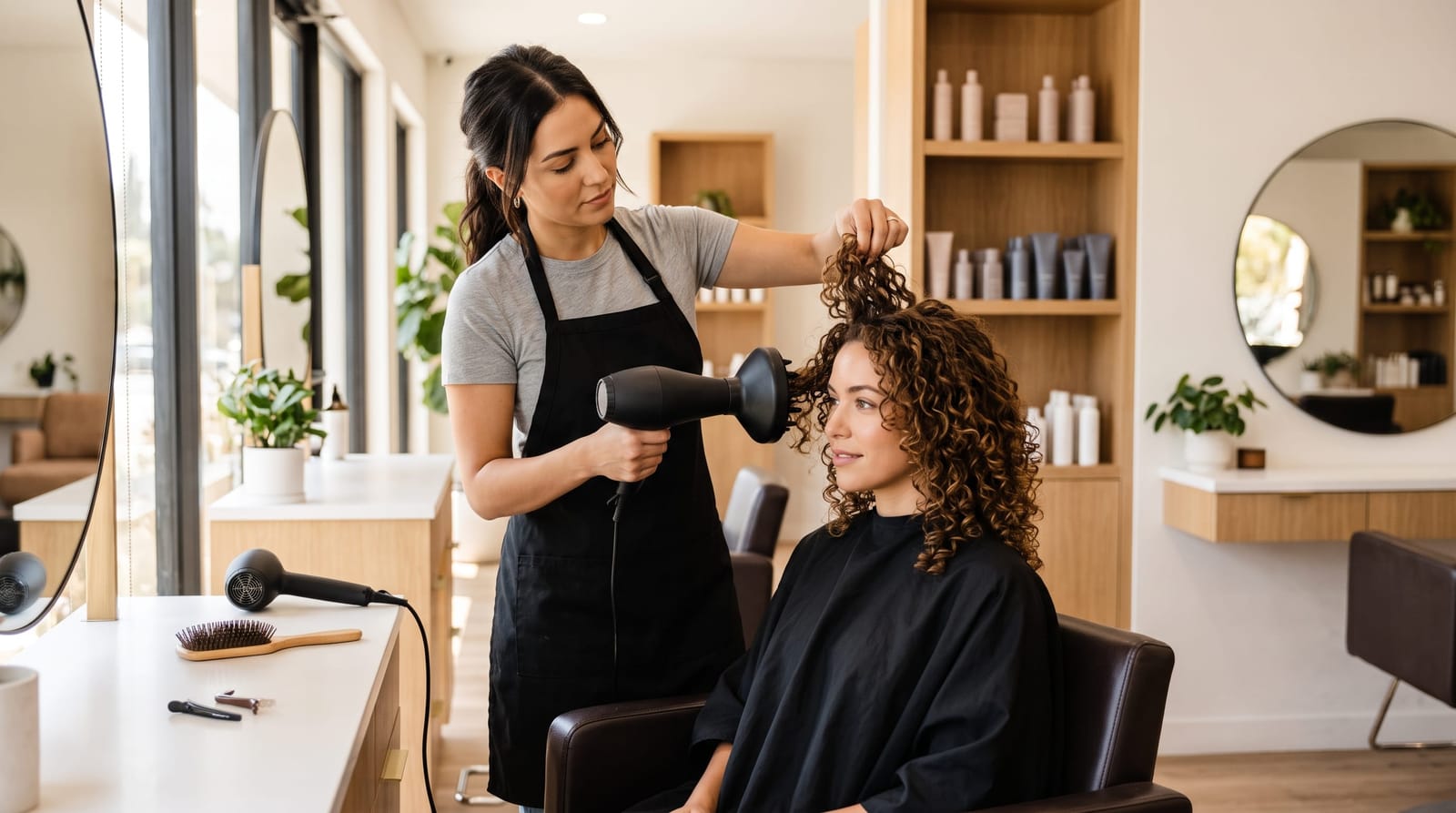
For a fuller, side-swept finish, dry curls with a deep side part. Use a diffuser to preserve your natural pattern, supporting sections gently rather than repeatedly moving the hair. A round brush creates a different result: it stretches and reshapes the hair into larger bends or curls. Choose diffusion when keeping your natural texture is the priority, or a round-brush finish when you want a more reshaped look. Use a heat protectant as directed when heat styling.
10. The Braided Crown
Styling effort: Moderate | Best starting point: Detangled hair with enough length to wrap and pin
Create a braid or twist on each side, beginning near the temples, then bring them toward the back and pin the ends securely. Leave the remaining curls loose for a half-up crown, or tuck longer lengths into the arrangement for an updo. This style keeps the front contained while allowing a softly textured finish. For shorter hair, use smaller side twists that meet at the back rather than trying to wrap them around the entire head.
Use Products for a Specific Job
You do not need every product category for every style. Choose what your hair needs that day, and avoid adding another layer simply because the previous style has lost definition.
- Gel or mousse for hold: Useful for defining loose curls or keeping gathered styles in place. Follow the product’s directions for wet or damp application.
- Leave-in conditioner or curl cream for softness: Apply lightly, especially on fine hair. Concentrate richer products on lengths and ends rather than automatically coating the roots.
- Smoothing gel for the surface: Use a small amount where you want control. A smooth hairline is an option, not a requirement for a professional look.
- Serum for finishing: A light application can add shine and smooth flyaways. It is not a substitute for hold or conditioning.
- Dry shampoo for oily roots: Use it selectively according to its directions. It absorbs oil but does not cleanse the scalp or refresh dry lengths.
If oil at the roots is your main concern between washes, our article on choosing dry shampoo for a curly-haired work routine explores that part of styling. If the issue is flattened curls instead, lightly dampening and reshaping those sections may be more useful than adding dry shampoo.
Build a Rotation Around How Your Curls Wear
A simple rotation can reduce the need to recreate your entire style each morning. For example, wear a wash-and-go after washing, gather the front into a half-up style when those curls flatten, and switch to a low chignon when you prefer the lengths contained. Treat this as a flexible sequence, not a rule about how often to wash.
Refresh only what needs attention. If the back still looks good, there is no need to wet and restyle it along with the front. Repeated brushing and friction can contribute to wear on the hair fiber, so gentle detangling is preferable to repeatedly brushing through dry curls to change their shape.
Frequently Asked Questions
How can I manage my style in humidity?
A hold product formulated for humidity can help, though results depend on the formula and your hair. Apply it as directed and allow the style to dry before repeatedly touching or rearranging it. A braid, bun, or ponytail keeps the overall shape contained even if some curls expand. Leave room for natural softness rather than trying to eliminate every flyaway.
Which options work for short curly hair?
A defined wash-and-go, side part, or wet-look finish does not require ponytail length. Small twists or pinned front sections can also keep hair away from your face. Work with the direction and length of your curls rather than pulling shorter sections into a style they cannot comfortably reach.
Do color-treated curls need different styling products?
Coloring, particularly lightening, can change how hair feels and responds to styling. Choose products based on that response: drier-feeling ends may benefit from added conditioning, while fine hair may need lighter layers to retain volume. Products labeled for color-treated hair can fit the routine, but more product is not automatically better. Separate the need for softness from the need for hold.
Let Your Cut Support Your Workday Style
A useful curly haircut supports both the shape you enjoy wearing loose and the styles you rely on when time is limited. Face-framing pieces need enough length to tuck or pin if you prefer them off your face. Layers influence where volume sits, while the overall length determines which buns and ponytails are practical.
At IlonaR Style in Marina del Rey, we specialize in curly hair and offer private, one-on-one hair services. The most useful starting point is how you wear your hair on an ordinary workday, including whether you air-dry, diffuse, or regularly gather it back. A work-ready look feels more manageable when the cut and styling routine work together.