Professional Gray Hair Color: When to Embrace It and How to Style It Beautifully
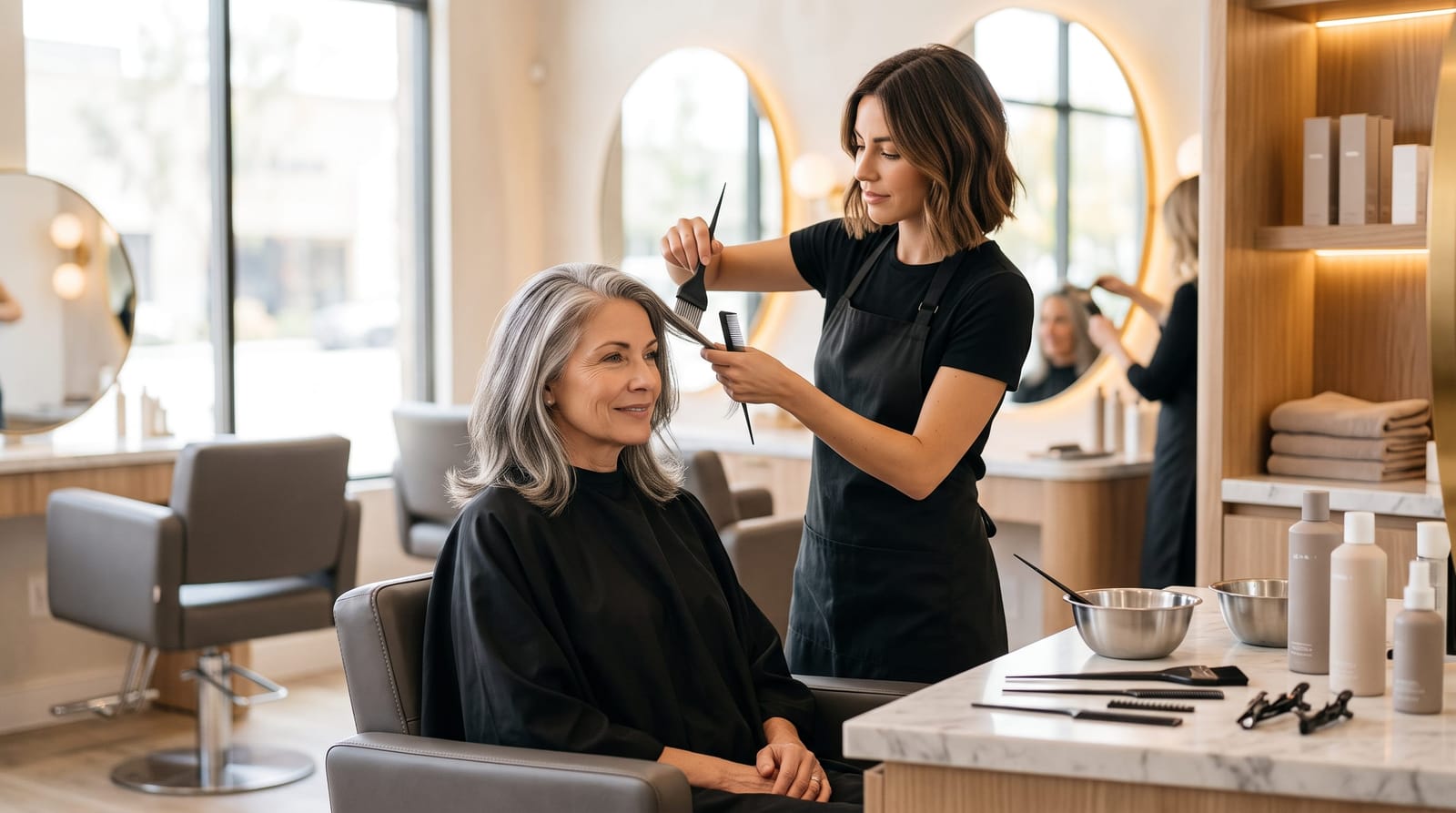
Gray hair is having a genuine cultural moment, and not just among women who feel ready to "give up." A growing number of professional women over 40 are actively choosing to lean into their silver tones, and the results can be stunning. Whether you're curious about transitioning away from full coverage or you want to enhance the gray you already have with modern techniques like silver balayage, understanding your options around professional gray hair color makes all the difference. Here's what you actually need to know.
Tip 1: Understand What's Actually Happening to Your Hair
Gray hair isn't just a color change: it's a structural one. As melanin production slows, each strand loses its pigment and often becomes coarser, more porous, and more resistant to color absorption. This is why at-home box dyes frequently fail on gray: the formulas simply aren't strong enough to penetrate that resistant texture.
According to colorist research, approximately 74% of women begin noticing significant gray by age 44, and nearly 50% of the population is at least half gray by age 50. That's a lot of women navigating this transition, and many of them are doing it without professional guidance tailored to where they actually are in the process.
Professional gray hair color formulas, whether demi-permanent or permanent, are specifically designed to address this resistance. Salon-grade products like Wella Colorcharm and L'Oréal Excellence Crème use stronger pigmentation and conditioning agents that work with the altered texture of gray strands rather than against them. The result is color that looks natural, lasts longer, and leaves hair in better condition than most over-the-counter alternatives.
Understanding this distinction is the foundation for every decision that follows. Your gray isn't the problem. It's just different, and it deserves a different approach.
Tip 2: Know When to Cover and When to Complement
One of the most important conversations to have with your colorist is an honest one about what you actually want. Professional gray hair color solutions fall into two broad categories: those that cover gray entirely and those that work with it. Neither is better: they simply serve different goals.
Full gray coverage makes sense if your gray is patchy, concentrated in unflattering areas, or simply feels premature for where you are in life. High-quality permanent formulas can deliver seamless, natural-looking coverage with the right shade selection: typically one that matches or is slightly lighter than your original base color to avoid a flat, painted-on look.
Gray blending and enhancement, on the other hand, are ideal for women who have enough gray to work with and want to make the transition feel intentional rather than accidental. Techniques like root smudging, gray blending balayage, and strategic highlights can soften the line between colored sections and natural growth, extending time between appointments and creating a genuinely elegant effect.
As a general guideline, colorists often recommend shifting toward a blending strategy once gray makes up roughly 30-40% or more of the overall hair. At that point, full coverage requires more frequent maintenance and can actually make the gray contrast more obvious when roots grow in.
Tip 3: Explore Silver Balayage and Gray-Enhancing Techniques
Silver balayage is one of the most flattering and low-maintenance professional gray hair color options available today, and it's particularly well-suited to professional women who want their color to work harder with less upkeep.
Rather than applying color uniformly, silver balayage involves hand-painting lighter tones through the hair in a way that mimics natural variation. The effect is dimensional, modern, and remarkably forgiving as new growth comes in. Because there's no hard demarcation line, clients typically return for touch-ups every 10 to 14 weeks rather than every four to six.
Other techniques worth discussing with your colorist include:
- Root shadowing: A medium or dark tone applied at the root to soften the contrast between colored lengths and natural gray growth, creating a seamless, lived-in look.
- Gray glossing: A translucent toning treatment that enhances natural silver tones, adds shine, and removes brassiness: perfect for women who are leaning into their gray but want it to look polished rather than dull.
- Partial highlights with gray integration: Lighter pieces are woven throughout existing gray to create a cohesive, intentional blonde-to-silver effect rather than a patchy, uneven transition.
Each of these techniques serves a slightly different need. A thorough consultation, like those described in our upcoming guide on what happens at a hair color consultation and how to prepare: will help identify which approach suits your specific texture, percentage of gray, and lifestyle goals.
Tip 4: Prioritize Toning and Maintenance to Keep Gray Looking Fresh
Here's something many women don't realize until after they've committed to embracing their silver: gray hair, particularly when lightened or blended, can develop a yellow or brassy cast over time. This is caused by environmental factors like UV exposure, mineral buildup from water, and certain styling products.
Professional gray hair color maintenance isn't just about touch-up appointments: it's an ongoing practice. A few essentials worth building into your routine:
- Purple or blue-toned shampoo: Used once or twice a week, these neutralize unwanted warmth and keep silver tones bright and clean. Overuse can cause a slightly violet tint, so frequency matters.
- Gloss treatments: In-salon glossing services add shine and extend tonal vibrancy between color appointments. Many clients schedule these every six to eight weeks as a standalone service.
- UV protection products: Gray hair is particularly susceptible to color fading and texture degradation from sun exposure. Leave-in treatments with UV filters are a simple, effective addition to any routine.
- Deep conditioning weekly: Because gray strands tend to be drier and more porous, regular moisture replenishment keeps the hair looking healthy, shiny, and intentional rather than coarse or wiry.
The goal is silver that looks polished, not neglected. With the right products and in-salon support, that's entirely achievable.
Tip 5: Choose Cuts and Styles That Make Gray Work For You
Professional gray hair color is only part of the equation. The cut and style you pair with your silver tones significantly influence how modern and intentional the overall look feels.
Blunt bobs and lobs (long bobs) are particularly popular among professional women embracing gray: the clean lines show off dimensional color beautifully and project confidence. Layered cuts add movement and softness, which can be especially flattering when gray is concentrated around the face.
Face-framing pieces, whether lightened or left naturally silver, draw attention to features rather than to the transition between color and growth. This is one of the most effective ways to make gray feel like a deliberate style choice rather than something that simply happened.
Texture also matters. Gray hair often benefits from light styling creams or serums that smooth the cuticle and add shine without weighing hair down. Avoid heavy waxes or products that can make silver tones appear dull or flat.
The women who wear gray most beautifully tend to wear it with intention: a cut that fits their face, a tone that's been refined by a skilled colorist, and a routine that keeps everything looking fresh. That's not luck. It's a plan.
Frequently Asked Questions About Professional Gray Hair Color
At what age should I start thinking about gray blending instead of full coverage?
There's no single right age: it depends more on the percentage of gray you have and your maintenance preferences than on your birthday. Many colorists suggest considering a blending approach once gray accounts for roughly 30-40% or more of your hair, since full coverage at that stage requires more frequent touch-ups and can create a starker contrast at the roots. That said, some women prefer full coverage well beyond that point, and that's equally valid. A professional consultation will help you evaluate what makes sense for your specific situation.
Is silver balayage damaging to hair?
Balayage techniques, including those used for silver and gray-enhancing effects, are generally considered gentler than traditional full-highlight applications because the product is painted freehand rather than applied root to tip on every strand. The degree of lightening involved does affect the hair, but with proper toning, conditioning treatments, and a skilled colorist, the results are typically healthy-looking and manageable. In-salon bond-building treatments can be added to further protect hair integrity during the lightening process.
How often do I need to come in for gray hair color maintenance?
It depends entirely on the technique. Full gray coverage typically requires touch-up appointments every four to six weeks, since new growth becomes visible relatively quickly. Gray blending and silver balayage dramatically reduce that frequency: most clients return every 10 to 14 weeks. Gloss treatments may be added in between for tonal maintenance. One of the reasons so many professional women are drawn to blending techniques is precisely this reduced maintenance schedule.
Can I transition from full gray coverage to embracing my natural silver without a drastic change?
Yes, and in most cases, a gradual transition is the most elegant approach. A skilled colorist can soften the line between your colored ends and natural growth through root shadowing, strategic highlights, and glossing services, making the grow-out process feel intentional rather than neglected. Depending on how much color you have and how fast your hair grows, a graceful transition typically takes two to four salon visits spread over six to twelve months. Patience and a good plan go a long way here.
Embracing Gray on Your Own Terms
Professional gray hair color isn't about giving something up: it's about making a sophisticated, considered choice that works for your life. Whether you want seamless coverage, a silver balayage that shines in the California sun, or a gradual transition that feels natural every step of the way, the right approach starts with an honest conversation with a colorist who truly understands gray. At IlonaR Style, we specialize in helping women over 40 find their most beautiful, confident version of silver, on their schedule, in their style.