Can You Get Color Correction on Curly Hair?
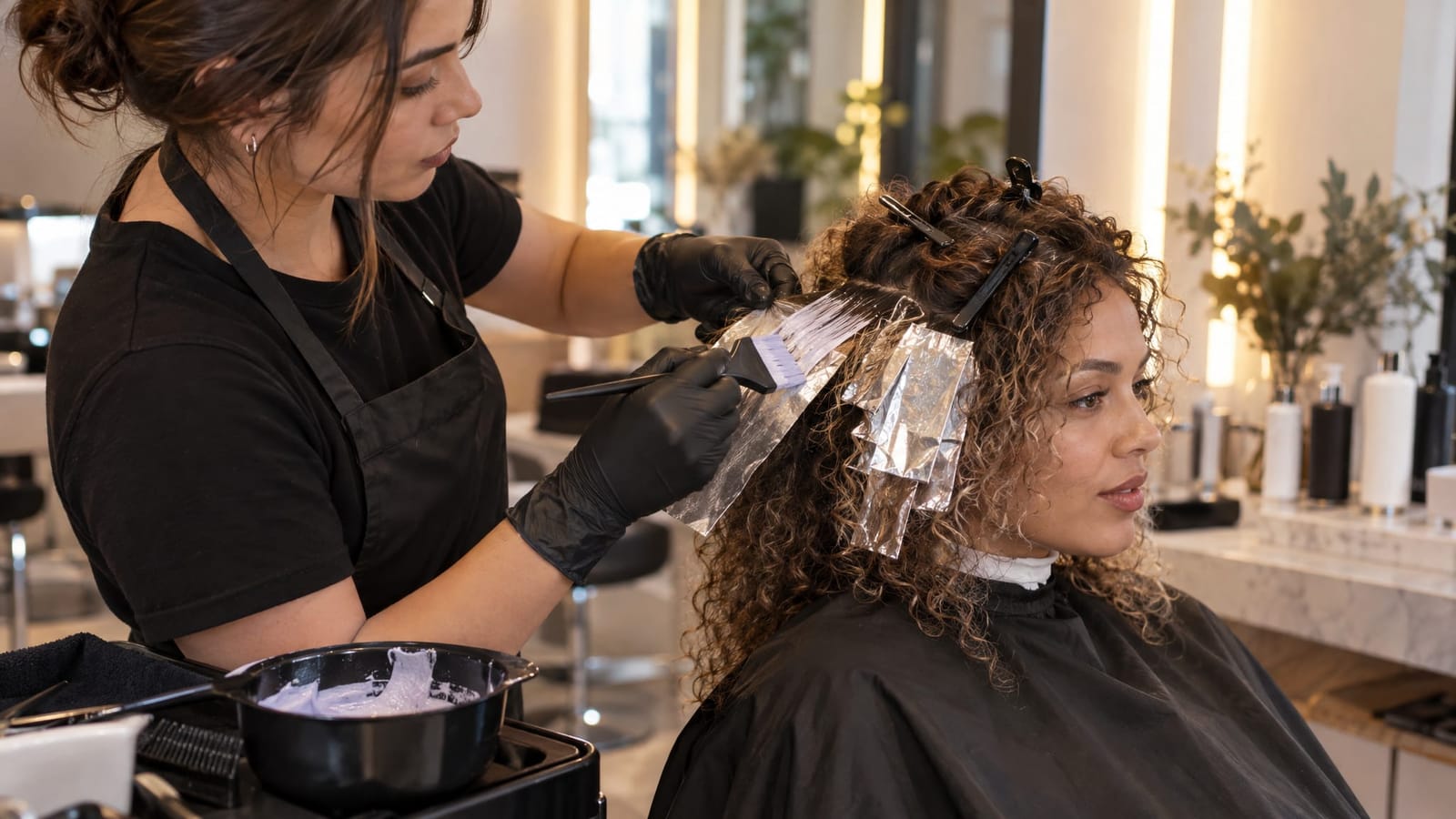
Yes, curly hair can have color correction. The right approach depends on the unwanted color, previous chemical services, and the condition of your curls. A correction might involve adjusting warmth with a toner, blending uneven sections, or gradually changing depth. It does not automatically mean bleaching your entire head.
The goal is more than an even shade. Curly hair coloring also needs to account for how the finished color sits within your curl pattern and how much processing your lengths can tolerate.
Why Porosity Matters for an Even Result
Porosity describes how readily hair takes in and releases moisture. It also affects how hair absorbs and holds color. Curl type alone does not tell a colorist how porous your hair is.
Previous lightening, repeated coloring, and everyday wear can leave the ends more porous than newer growth. That means the same formula applied from roots to ends may produce different results: porous sections can absorb color intensely, appear darker than intended, or fade unevenly.
For example, warm roots and dull, dark ends are not necessarily one problem with one solution. Applying an all-over ash shade to reduce warmth could make those ends look even flatter. A correction needs to distinguish between:
- Depth: How light or dark each section is.
- Tone: Whether the color looks golden, coppery, cool, or neutral.
- Condition: How differently the roots, mid-lengths, and ends respond to processing.
This is why a targeted approach often makes more sense than another all-over application.
Can Color Correction Affect Your Curl Pattern?
Lightening and other chemical color processes can weaken hair, particularly when previously processed sections are treated again. On curly hair, that can show up as increased roughness, breakage, less definition, or curls that appear looser.
The important distinction is that color correction is not a single procedure with a fixed level of risk. Adjusting tone without further lightening is different from removing dark artificial pigment to reach a much lighter shade.
A strand test helps a colorist see how a small section responds to a proposed process, including its color change and condition afterward. It informs the plan, but it does not guarantee that every section will respond identically.
If the lengths are already fragile, a more suitable direction may be deeper color, selective blending, or postponing further lightening. Dividing a change into appointments allows reassessment, but time between visits does not erase existing chemical damage.
The Correction Depends on What Needs to Change
Warm or brassy highlights
When highlights are light enough but too yellow or orange, toner or gloss may adjust the tone without additional lightening. The formula needs to suit both the underlying warmth and the condition of the hair. Cooler is not always better, especially when porous ends already look dull.
Color that looks too dark
A toner or gloss is not a reliable way to make overly dark artificial color lighter. That goal requires a different assessment, particularly when several permanent-color applications overlap through the lengths. A smaller shift or selective brightness may be a more manageable choice than returning immediately to a much lighter shade.
Patchy color or visible bands
Different-colored bands often reflect different processing histories. Rather than treating everything again, a colorist can plan around the sections that need adjustment. On curls, placement also matters because a bright patch may look more prominent when several strands gather into one curl.
Going darker after excessive lightening
Lightened hair sometimes needs warm pigment added back before a deeper shade is applied. This is called filling. It helps create a balanced darker result rather than a hollow or muddy appearance. Going darker changes the color, however; it does not restore the hair’s original structure.
Why Both Curl and Color Expertise Matter
A colorist needs to understand the existing pigment and previous processing. A curly hair specialist also considers how the hair contracts as it dries, how curl groups fall, and where color becomes visible in your everyday style.
Those perspectives work together. Highlights that look evenly spaced when hair is stretched straight may appear clustered or hidden once it curls. Similarly, an even shade is not the whole picture if repeated processing leaves the ends difficult to style.
At IlonaR Style in Marina del Rey, we specialize in curly hair and hair color, including color correction, with private, one-on-one services. Bringing those specialties together keeps the conversation focused on both your desired shade and the way you wear your curls.
What to Prepare and How to Care for the Result
A useful color history includes permanent and semi-permanent dyes, bleach, henna, smoothing services, and at-home color removers. Include what was applied to the lengths, not just the most recent root touch-up. Older color can remain in hair long after the application.
For the consultation, identify your main priority: less warmth, more even color, brighter pieces, or a softer grow-out. Ranking those goals helps clarify tradeoffs if achieving all of them would involve more processing than the hair can tolerate.
After correction, keep care focused on manageability and reducing unnecessary wear:
- Use shampoo and conditioner suited to colored hair and your curl texture.
- Detangle gently with enough conditioner or slip rather than pulling through resistance.
- Limit repeated high-heat styling, particularly on previously lightened lengths.
- Use toning products for a specific color need, not automatically at every wash. Porous sections can pick up excess pigment.
Conditioners and masks can improve softness and ease of styling, but they do not undo chemical damage.
Frequently Asked Questions
Does box dye rule out color correction?
No. It makes an accurate application history especially helpful. Repeated permanent dye through the ends creates a different starting point from a single application. Product names, approximate dates, and whether the color covered the whole head help explain that history.
Will I need to cut my curls?
Not every correction requires a haircut. A trim may be part of the plan when the ends are split, breaking, or no longer supporting the shape. Length preferences belong in the discussion before choosing the color direction.
What inspiration photos are most useful?
Choose examples with a similar curl pattern and starting depth, ideally shown in natural light. Include a recent photo of your own hair worn naturally. Point out whether you like the tone, brightness, or placement, since those are separate choices.
A Better Color Plan Starts With Your Curls
Color correction is possible on curly hair, but the best direction is not always the most dramatic change. A thoughtful plan addresses uneven pigment, respects previously processed lengths, and creates color that works with your natural texture.