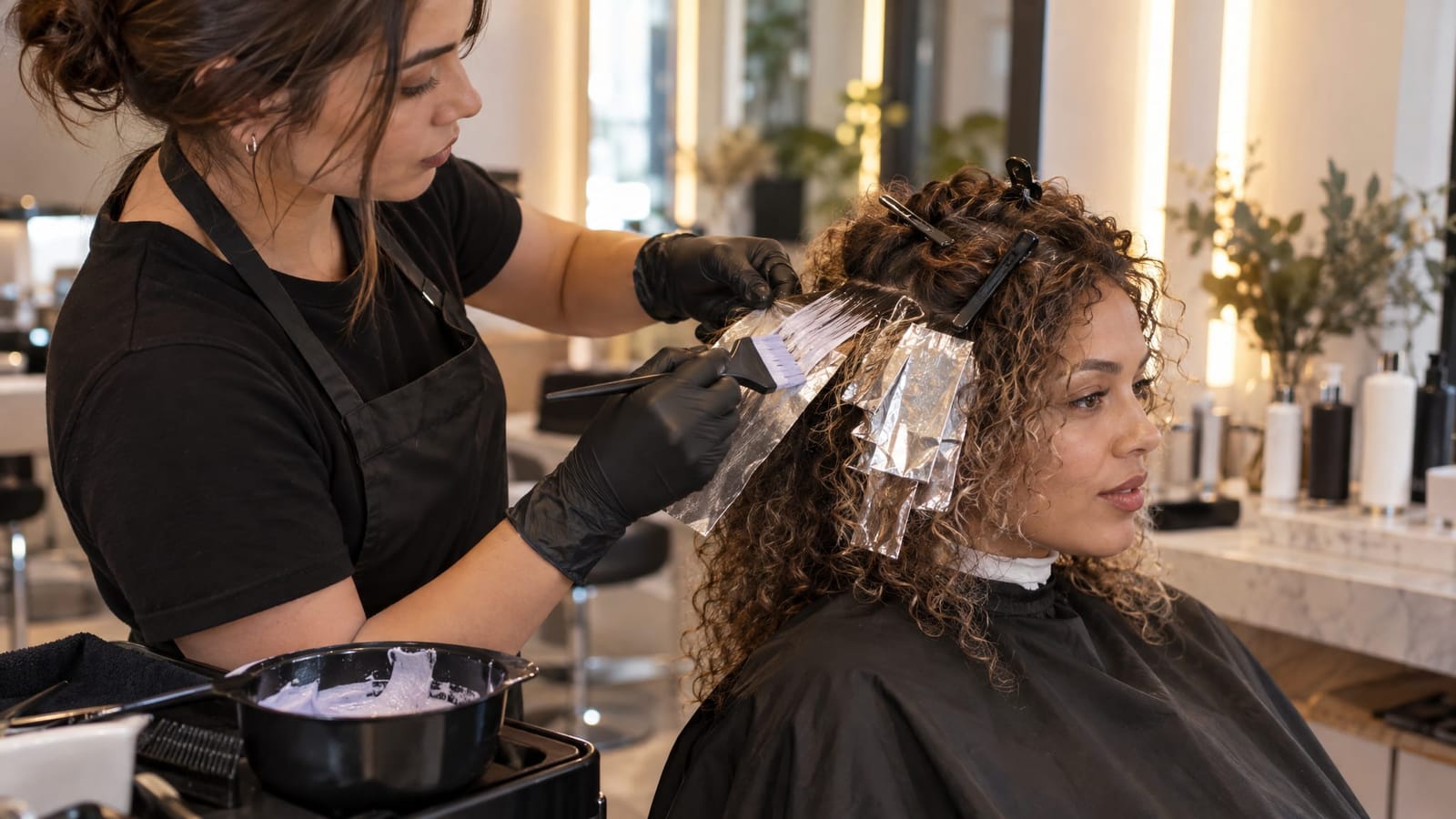
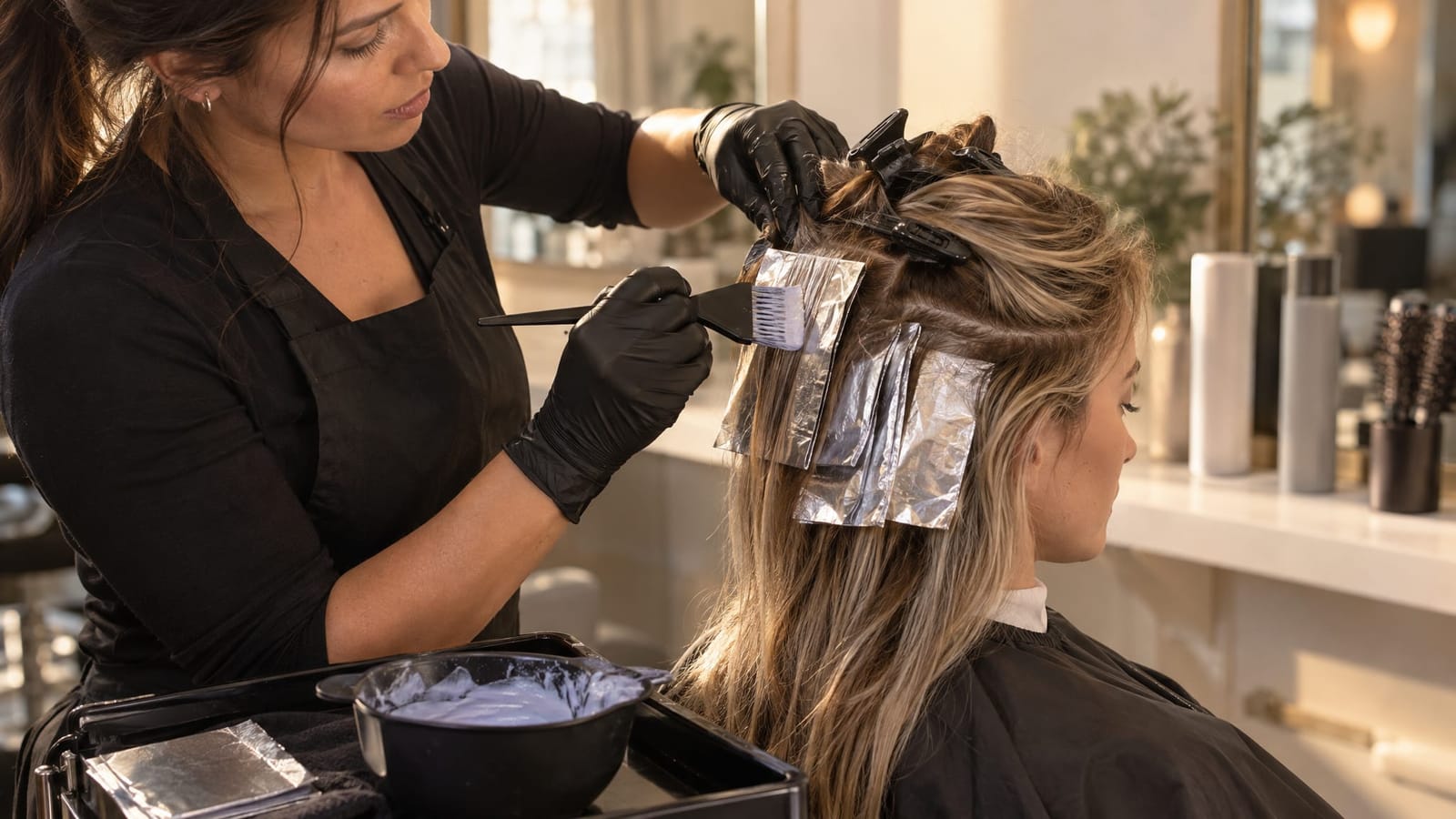
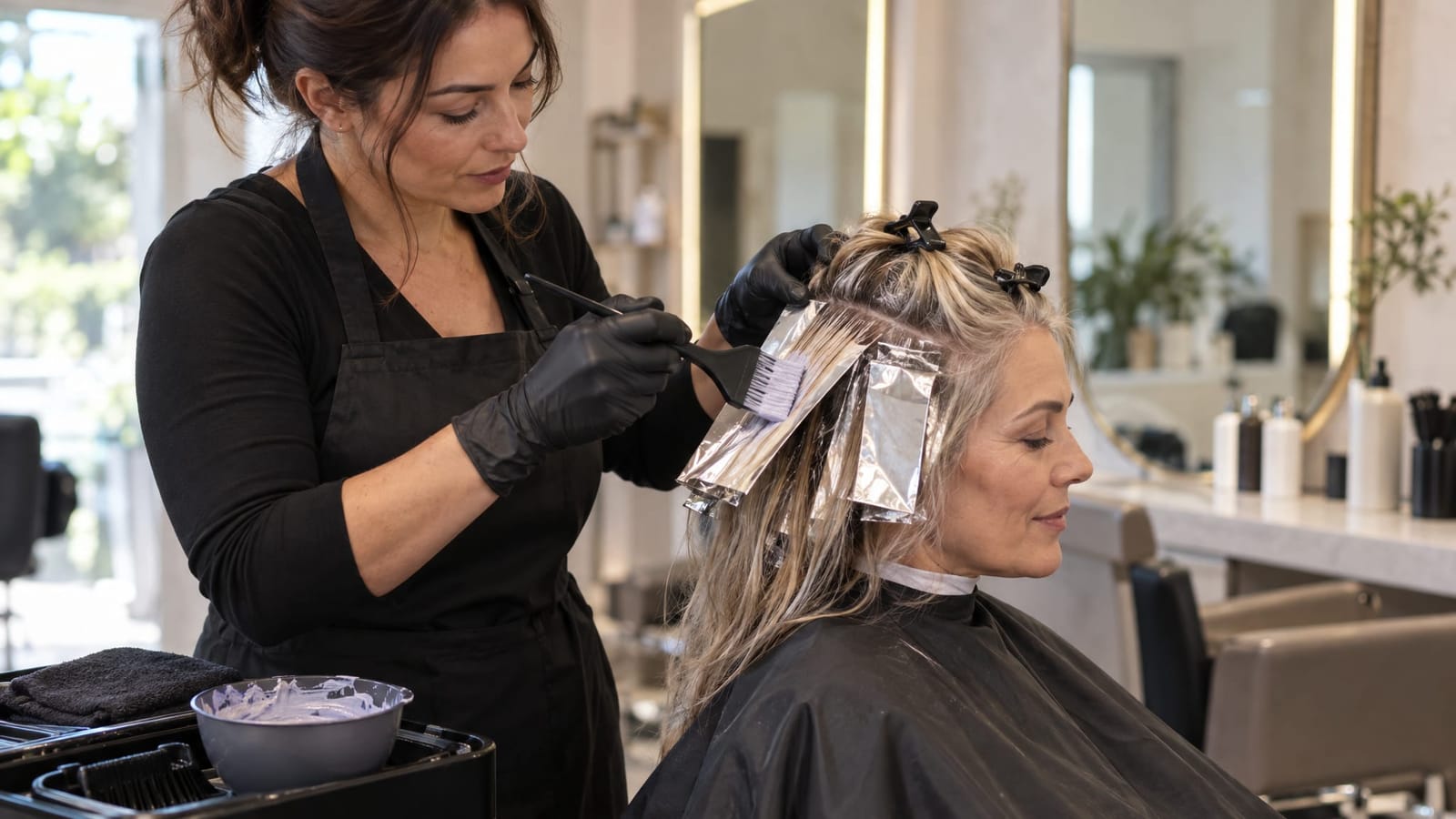
What Is Bleach and Tone vs Color Correction? Understanding the Difference
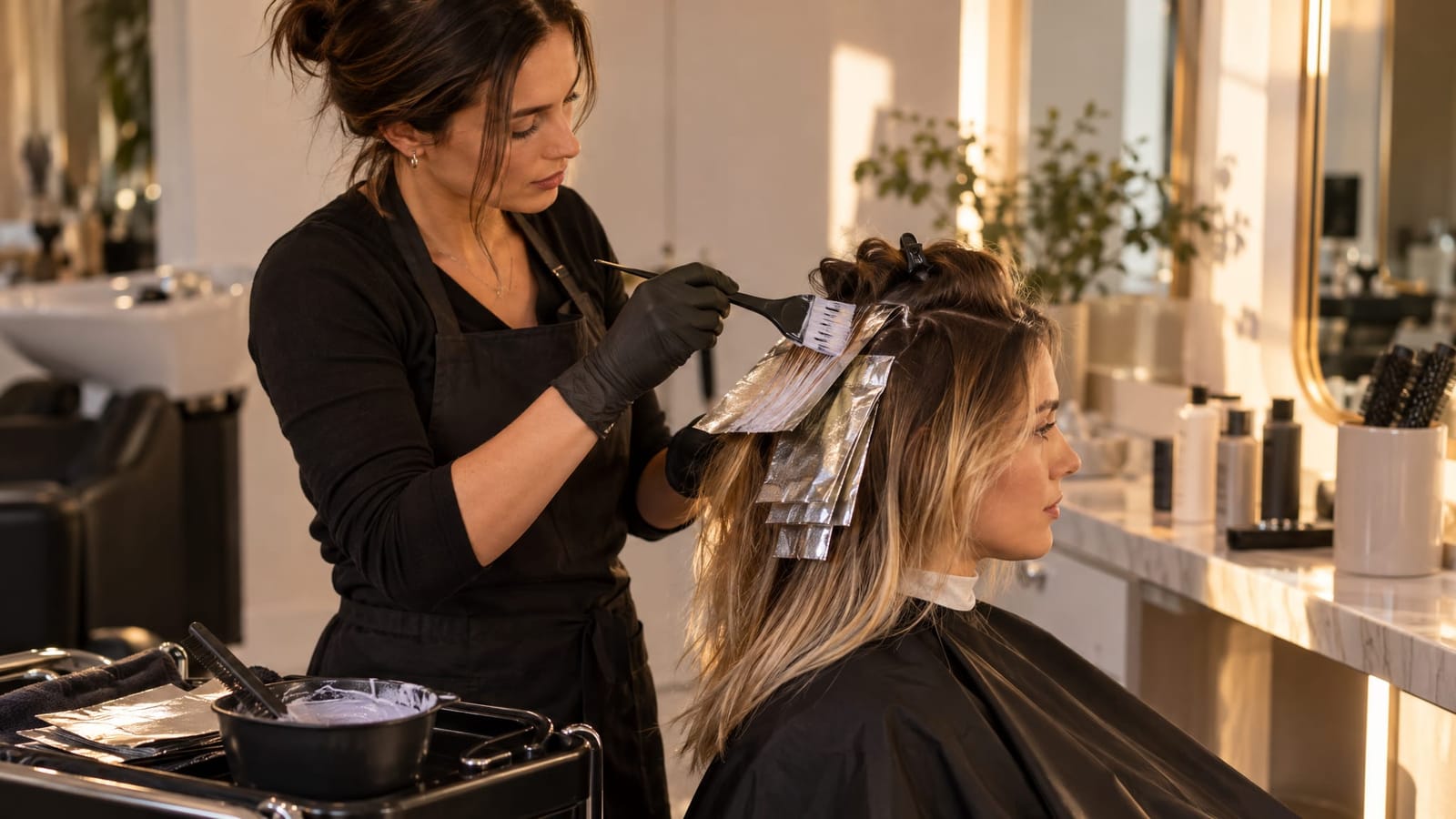
Bleach and tone describes a technique: lightening hair, then refining its shade. Color correction describes a goal: resolving unwanted color, unevenness, or complications from previous coloring. A correction can include bleach and toner, but it may require different approaches for different sections of hair.
For a dark to light hair transformation, the deciding factor is not simply how blonde you want to go. Your existing color, previous treatments, and the condition of your lengths help determine which service fits. Untreated hair with an even starting color often suits bleach and tone. Dark dyed ends, overlapping color, or distinct bands usually call for a corrective plan.
Bleach and Tone vs Color Correction at a Glance
| Comparison | Bleach and Tone | Color Correction |
|---|---|---|
| Main purpose | Create a lighter overall base and refine the resulting shade. | Resolve unwanted pigment, uneven color, or a complicated color history. |
| Typical starting point | Untreated hair, a relatively even base, or routine regrowth on an established blonde. | Dark artificial color, patchiness, bands, or sections with different processing histories. |
| Approach | Lighten the intended areas, then use toner to adjust warmth and shade. | Address each area according to its starting color and condition. |
| Main limitation | An even starting point does not guarantee the desired blonde in one appointment. | A more involved service does not mean more lightening is appropriate everywhere. |
When Bleach and Tone Is the Better Match
Bleach lightens the hair’s existing pigment. Toner then adjusts the shade of the lightened hair, such as softening yellow warmth or creating a beige finish. The achievable tone depends on how light the base becomes. Toner cannot turn a much darker section into pale blonde.
This service often fits when the goal is an overall blonde rather than ribbons of brightness through a darker base. It can also describe maintenance for an established blonde, where new growth is lightened and the tone is refreshed.
For example, someone with an untreated brown bob who wants an all-over blonde may fit a bleach-and-tone service. Untreated hair, sometimes called virgin hair, has no previous color to work through. However, the starting depth and desired shade still affect what is achievable.
Previously colored hair does not automatically need correction. The important distinction is whether its existing color creates an obstacle to the new result.
When Color Correction Is the Better Match
Correction becomes more relevant when one uniform application would not address the whole head evenly. Natural roots, previously lightened lengths, and dark dyed ends can respond differently, even when they initially look similar.
Common corrective situations include:
- Repeated dark coloring: Artificial pigment remains through the lengths while newer growth has a different color history.
- Visible bands: Horizontal sections appear lighter or darker after previous applications.
- Patchy lightening: Some areas are already pale while others remain considerably darker.
- Unwanted depth or tone: The hair looks too dark, too cool, or uneven after a color change.
Consider dark dyed lengths with much lighter roots. Applying more lightener everywhere would treat two different problems as one. A corrective approach separates those areas and considers whether to lighten darker sections, soften the contrast, or move toward a more even intermediate shade.
Over-processed hair adds another consideration. Fragile lengths may limit further lightening, so correction can involve adjusting the goal rather than pushing toward the lightest possible result. Correction is not always a journey to blonde; it can also restore depth or create a more balanced brunette.
Which Takes Longer or Costs More?
The service name alone does not determine appointment time or hair transformation cost. A major bleach-and-tone change can be extensive, while a limited tonal correction may be less involved.
The most useful factors to compare are:
- Starting color versus target color: A subtle shift and a very pale blonde require different plans.
- Color history: Repeated dark dye or several previous techniques can require more detailed work.
- Length and density: More hair means more application work and product.
- Unevenness: Several distinct color zones require more selective attention.
- Number of visits: The overall transformation may involve staged changes rather than one appointment.
Maintenance matters, too. An all-over blonde creates a clearer contrast with dark new growth than a look that keeps a deeper root. A correction addresses the starting problem, but the finished color still has its own upkeep. Comparing the initial appointment and the maintenance plan gives a more useful picture than comparing service labels alone.
How to Identify the Right Service for Your Goal
If your goal is an even, all-over blonde and your starting color is relatively consistent, bleach and tone is the closer description. If the priority is fixing patchiness, removing an unwanted dark result, or working around several previous color processes, color correction is the more relevant category.
These details help make the distinction clear during a color consultation:
- Your full color history: Include salon color, home dye, lightening, and smoothing services that remain in the current lengths.
- A current photo in natural light: Show the roots, mid-lengths, and ends without filters.
- Your priorities: Explain whether keeping length, reaching a particular shade, or simplifying maintenance matters most.
- Your reference image: Identify what appeals to you, such as brightness, warmth, or a softer root.
A strand test can help assess how a small section responds before a larger color change. At IlonaR Style in Marina del Rey, we offer both bleach and tone and color correction within our private, one-on-one salon services. The distinction is about matching the work to your starting point, not choosing the most intensive option.
Frequently Asked Questions
Does orange hair always need color correction?
No. Warmth can become visible during lightening. If the hair is evenly lightened enough for the intended shade, toner may address the warmth. Darker patches or insufficient lightness require a different assessment.
Can highlights achieve a lighter look instead of bleach and tone?
Yes. Highlights lighten selected strands while retaining some of the existing base. They can create an overall brighter appearance without making every strand blonde, which may better suit a softer grow-out preference.
Can a dark to light transformation happen in one visit?
Some can, but one visit is not a reliable expectation for every starting point. Previous artificial pigment, uneven sections, and fragile lengths can make a staged transition more appropriate.
The Difference Comes Down to Your Starting Point
Bleach and tone creates and refines a lighter base. Color correction resolves obstacles to an even, intentional result. The right choice accounts for both the color you want and the hair history that comes with it.