Can You Get Highlights on Curly Hair? What You Need to Know
If you have curly hair, you may have heard mixed messages about whether highlights are a good idea, or whether they'll leave your curls dry, frizzy, or damaged. The good news is that highlights on curly hair are absolutely achievable, and when done with the right techniques and the right colorist, they can look stunning while keeping your curls healthy and defined. This guide answers the most common questions curly-haired women have before sitting down in the color chair.
Why Curly Hair Requires a Different Highlighting Approach
Curly hair has a naturally different structure than straight hair. Each curl has a slightly uneven surface with more points of vulnerability along its shape, which means it can absorb and release moisture, and color, differently than straight strands. Because of this, the standard foil highlighting method used on straight hair doesn't always translate well to curly textures.
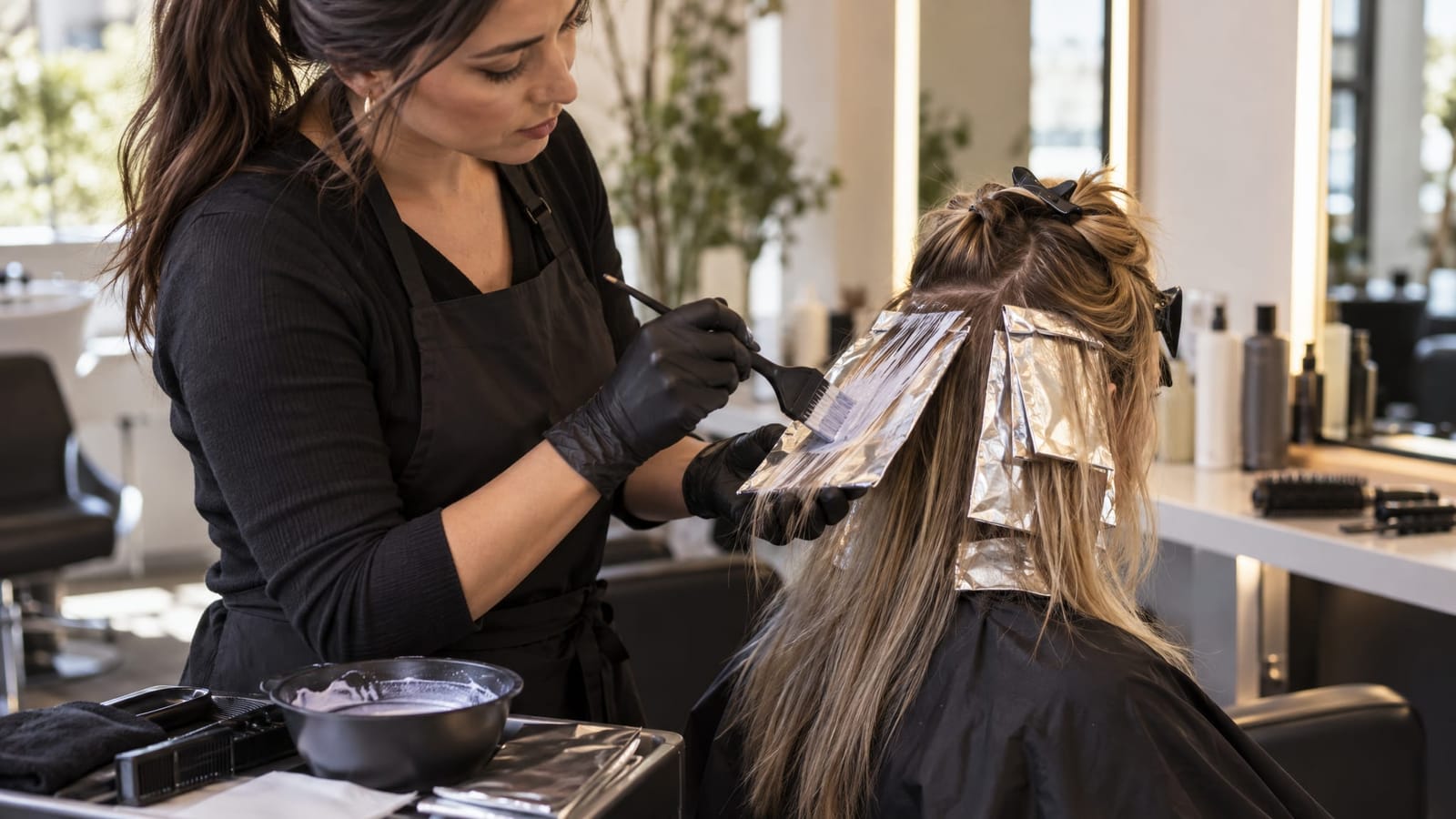
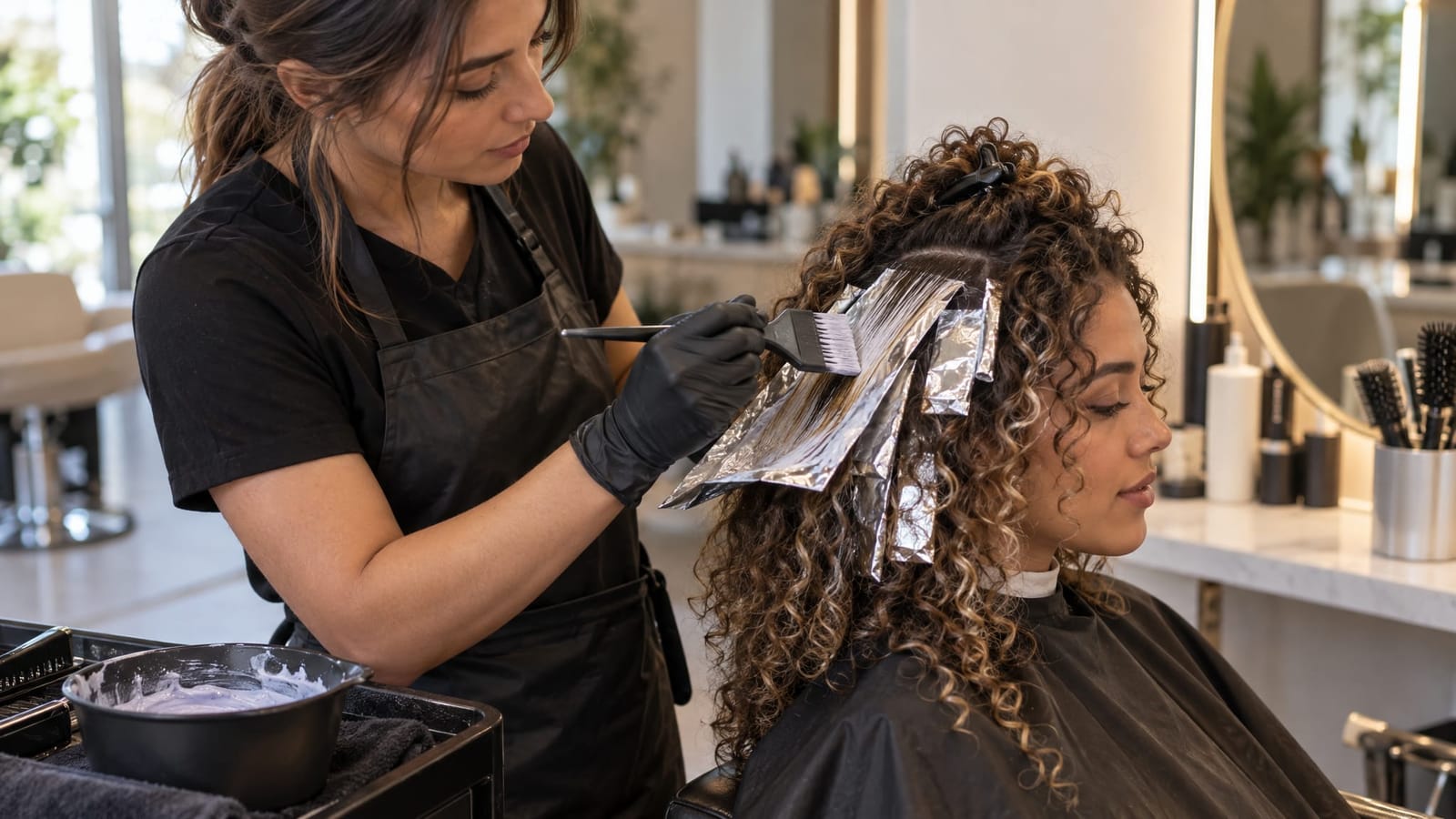
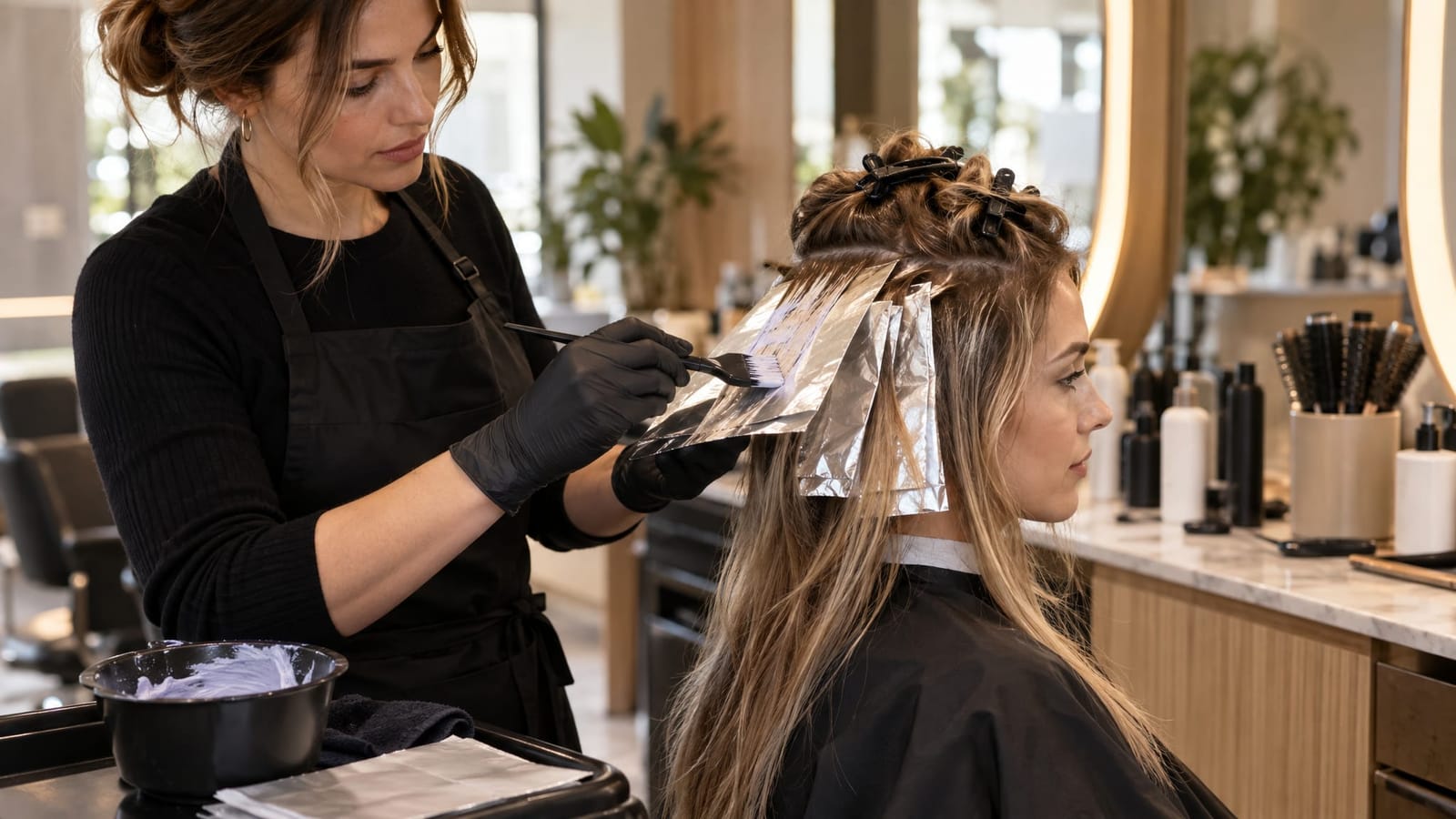
Traditional foil highlights involve precise sectioning and flat placement. On curly hair, this can result in highlights that look patchy, blocky, or inconsistent once the hair dries and curls reform. Curly hair also has a tendency to be more porous: meaning it can process color faster and may be more prone to dryness if the wrong products or techniques are used.
According to hair care research, approximately 65% of women report that their primary concern with coloring curly hair is damage to their curl pattern. This is a valid concern, but it's also one that a skilled curly hair colorist knows how to address before a single brush stroke is applied. The key is pairing the right technique with a thorough consultation about your curl type, porosity, and color history.
The Best Highlighting Techniques for Curly Hair
Not all highlighting methods are created equal when it comes to highlights on curly hair. The techniques best suited for curls are those that work with the natural movement of your hair rather than against it.
Balayage
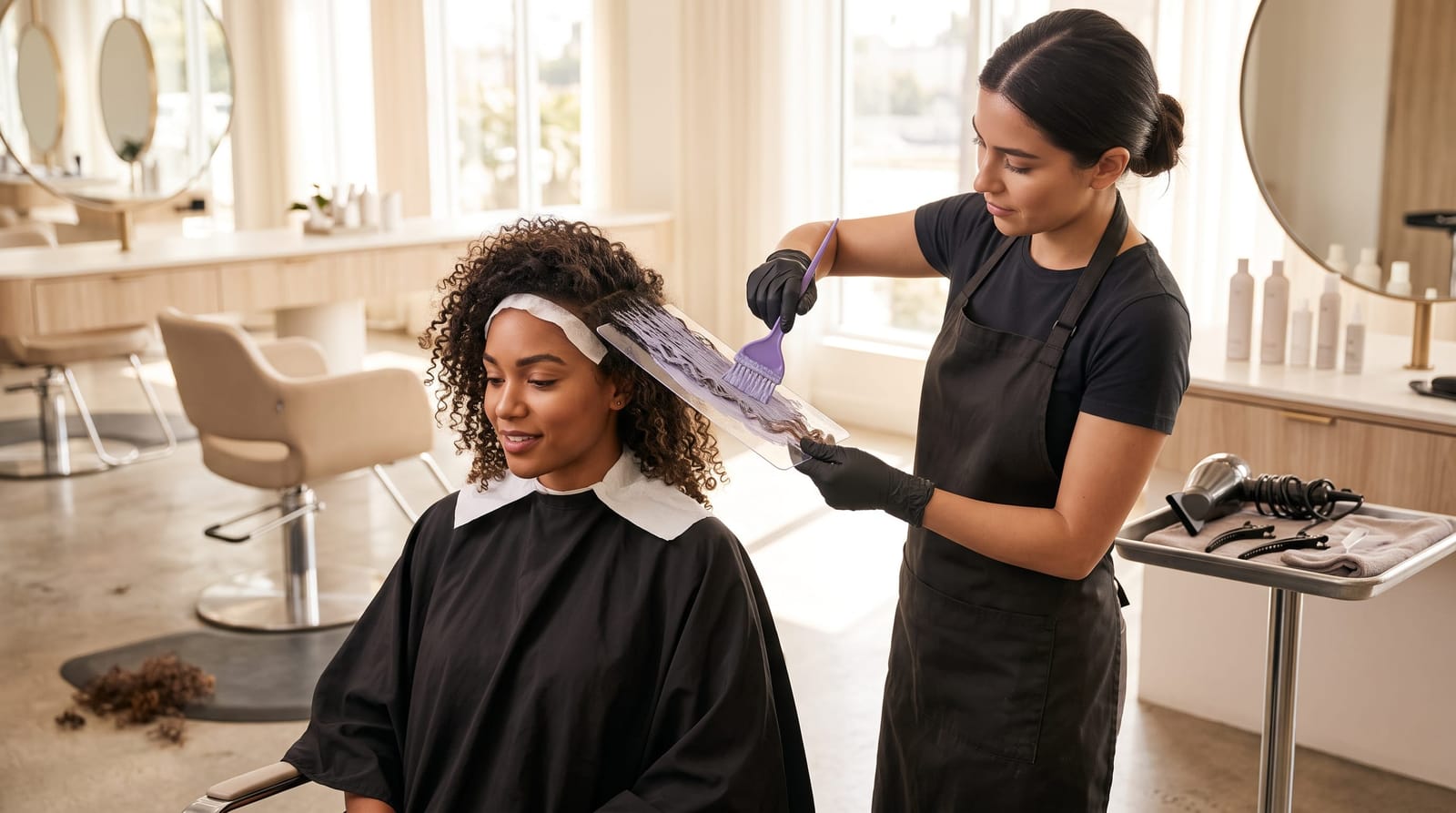
Balayage is one of the most popular and effective highlighting methods for curly hair. The technique involves hand-painting color directly onto sections of hair in a sweeping motion, which allows the colorist to follow the curl's natural path. This creates a soft, graduated result that looks dimensional and sun-kissed rather than striped or uniform. Because balayage is applied away from the root and feathered gently upward, it tends to produce less visible regrowth: a major plus for anyone who doesn't want to be back in the salon every six weeks.
Pintura Highlighting
Pintura is a technique specifically designed for curly and wavy hair. The name comes from the Spanish word for "painting," and that's exactly what it is: the colorist paints individual curls to highlight the most visible, light-catching parts of each spiral. Unlike foil methods that can disrupt the curl pattern, pintura works with each curl individually, giving the finished result an organic, natural look that enhances rather than flattens the texture.
Clouding
Clouding is a newer highlighting technique gaining recognition in the curly hair community. Rather than using a brush, the colorist applies color by scrunching the formula onto the hair using their hands: mimicking the way a curly-haired person would apply a styling product. This method distributes color in a way that complements curl groupings and creates a soft, diffused effect that looks effortlessly blended.
How a Curly Hair Specialist Approaches Color Differently
There's an important distinction between a general colorist and a colorist who also specializes in curly hair. The difference becomes especially apparent when it comes to technique selection, processing time, and aftercare guidance.
A curly hair specialist will typically assess your curl pattern, density, and porosity before selecting a highlighting approach. They'll consider how your curls behave when dry versus wet, where the hair naturally coils or spirals, and which areas catch the most light, because that's where highlights will have the greatest visual impact. They'll also apply highlights in a way that accounts for how much the hair will shrink once it's dry. Curly hair can shrink anywhere from 30% to 50% of its wet length, which means color placement must account for that shift to avoid results that look uneven or unexpected once fully styled.
At IlonaR Style, this dual expertise, as both a curly hair specialist and an experienced colorist, is central to how highlight services are approached. Rather than applying a one-size-fits-all technique, the process begins with understanding your specific curl type and what result will genuinely work for your texture and lifestyle.
Managing Damage Risk with Highlights on Curly Hair
One of the most common concerns about highlights on curly hair is the fear of damage: specifically, that bleach or color will weaken the hair and loosen the curl pattern. While any chemical service carries some level of change, the risk can be significantly minimized with the right approach.
A few practices make a meaningful difference:
- Bond-building treatments: Products like Olaplex or similar bond-protecting additives can be mixed into the lightener or applied as a treatment to help strengthen the hair's internal structure during the coloring process.
- Strategic placement: Avoiding heavy saturation at the root and keeping highlights to mid-lengths and ends reduces the amount of chemical contact near the scalp and more fragile sections of each strand.
- Toning instead of bleaching to the max: Rather than lifting hair to an extreme level, a skilled colorist will lift to a workable level and use a gloss or toner to refine the tone: reducing the amount of processing needed. If you're curious about how toning works alongside highlighting, understanding the bleach and tone process and what it does for the hair's final color is a helpful starting point.
- Post-color care: Using sulfate-free shampoos, deep conditioning masks, and leave-in moisture treatments at home keeps highlighted curls soft and defined between appointments.
Studies suggest that clients who use bond-protecting treatments during color services report up to 70% less breakage compared to those who don't, which speaks to the real value of these additions for curlier, more porous hair types.
What to Expect at Your Highlighting Appointment
If you're coming in for highlights on curly hair for the first time, here's a general sense of what the experience involves:
Most curly hair colorists prefer to see your hair in its natural, dry state at the start of the appointment. This allows them to observe how your curls fall, where the natural highlights and shadows already exist, and how the color should be placed to look most natural once your hair is styled. Some colorists will apply color to dry hair entirely; others may dampen sections slightly depending on the technique used.
Processing time varies depending on your starting color and desired result, but most highlight appointments on curly hair run between two and three hours. After rinsing, a toner is often applied to refine the shade and add shine. The appointment typically finishes with a curl-friendly styling routine so you can see the results as they'll actually look day-to-day.
Frequently Asked Questions
Will highlights damage my curl pattern permanently?
When highlights are applied using curl-appropriate techniques and proper care is taken during processing, most clients retain their curl pattern. The techniques that pose the greatest risk are those involving heavy all-over bleaching or repeated overlapping applications. A colorist experienced with curly hair will design a color plan that keeps your curls intact.
How often will I need to come back for touch-ups?
One of the advantages of balayage and pintura-style highlights on curly hair is that they grow out gradually and naturally. Most clients with curly hair return for refreshed highlights every three to five months, rather than every four to six weeks as is more common with traditional foil methods.
Can I get highlights if my curly hair has already been chemically treated?
This depends on your hair's current condition, what chemical services have been done, and how recently. A thorough consultation before your appointment is essential. A knowledgeable colorist will assess the hair's integrity and may recommend a strengthening treatment before any color is applied. Never attempt to combine multiple chemical services at home: always consult a professional.
What's the difference between highlights on straight hair versus curly hair?
The primary differences are technique, placement, and timing. Straight hair highlights are often applied in flat, uniform sections using foils. Curly hair highlights are placed with more consideration for the curl's movement, the way the hair shrinks when dry, and which sections are most visible within the curl pattern. The goal is always for highlights to look intentional and natural, not like an afterthought.
The Bottom Line on Highlights and Curly Hair
Highlights on curly hair aren't just possible: they can be one of the most flattering things you do for your look. When approached thoughtfully, they add dimension, warmth, and luminosity that makes curls look even more vibrant and alive. The key is working with a colorist who understands both color and curl: someone who knows that beautiful highlights on curly hair start with a personalized plan, not a one-size-fits-all formula. If you're ready to explore what highlights could do for your curls, a consultation is always the best first step.