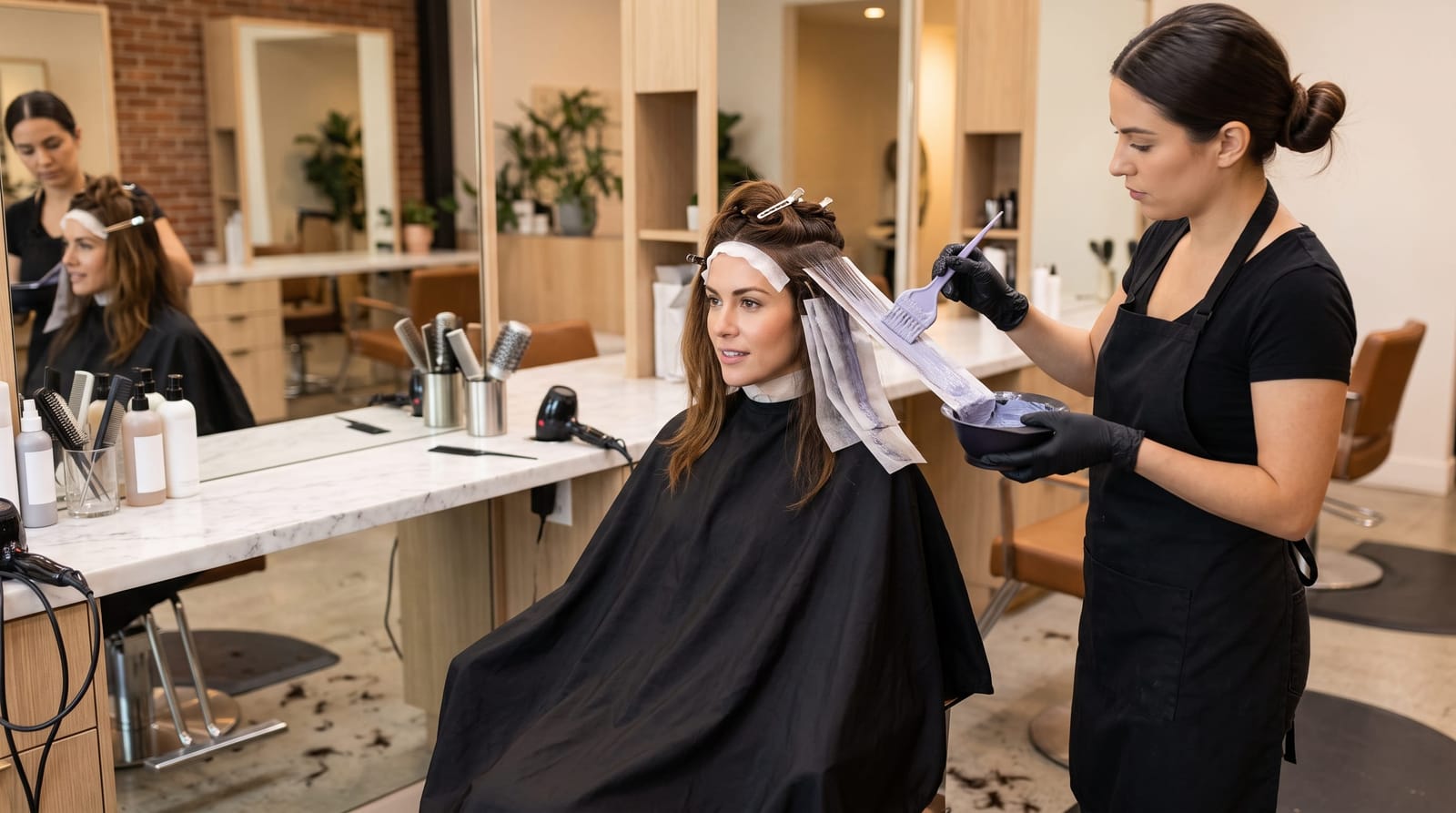
The Complete Guide to Hair Highlights: Balayage, Baby Lights, Foils & More in Los Angeles
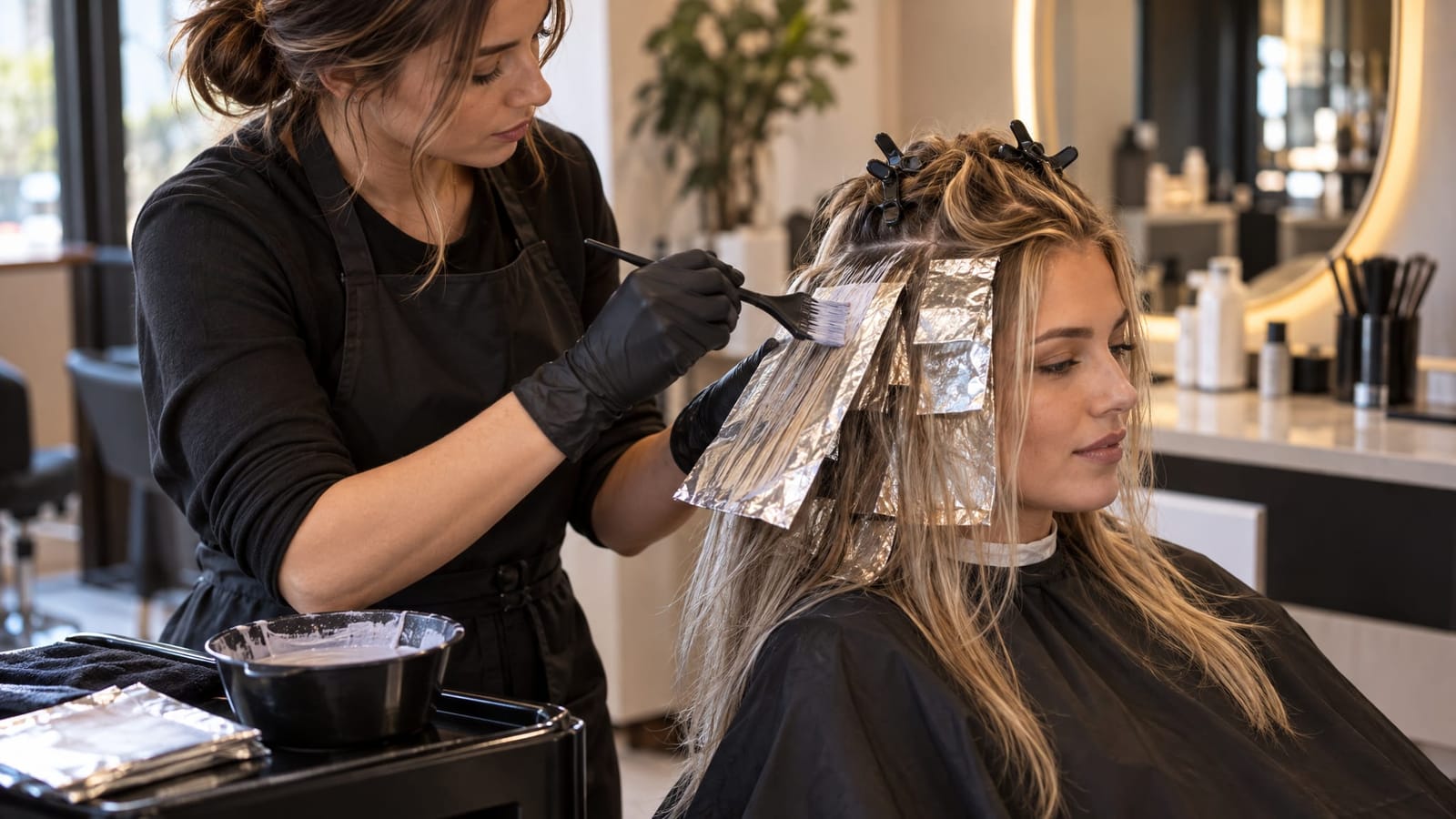
The best highlighting technique depends on where you want brightness, how much contrast you like, and how noticeable you want new growth to be. Partial highlights brighten selected areas. Full highlights distribute dimension throughout the hair. Baby lights create fine, delicate strands, while balayage uses hand-painted placement for a softer transition. Lowlights add darker strands when the hair needs depth rather than more lightness.
These options can also work together. A full highlight can use baby-fine sections, and a lighter color can include lowlights to keep it dimensional. Understanding those distinctions makes choosing a service much easier.
At IlonaR Style in Marina del Rey, we offer private, one-on-one hair services, including balayage, partial and full highlights, baby lights, combined highlight-and-color services, and toner or gloss. Here is how to compare the options and build a color plan around your hair and daily routine.
Hair Highlights and Lowlights: Start With the Difference
Highlights create lighter strands; lowlights create darker strands. Both add dimension, which is the visible interplay of light and shadow through the hair. Neither has to look striped or dramatic. The result depends on the contrast, section size, placement, and finishing shade.
Highlights can brighten a brunette base without making the whole head blonde. Lowlights can restore contrast when previously highlighted hair has become uniformly light. Together, they can create a balanced result with distinct ribbons of color.
Several different choices sit beneath the word “highlights”:
- Coverage: Partial or full describes how much of the head receives highlights.
- Section size: Baby lights use very fine sections; larger sections create more visible ribbons.
- Application: Foils and balayage describe ways of placing and processing color or lightener.
- Depth: Highlights add brightness, while lowlights introduce darker contrast.
- Finish: Toner or gloss adjusts the finished shade or shine.
This is why “full highlights versus balayage” is not always a direct comparison. One describes coverage, while the other describes application. A useful color plan addresses both.
Compare the Main Highlighting Options
Partial Highlights: Brightness Where It Shows Most
Partial highlights focus on selected areas rather than distributing lighter strands throughout the entire head. Placement commonly emphasizes the hairline, part, and upper layers, although the exact pattern depends on the desired look.
They are a practical choice when you like your overall depth but want more brightness around your face or through the visible surface. They can also refresh an existing highlight pattern without revisiting every section.
The tradeoff is coverage underneath. If you regularly wear your hair up, darker lower sections may be more noticeable. That contrast can be attractive, but it is different from an evenly highlighted effect throughout.
Choose this direction when: You want targeted brightness rather than a substantial change across your whole hairstyle.
Full Highlights: Dimension Throughout the Hair
Full highlights distribute lighter strands across the head, including areas beneath the top layers. This creates a more consistent pattern when the hair moves, changes part, or goes into an updo.
“Full” does not mean every strand is lightened. Natural or darker hair remains between the highlighted sections, and the result can be subtle or noticeably blonde depending on the placement and contrast.
Full coverage involves a broader scope of work than a partial service. It is particularly useful when the underneath feels disconnected from the top or when the goal is an overall lighter impression.
Choose this direction when: You want brightness visible from multiple angles, not only around the face and crown.
Foil Highlights: Controlled Placement and Separation
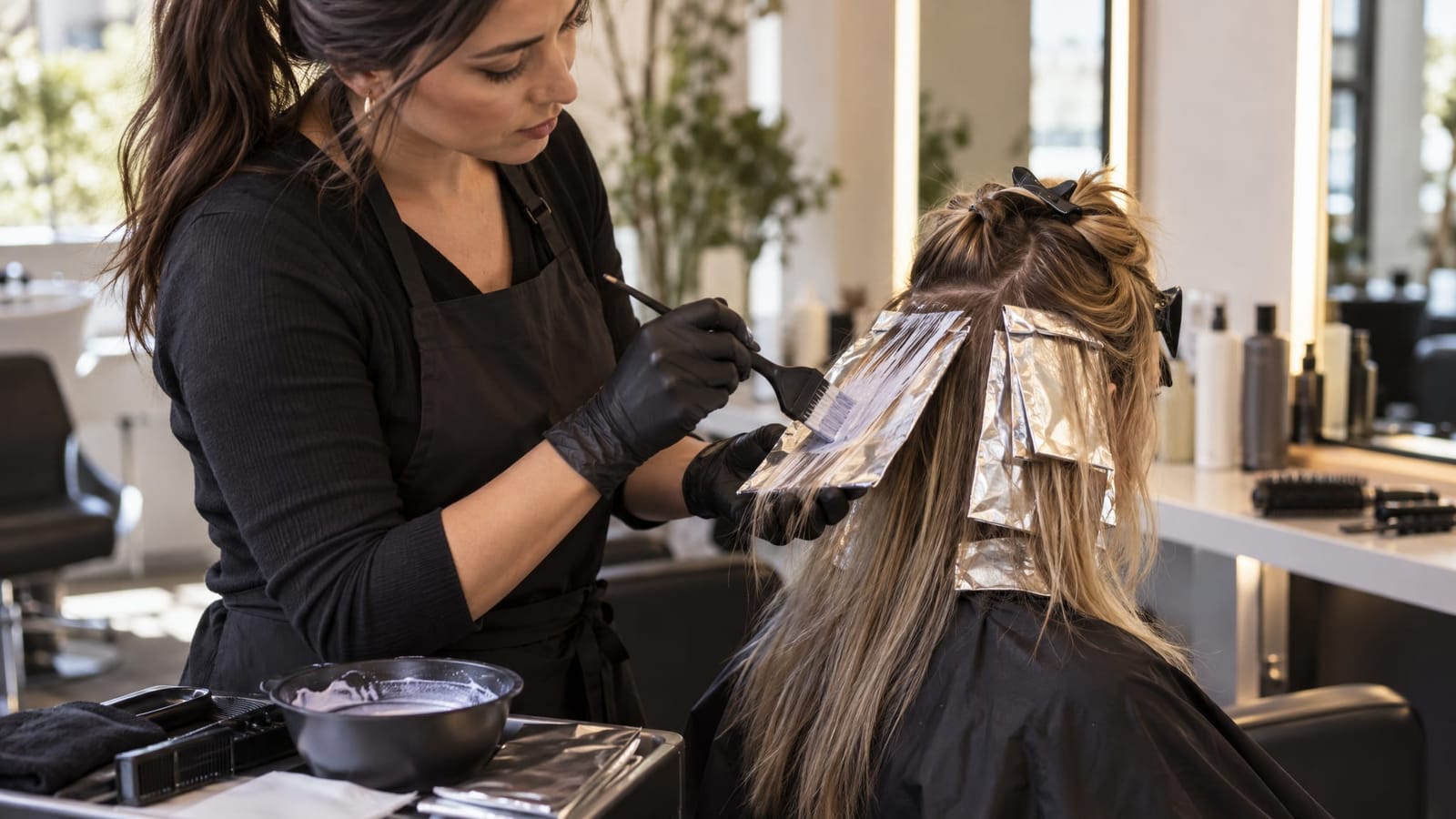
Foils separate selected strands from the surrounding hair during processing. They allow deliberate placement, including highlights that begin close to the roots and lighter pieces positioned through darker lengths.
Foils do not automatically create bold stripes. Fine sections with modest contrast can look soft, while larger sections create more pronounced ribbons. The sectioning pattern matters as much as the tool.
Root-close placement can make new growth more visible, especially when the highlighted shade is much lighter than the base. A softer root transition changes that maintenance picture.
Choose this direction when: You want precisely placed brightness, including near the roots, or a more defined highlight pattern.
Baby Lights: Fine, Delicate Dimension
Baby lights, also written as “babylights,” are very fine highlights designed to blend closely with the surrounding hair. They describe the size and delicacy of the sections, not a particular blonde shade.
On brunette hair, baby lights can add restrained warmth or brightness without creating obvious ribbons. On lighter hair, they can produce a finely blended effect. They can be placed through selected areas or across the whole head, often using foils.
The subtle appearance does not mean the service is simple. Numerous fine sections require detailed work. Maintenance also depends on how closely the color begins at the root and how much lighter it is than the base.
Choose this direction when: You prefer a refined blend over visibly separated pieces.
Balayage: Hand-Painted Brightness With a Softer Transition
Balayage uses hand-painted placement to create lighter areas through the hair. It is often associated with a softer transition near the roots and more brightness through the lengths and ends.
That placement makes it appealing when preserving some natural depth is part of the goal. It is not limited to blonde: brunette balayage can create subtle contrast without changing the overall impression of dark hair.
The tradeoff is that a soft, rooted result differs from strong brightness directly at the scalp. The word “balayage” also does not specify the final shade, so reference images remain important.
Choose this direction when: You want lighter lengths with a less obvious boundary between natural growth and colored hair.
Lowlights: Depth Without Adding More Brightness
Lowlights introduce darker strands among lighter ones. They are useful when highlighted hair has lost contrast or when the desired result is richer and less uniformly blonde.
For example, if the ends look like one solid pale color, adding more highlights may not create the dimension you want. Selective darker strands can make the remaining light pieces stand out more clearly.
Lowlights do not automatically correct brassiness in neighboring lighter strands. Adding depth and adjusting unwanted warmth are separate tasks, even when both belong in the same color plan. Their shade and placement also matter: too much darkness can overwhelm a delicate highlight pattern.
Choose this direction when: You like some of your existing brightness but want more contrast, richness, or visual separation.
Match the Technique to Your Starting Color and Texture
For Brunette Hair, Decide How Much Contrast You Want
A brunette can remain distinctly brunette with fine, low-contrast highlights or move toward a much lighter overall appearance with broader coverage. Those are different goals, even if both reference photos feature highlights.
Compare the amount of dark hair left between the lighter pieces. If that depth is what makes an image appealing, an evenly blonde result will not reproduce the same effect.
Previously colored lengths can also respond differently from untouched roots. Color history affects the route to the desired shade, not just the choice between foils and balayage.
For Already-Lightened Hair, Look for Missing Depth
When blonde hair feels flat, the answer is not always additional lightening. First distinguish between a tonal issue and a contrast issue.
- The shade looks too warm or too cool: Tonal refinement may address the concern.
- The hair looks uniformly pale: More depth between the lighter pieces may be useful.
- The roots feel disconnected from the lengths: Placement or a softer transition may be the priority.
This distinction helps avoid choosing a larger lightening service when the desired change is actually smaller and more specific.
For Curly and Wavy Hair, Follow the Visible Pattern
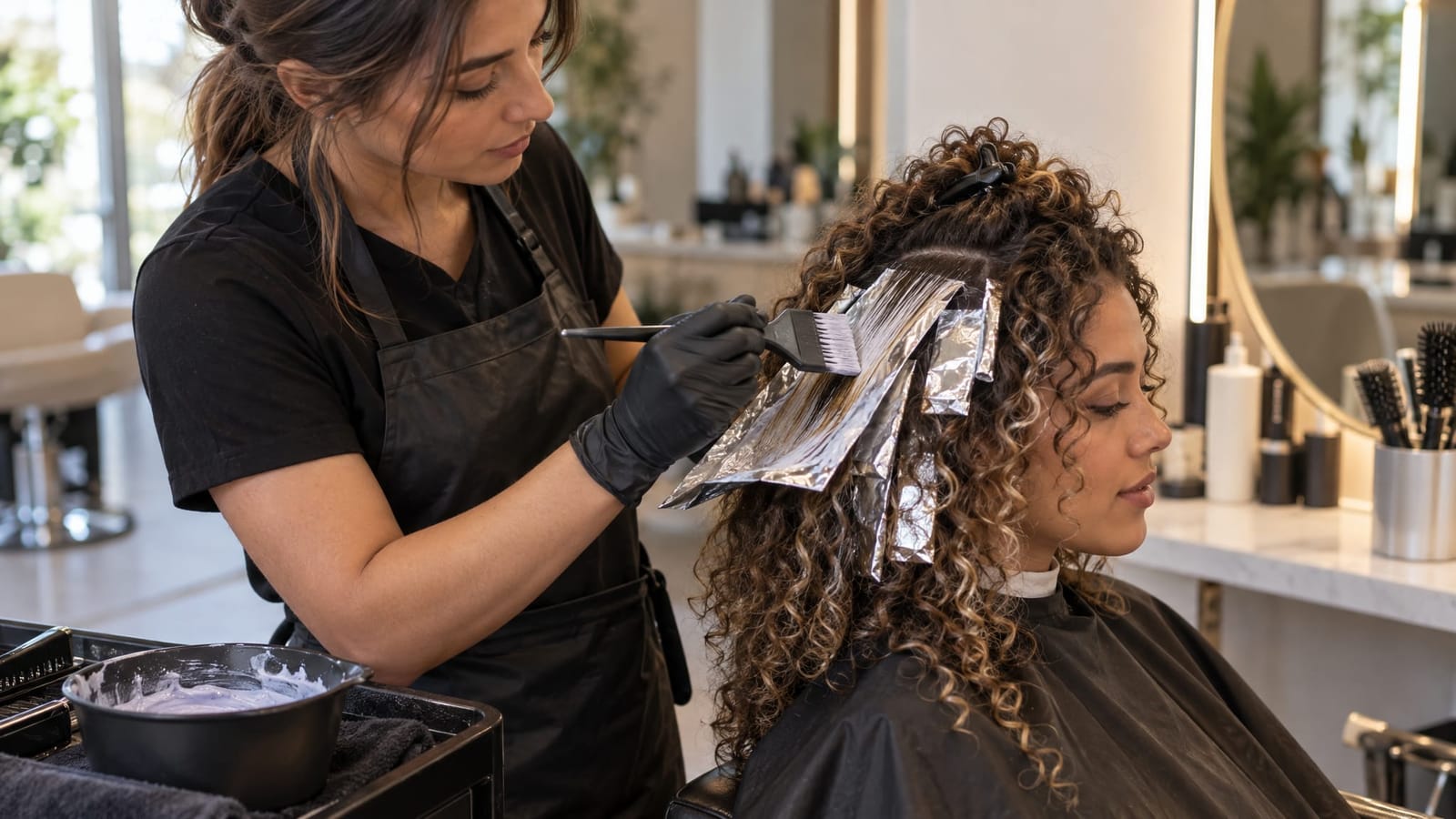
Curls change how highlighted sections appear. A fine piece can disappear inside a curl grouping, while a broader ribbon can become more visible as the curl turns toward the light.
Placement is easier to evaluate when the natural texture, usual part, and everyday styling are part of the conversation. Someone who wears defined curls most days may want a different pattern from someone who regularly wears a smooth blowout.
There is no single best technique for curly hair. The useful question is whether the placement makes the curl pattern readable without creating more contrast than desired.
For Fine or Dense Hair, Balance Section Size and Coverage
Fine sections can look delicate, but many closely spaced highlights can still produce an overall lighter effect. Leaving enough depth between them preserves separation. Color can create an impression of dimension, but it does not change the amount of hair present.
Dense hair presents a different decision: surface brightness may look lovely worn down, while darker interior sections become visible in movement or an updo. That makes everyday styling especially relevant to the partial-versus-full choice.
For Gray Blending, Separate Softening From Coverage
Highlights can soften the contrast between gray strands and a darker base, but blending gray is not the same as covering it with base color.
If the goal is less noticeable contrast rather than complete coverage, strategic brightness may fit the look. If the goal is a more uniform base with lighter dimension added afterward, a combined color-and-highlight service addresses a different need.
When Highlights, Base Color, Toner, and Gloss Work Together
Each part of a combined service has a separate job. Base color changes the background shade. Highlights add lighter dimension within it. At IlonaR Style, we offer both partial highlights with color and full highlights with color.
For example, a brunette wanting a richer overall shade and brighter face-framing pieces has two goals: adjusting the base and adding lightness. Highlights alone would not address both.
Toner Refines the Shade After Lightening
Lightening creates brightness, but it does not always leave the desired finished tone. Toner refines that shade, including adjusting unwanted warmth or guiding the result toward a warmer, cooler, or more neutral appearance.
Toner is not a substitute for additional lightening when the desired result is substantially lighter. It changes the tonal finish rather than replacing the highlighting process.
Gloss Can Add Shine and Refine Color
Gloss treatments can be clear or tinted. A tinted gloss can refine color as well as enhance the appearance of shine.
“Toner” and “gloss” are not always mutually exclusive labels. A tinted gloss may perform a toning function. The useful distinction is the intended result: refining warmth, refreshing faded color, or emphasizing shine.
Neither service moves an existing highlight pattern. If brightness is missing around the face, changing tone alone will not add lighter strands there.
Maintenance: Separate Root Growth From Fading Tone
There are two main maintenance timelines to consider: when the placement needs refreshing and when the finished shade needs attention. They do not necessarily arrive together.
Root Contrast Determines How Noticeable Growth Looks
Highlights that begin close to the scalp and contrast strongly with the base tend to show new growth more clearly. Softly blended placement that preserves natural depth usually creates a less defined boundary.
This is why balayage often allows longer gaps between major lightening services than a high-contrast, root-close pattern. Baby lights can also grow out softly, but the name alone does not make them low-maintenance. Their starting point and shade still matter.
Tone Can Need Refreshing Before Placement Does
You may still like where the highlights sit while wanting the blonde to look less warm or the brunette dimension to look richer. A tonal refresh addresses a different concern from moving brightness closer to the roots.
Similarly, a partial refresh can address selected areas when the rest of the pattern still works. A full highlight does not automatically need repeating at every color visit.
Define Low-Maintenance in Practical Terms
- Fewer major lightening appointments: Favor a softer transition that leaves some natural root depth.
- Consistent brightness near the scalp: Expect placement to need attention sooner as the hair grows.
- A very specific blonde tone: Account for tonal refreshes separately from highlight placement.
- Less change to the overall color: Consider targeted brightness instead of broad lightening.
A useful maintenance plan identifies what is likely to need attention first: roots, face-framing pieces, tone, or overall coverage.
Cost Comparisons: Compare the Whole Color Plan
Service names alone do not provide a meaningful cost comparison. Coverage, sectioning detail, hair length and density, existing color, and the desired amount of change all affect the scope of the work.
| Comparison | What changes the work involved |
|---|---|
| Partial versus full highlights | Full coverage involves more areas of the head. A partial service focuses the work on selected sections. |
| Baby lights versus larger sections | Very fine sectioning can require detailed placement, even when the finished result looks understated. |
| Foils versus balayage | Neither label automatically means a simpler service. The starting color and desired brightness affect the work required. |
| Highlights alone versus highlights with color | Changing the base shade adds a separate task to creating lighter dimension. |
| A refresh versus a substantial change | Maintaining an established pattern differs from changing the overall shade or working through previous color. |
Compare the complete service scope, including whether tonal finishing or base color is part of the plan. A highlighting service and a combined color, highlight, and toner service are not equivalent simply because both produce lighter pieces.
Ongoing upkeep matters too. Softer placement may reduce how often the highlights need repositioning, while a particular tone may still need refreshing between those visits. Less frequent lightening does not necessarily mean no maintenance.
What to Bring to a Color Consultation
A useful consultation connects the desired look with the starting hair and the maintenance routine. These details make that conversation more precise:
- Reference images with specific notes: Identify whether you like the root depth, face-framing brightness, tone, or overall contrast.
- A clear dislike: “I do not want bright ends” is more informative than “I want something natural.”
- Your color history: Include previous lightening, darker color, and at-home coloring, even when the visible shade has faded.
- Your everyday styling: Mention your usual part and whether you wear curls, straight styles, ponytails, or updos.
- Your maintenance preference: Distinguish between wanting fewer appointments and wanting minimal visible root growth. Those goals can call for different placement.
- Your main priority: More brightness, softer gray contrast, restored depth, and a different tone are separate starting points.
A reference photo is most useful as a description of preferences, not a promise of an identical outcome. Differences in starting color, previous processing, texture, and styling all influence how the same pattern appears.
Everyday Care for Highlighted Hair
Home care supports the feel and appearance of the finished color. A straightforward routine is more useful than collecting products that address different goals.
- Choose cleansing and conditioning products intended for color-treated hair. Match the conditioning level to how your lengths feel rather than assuming every highlighted head needs the richest formula.
- Use heat thoughtfully. A heat protectant used according to its label and avoiding unnecessary repeated passes can help limit styling wear.
- Treat purple or blue shampoo as a tonal product. These shampoos deposit pigment to counter certain warm tones; they do not lighten hair or replace every cleansing product.
- Notice what has changed before choosing the next service. Faded tone, darker roots, and ends that feel rough are different concerns.
If the color still has the right brightness but the shade looks different, that is a tonal question. More lightening is not automatically the answer.
Deep Dive Topics
For a closer comparison of individual service choices, explore these related guides:
- Partial Highlights vs Full Highlights: Which Is Right for You? focuses on coverage, including the difference between targeted brightness and dimension throughout the hair.
- What Are Baby Lights? The Natural-Looking Highlight Technique Explained explores fine-section highlighting and the softly blended appearance it creates.
- Highlights and Color Together: How Combining Services Creates the Perfect Look explains the separate roles of base color and lighter dimension.
- Toner vs Gloss: Which Finishing Treatment Does Your Hair Need? looks more closely at tonal refinement, shine, and the overlap between these finishing services.
The Best Choice Is a Plan, Not Just a Technique
A well-matched highlight plan answers four questions: where the brightness belongs, how much depth remains, what finished tone suits the goal, and how the color will grow out. Partial highlights, full highlights, baby lights, foils, balayage, and lowlights are tools for shaping those decisions. The most useful choice is the combination that looks intentional with your natural texture, everyday styling, and preferred level of upkeep.