What Is Bleach and Tone? The Secret to Bright, Even Blonde Hair
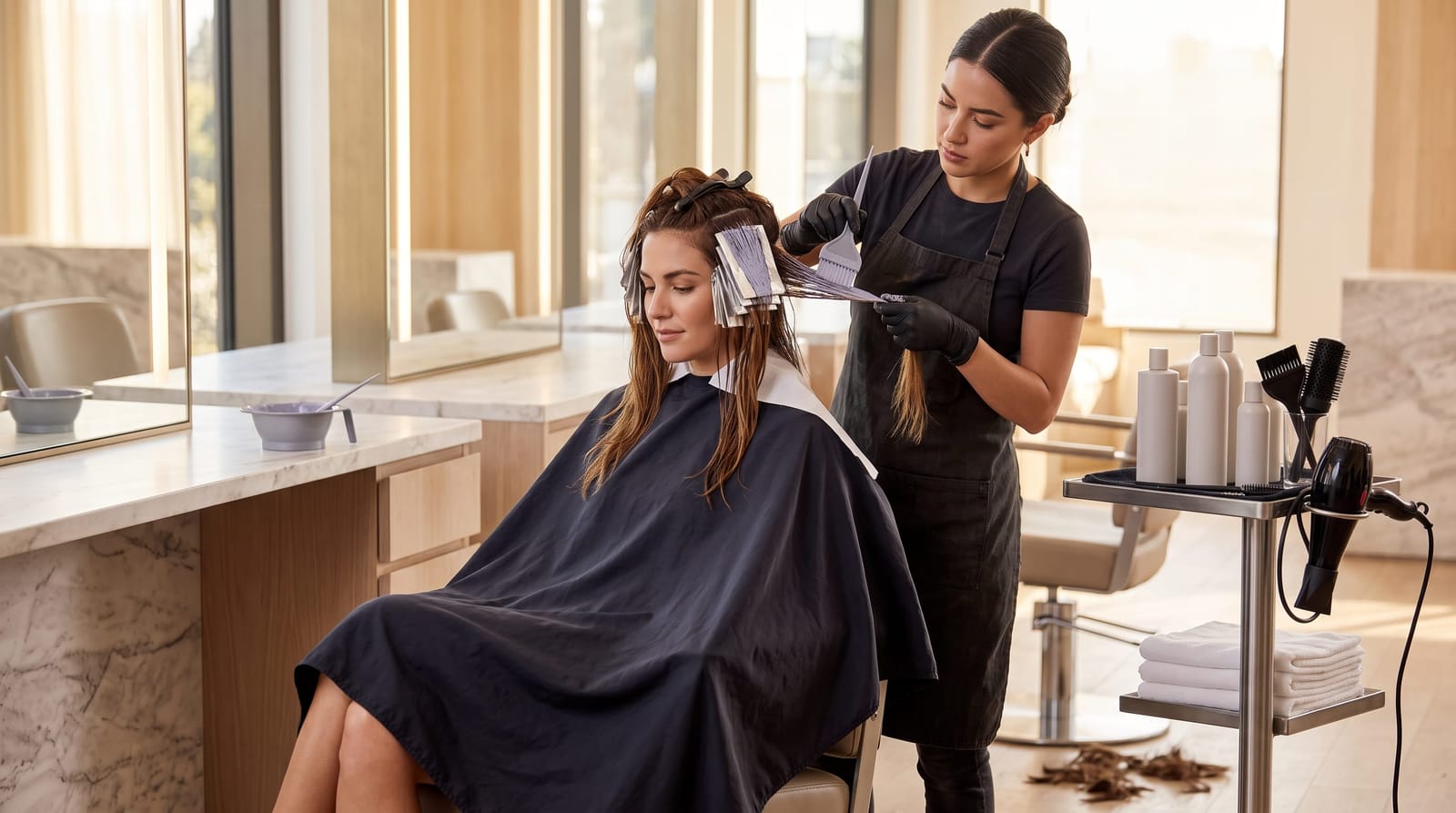
Bleach and tone is a two-part salon color service: lightener removes pigment from the hair, then toner refines the resulting shade. It is often chosen for an all-over blonde look rather than the ribbons of light and dark created by highlights or balayage.
For anyone considering a dark to light hair transformation, the important distinction is coverage. Bleach and tone aims for a broadly consistent blonde foundation, but “even” does not mean every starting color can become platinum in one appointment. Your existing color, previous services, and the condition of your hair help determine what is realistic.
What Do Bleach and Toner Each Do?
The lightening stage creates the foundation. As dark hair lightens, warmer underlying tones become visible before a lighter blonde base is reached. Hair.com’s overview of the stages of lightening dark hair explains this progression. It helps explain why the color visible during processing is not necessarily the intended finished shade.
Toner then adjusts that foundation toward the desired finish, for example, a softer beige, golden blonde, or cooler-looking blonde. It can help balance unwanted warmth, but it does not replace the lightening needed to reach a pale result. Hair that has not lifted sufficiently cannot simply be toned into an icy blonde.
“Bleach and tone” describes the service approach, not one particular shade. An all-over blonde can be warm, neutral, or cool, depending on the base achieved and the finish selected.
Who Is Bleach and Tone Designed For?
This service may suit someone who wants blonde to be the main background color of their hair, rather than an accent woven through a darker base. It is especially relevant when the goal is a solid-looking blonde through the parting, crown, and lengths.
It may be worth discussing if:
- You prefer a consistent blonde appearance over a strongly dimensional result.
- You want substantial brightness, not just lighter pieces around the face.
- You are comfortable with visible contrast as darker roots grow in.
- You can accommodate ongoing salon maintenance rather than expecting a low-upkeep transformation.
It may be less aligned with your preferences if soft grow-out is the priority. Keeping some natural depth through highlights or balayage can offer a different balance between brightness and maintenance.
Previously colored hair also needs a more individualized assessment. Dark dye, older highlights, and uneven color history can make an all-over blonde plan more complex than lightening an uncolored starting base.
What Happens During a Bleach and Tone Appointment?
Consultation and color-history review
The consultation establishes both the desired blonde and a realistic starting point. Useful details include previous permanent color, at-home dye, lightening services, and smoothing treatments, even when they happened some time ago.
Reference photos are most useful when you explain what you like: the brightness, the warmth, the absence of dark pieces, or the softer root. A photo alone cannot show how that person’s color was achieved.
A stylist may recommend a strand test to help assess how a small section responds. That information can guide the plan, though it is not a guarantee of an identical result across every section.
Lightening the hair
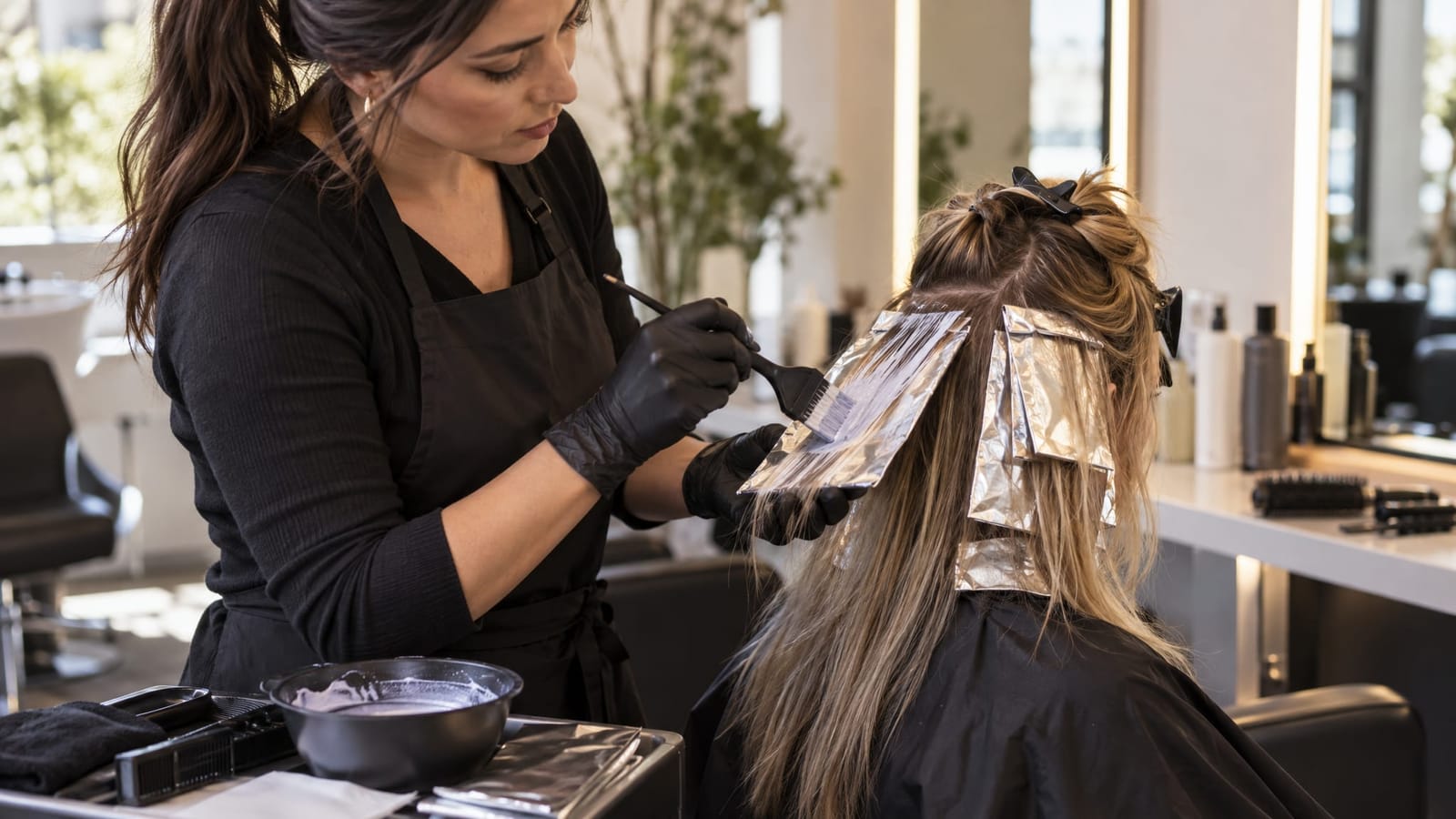
The stylist plans the application around differences between roots, lengths, and previously processed areas. Those areas may not begin at the same color or respond alike, so an even result requires more than applying one formula everywhere.
The desired endpoint also matters. A warmer blonde and a very pale, cool blonde require different foundations. Processing decisions depend on the hair’s response, not simply on the reference photo.
Toning and reviewing the finish
Once the lightening stage is complete and the hair is rinsed, toner refines the shade. The finished color is then assessed, along with the plan for maintenance or another appointment.
If the target is not achievable in that visit, a wearable intermediate shade may be part of the transition. Clementine’s guide to going from dark hair to blonde emphasizes planning around the starting color and hair condition. Multiple sessions may be needed; a consultation helps clarify the possibilities rather than promise a fixed outcome.
How Does It Differ From Highlights or Balayage?
The clearest comparison is where the lightness goes and how much darker hair remains.
- Bleach and tone: Generally aims for an all-over blonde foundation. It offers broad brightness, with more noticeable regrowth when the natural base is dark.
- Foil highlights: Lighten selected sections while leaving other hair darker. Fine or closely placed highlights can create considerable brightness while retaining some dimension.
- Balayage: Uses painted placement to create selected areas of brightness, often with more depth near the roots. It is a placement technique, not a guarantee of a particular blonde shade.
Toner is not exclusive to bleach and tone. Highlights and balayage may also include toning to refine the lightened sections.
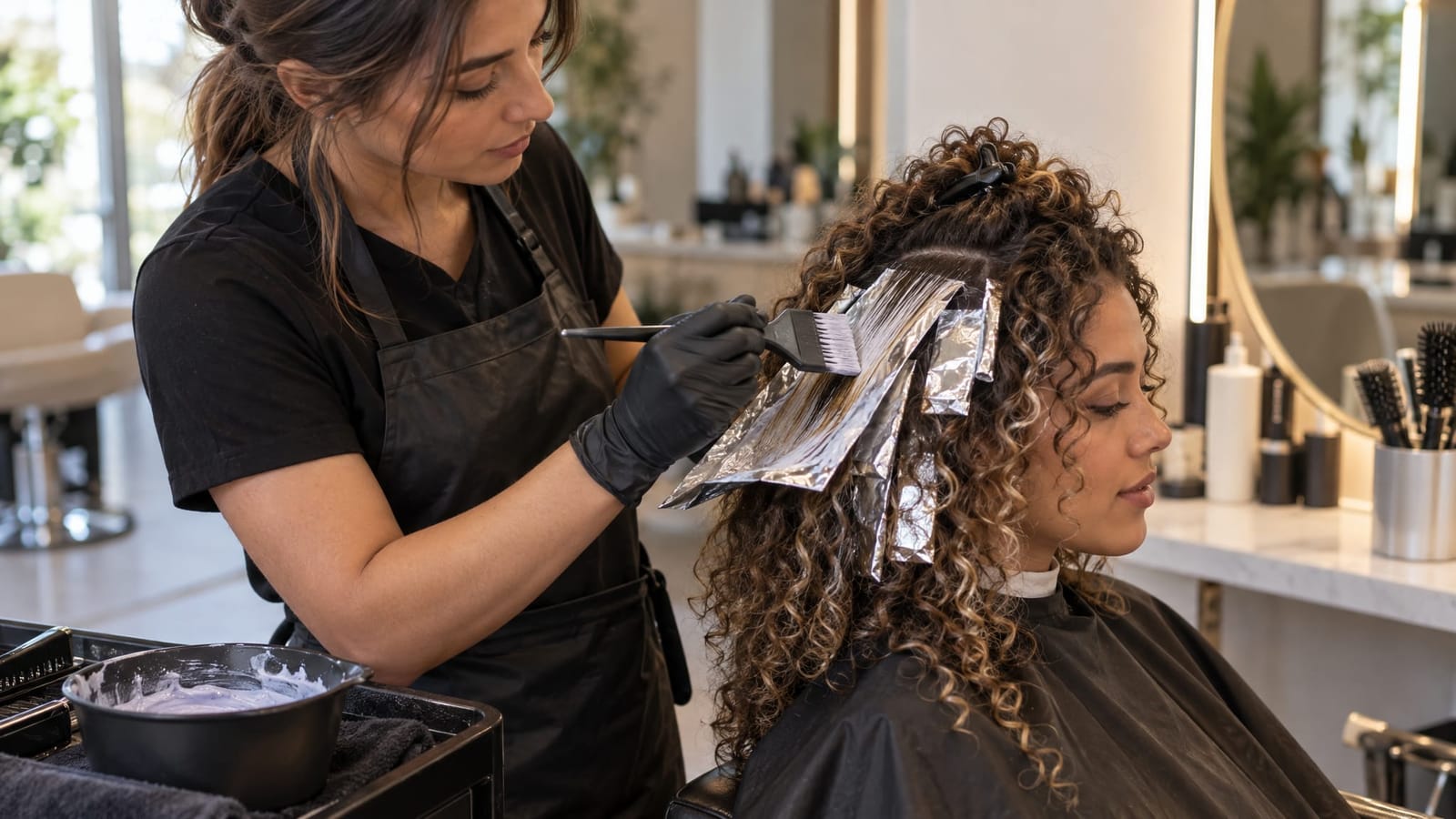
For a hypothetical example, someone wanting blonde throughout the crown and lengths might explore bleach and tone. Someone wanting brighter ends while keeping a darker root may prefer balayage. If curl definition and placement are central to your decision, this guide to highlights on curly hair explores that option in more detail.
What Maintenance Can You Expect?
An all-over blonde usually makes dark regrowth more apparent than a blended-root look. Tonal upkeep and root lightening are also separate needs: refreshing the blonde’s shade does not remove newly grown natural pigment.
Rather than relying on a universal appointment schedule, discuss these practical questions with your colorist:
- How much root contrast are you comfortable seeing?
- Would a softly shaded root suit your goal better than blonde directly from the scalp?
- What home-care routine fits the finished shade and your styling habits?
- How will existing lightened lengths be treated differently from new growth?
For an individualized color plan, consult a licensed hairstylist. This overview explains service choices rather than providing an at-home bleaching procedure.
Frequently Asked Questions
Can dark brown hair become blonde in one appointment?
Sometimes, but not every blonde goal is achievable in one visit. Previously applied color, uneven starting shades, and the hair’s response can make a staged transition more appropriate. Avoid treating a single appointment as a promised finish line.
Does bleach and tone always mean platinum?
No. It can create several blonde directions, including golden, beige, and cooler shades. Platinum is one possible goal, not the definition of the service.
Is purple shampoo a substitute for toner?
No. Purple shampoo can help temper yellow-looking warmth in some blonde hair, but it does not lighten dark roots or correct an uneven foundation. Its suitability depends on the blonde you want to maintain.
Choosing Your Blonde Direction
Bleach and tone is worth exploring when an all-over blonde matters more to you than retaining natural depth. Within the broader choice of highlights, balayage, and full lightening, the best fit depends on both the finish you want and the grow-out you are comfortable with.
For a personalized discussion, ask IlonaR Style about a color consultation and bring photos of both your ideal blonde and an intermediate shade you would feel comfortable wearing.