Balayage vs. Highlights: Which Technique Is Right for You?
When you're exploring options for a fresh hair color transformation, two techniques come up in almost every conversation: balayage and highlights. Both can beautifully brighten your look, but they work in fundamentally different ways, and understanding those differences before your appointment makes all the difference in getting exactly the result you want. As part of our complete guide to balayage hair color, this post breaks down balayage hair color versus traditional highlights side by side, so you can walk into the salon with clarity and confidence about which service truly fits your lifestyle, hair type, and goals.
How Each Technique Is Applied
The most fundamental difference between balayage and highlights lies in how the color is physically applied to your hair, and that single distinction shapes everything else about your results.
The Balayage Application Method
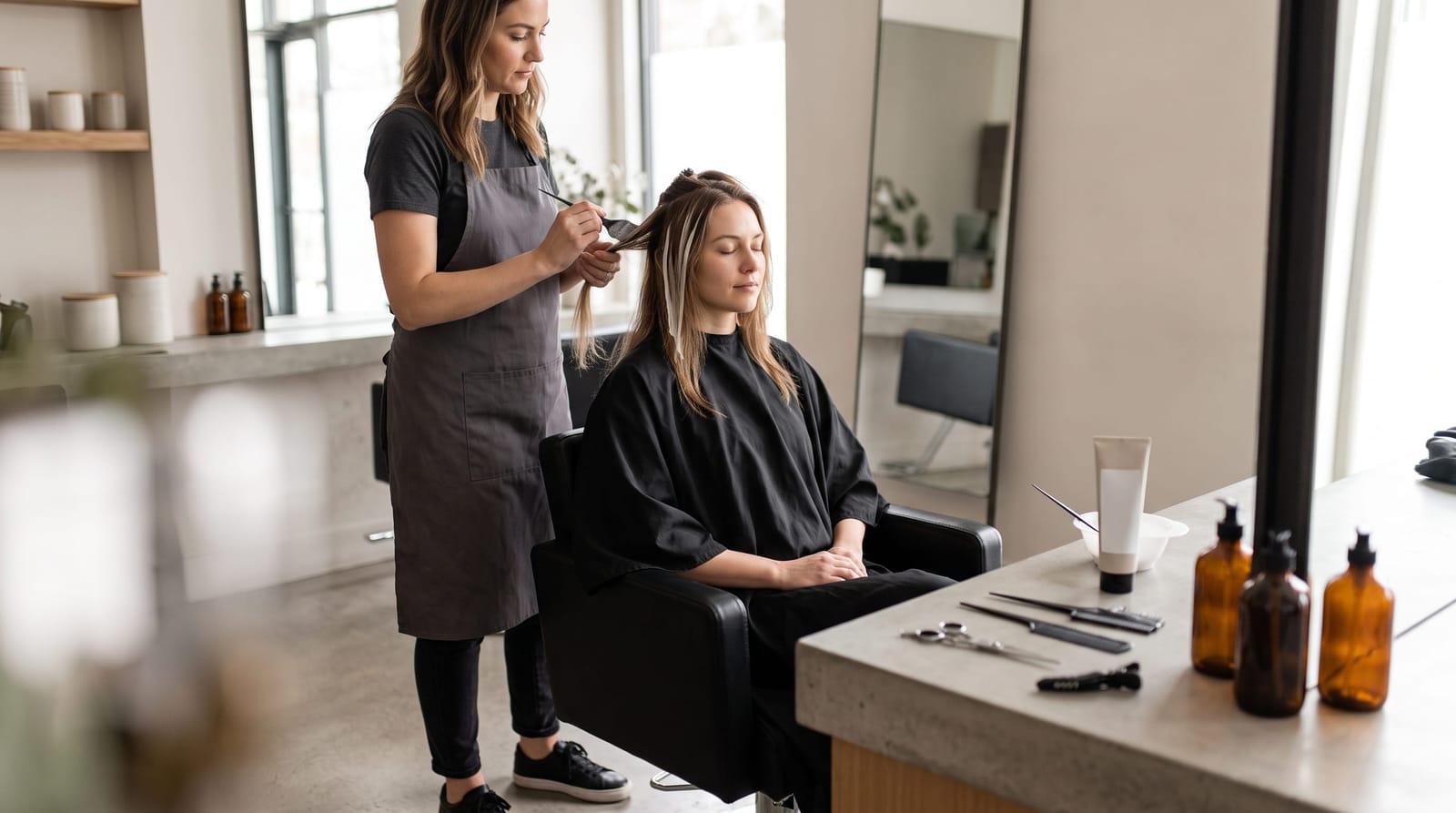
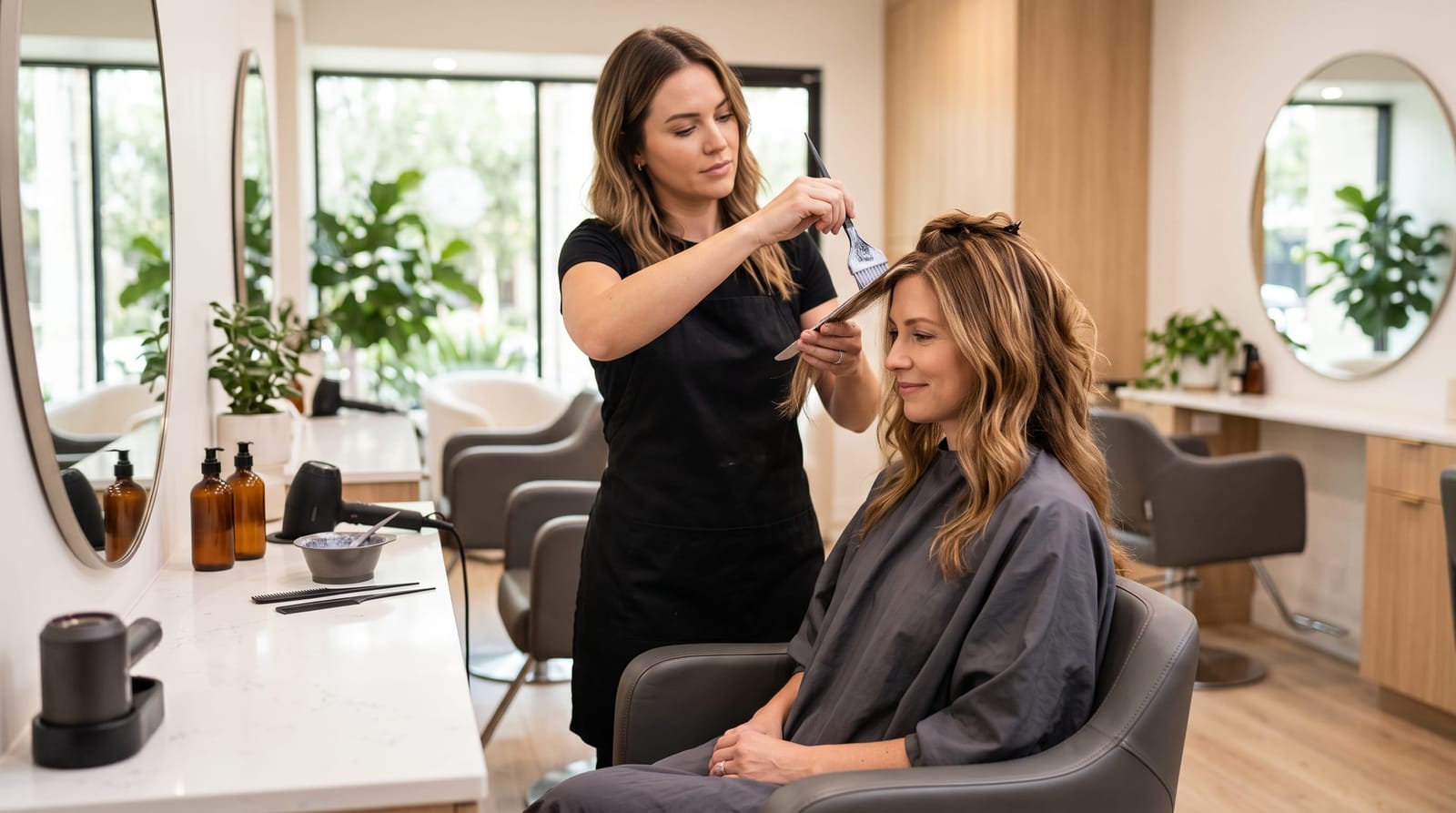
Balayage (pronounced bah-lee-AHZH) comes from the French word meaning "to sweep." That name perfectly describes the technique: a colorist hand-paints lightener or color directly onto sections of your hair in sweeping, feathered strokes. No foils. No rigid sectioning grids. The color is worked freehand, with varying saturation, heavier toward the ends, lighter at the roots, to mimic the way sunlight naturally brightens hair over time. This artistic, painterly method gives the colorist tremendous creative control, allowing them to place highlights exactly where they'll complement your face shape, skin tone, and natural hair movement.
The Traditional Highlights Application Method
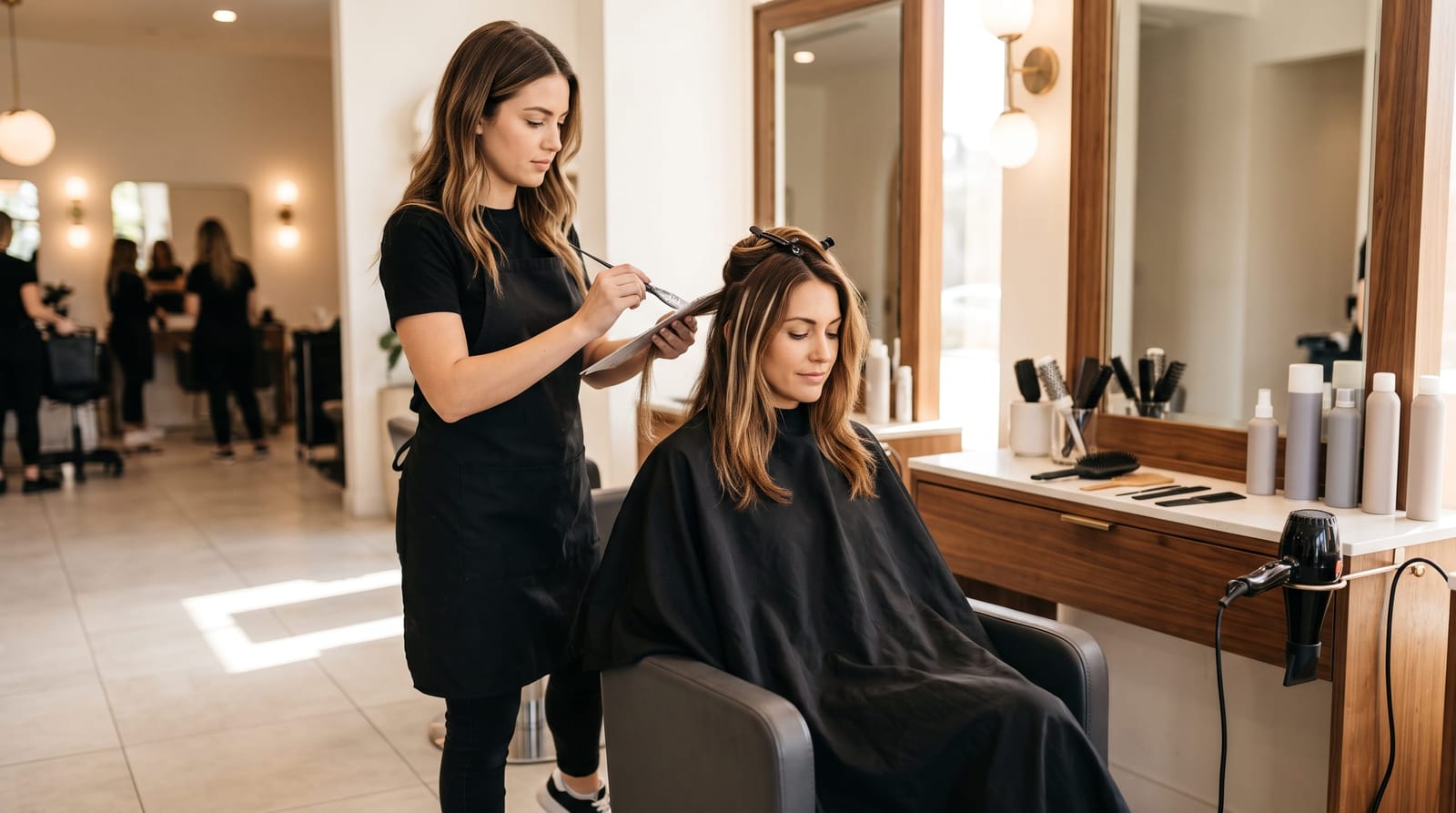
Traditional highlights rely on a foil system. Your colorist sections the hair precisely, weaves out fine or chunky pieces, applies lightener or color to those sections, and folds them into aluminum foils to isolate them from the surrounding hair. The foils create heat, which accelerates the lightening process. Because the sections are isolated from root to tip, traditional highlights produce a more uniform, consistent lift from top to bottom. The result is a defined, deliberate contrast: brighter, bolder, and more structured than balayage.
In short: balayage is freehand painting, highlights are foil-based sectioning. Both are effective: they simply create different visual outcomes.
The Look Each Technique Delivers
Because the application methods differ so significantly, so do the finished results. Understanding the aesthetic difference helps you choose the look that resonates with your personal style.
Balayage: Sun-Kissed and Dimensional
Balayage is designed to look natural, like your hair has been gently kissed by summer sun. The color concentrates at the mid-lengths and ends, with a soft, blended transition at the root. There are no harsh lines where the color begins or ends. The effect is warm, organic, and dimensional, giving hair depth and movement without looking "done." This is especially flattering for women in the 35-55 range who want their color to enhance their features rather than announce itself.
Highlights: Bold, Bright, and Defined
Traditional highlights create a more structured look. Because lightener is applied from root to tip within each foil section, you get brighter, more uniform strands throughout. The contrast between highlighted and natural sections is more visible and dramatic. This can create beautiful brightness and volume, particularly on women with darker base colors who want a noticeable, high-contrast effect. Fine highlights throughout the whole head can also create an all-over brightening effect that balayage typically doesn't replicate.
According to professional colorists, approximately 70% of clients requesting a "natural-looking" color result are better suited to balayage, while clients requesting maximum brightness or full-coverage lightness often achieve better results with foil highlights or a combination approach.
Maintenance, Grow-Out, and Upkeep Frequency
For the busy professional woman who wants beautiful hair without a demanding salon schedule, maintenance is often the deciding factor between these two techniques.
How Balayage Grows Out
One of balayage's most celebrated advantages is its graceful grow-out. Because the color begins below the root rather than directly at the scalp, there's no hard regrowth line as your natural hair grows in. The blended transition simply softens further over time. Most clients find they can go 12 to 16 weeks, and sometimes longer, between balayage appointments without the color looking grown out or neglected. For women who prefer a low-maintenance schedule, this is a significant lifestyle benefit. You can explore more about timing expectations in our post on how long does balayage last between appointments.
How Highlights Grow Out
Traditional highlights, because they begin at the root, create a visible line of demarcation as your natural hair grows in. Most clients with highlights schedule touch-up appointments every 6 to 8 weeks to keep that regrowth line from becoming noticeable. For women who love a crisp, bright, freshly done look, that schedule works perfectly. For those with busier lives or tighter schedules, the more frequent commitment can feel like a lot.
The upkeep difference is real: balayage clients typically visit the salon 3 to 4 times per year for color, while traditional highlight clients average 6 to 8 appointments annually. Over the course of a year, that's a meaningful difference in both time and investment.
How Each Technique Works Across Different Hair Types and Base Colors
Not every technique suits every hair situation equally well, and your existing base color and hair texture play a significant role in which service will give you the best result.
Balayage by Base Color
Balayage is exceptionally versatile across a range of natural base colors. On light to medium brunettes, it creates a beautiful caramel-to-golden dimension. On darker brunettes and black hair, a skilled colorist can achieve rich, warm contrast, though deeper bases may require multiple sessions to reach lighter blonde tones safely. On women with naturally lighter hair or existing blonde, balayage refreshes and brightens with ease. It also integrates gracefully with gray hair, which is worth exploring in our post on professional gray hair color and how to blend it beautifully.
Highlights by Base Color and Texture
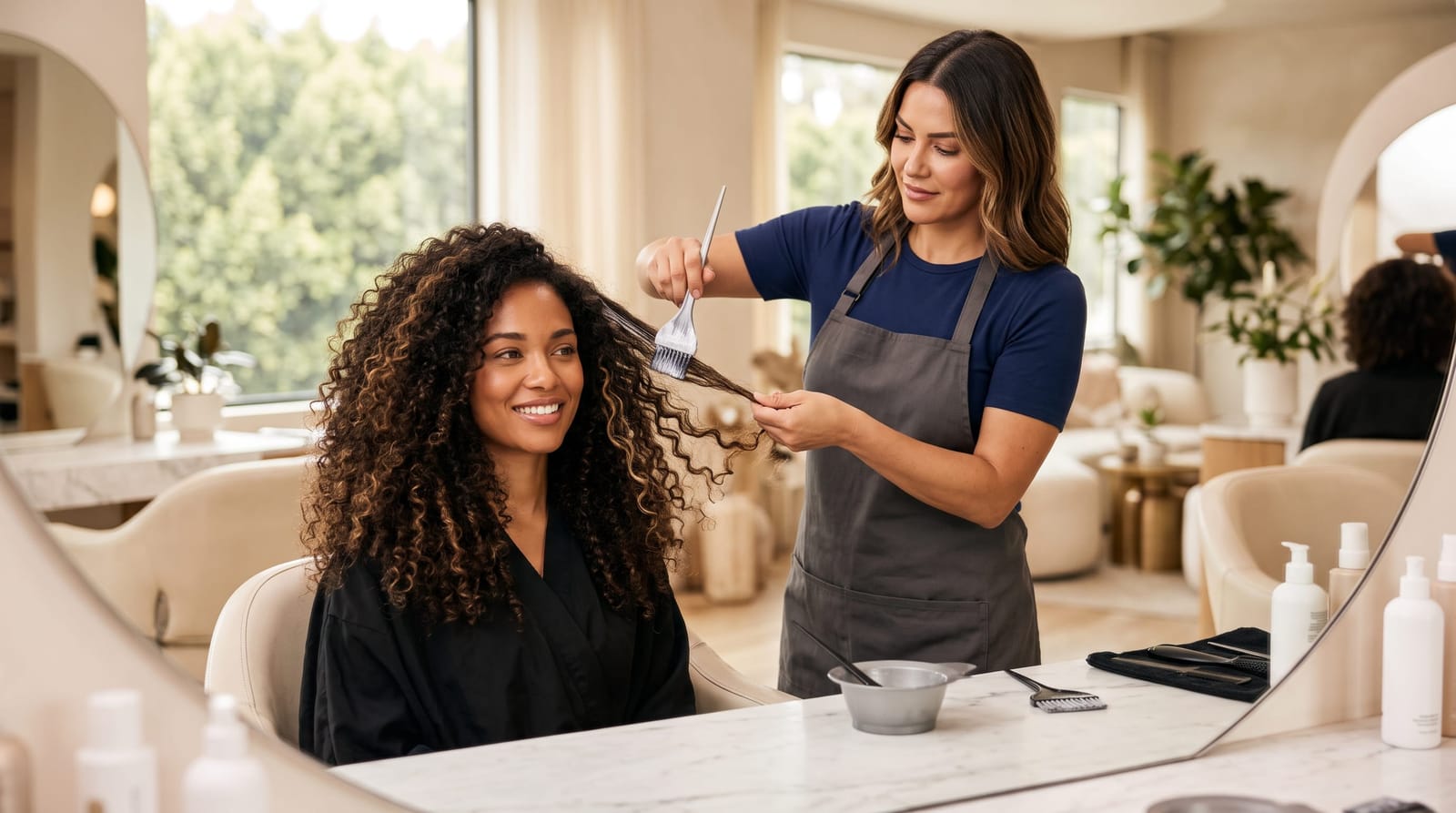
Traditional highlights can achieve significant lightness lift in a single session because the foil heat accelerates the process. This makes them a strong choice for women with darker bases who want dramatic brightness quickly. On fine hair, highlights can create the illusion of volume and fullness. On thick or coarse hair, they add texture and dimension. However, on very curly or highly textured hair, foil highlights can sometimes produce less predictable placement, which is why many curly-haired clients prefer balayage. If you have natural curl or wave, our post on balayage curly hair goes into wonderful detail on what to expect.
Which Look Are You Chasing? A Side-by-Side Summary
Sometimes the clearest way to make a decision is to see the key comparison points laid out directly. Here's a practical summary to guide your thinking:
- Balayage delivers: A soft, sun-kissed, natural-looking result with minimal root contrast and a graceful grow-out. Best for women who want dimension, warmth, and low-maintenance color.
- Traditional highlights deliver: A brighter, more uniform, higher-contrast result with consistent lightness from root to tip. Best for women who want bold brightness or a more structured, polished color.
- Balayage maintenance: Touch-ups every 12-16+ weeks. Fewer annual appointments. Easier, more flexible schedule.
- Highlights maintenance: Touch-ups every 6-8 weeks. More frequent appointments for a consistently fresh look.
- Balayage works best on: All base colors; especially flattering for women seeking natural, blended, or lived-in color. Excellent for wavy and curly textures.
- Highlights work best on: Women wanting maximum brightness or uniform coverage. Particularly effective for fine hair needing volume and lift.
- Grow-out appearance: Balayage grows out softly and naturally. Highlights show a visible root line that requires more timely maintenance.
It's also worth noting that these two techniques aren't mutually exclusive. Many talented colorists, including our specialists at IlonaR Style, combine both methods to create customized, layered results that take advantage of the strengths of each. A balayage base with strategic foil highlights placed around the face, for example, can achieve stunning dimension and brightness simultaneously.
Why a Consultation Makes All the Difference
Reading about techniques is a wonderful starting point, but every head of hair is unique. Your base color, current condition, hair history, lifestyle, and the specific result you're envisioning all shape which technique, or combination of techniques, will serve you best.
At IlonaR Style in Marina Del Rey and Santa Monica, our balayage specialists take the time to truly understand your hair before recommending a service. A thorough consultation isn't just a formality; it's the foundation of a color result you'll love. If you've never had a professional color consultation before or want to know what to expect, our guide on hair consultation preparation walks you through exactly how to prepare and what to discuss with your colorist.
The difference between a color result that feels "fine" and one that makes you feel genuinely radiant often comes down to that conversation. The right colorist listens, assesses, and tailors the technique to you, not the other way around. You can also explore a deeper technical look at each method in our post comparing foil highlights vs balayage, which goes into even greater detail about when each approach is the ideal choice.
Related Topics Worth Exploring
If you're still refining your understanding of these color techniques before booking, a few related topics may help round out your thinking:
- How your hair texture, especially curl pattern, affects which technique delivers the most flattering result
- What to realistically expect from balayage timing and how to extend the life of your color between appointments
- How to blend gray into your color strategy so it enhances rather than distracts from your overall look
- What a professional color consultation covers and how to communicate your vision clearly to your stylist
The Bottom Line: Choosing the Technique That Works for Your Life
The balayage vs. highlights decision ultimately comes down to two things: the look you want and the maintenance lifestyle you're willing to commit to. If you're drawn to natural, sun-kissed dimension that grows out gracefully and asks less of your schedule, balayage is almost certainly the better fit. If you want bold, bright, root-to-tip lightness with a structured, high-impact finish and you're happy to visit the salon more frequently, traditional highlights may be your answer.
Most women in our Marina Del Rey and Santa Monica clientele find that balayage, whether on its own or combined with strategic foil work, gives them exactly the luminous, low-maintenance result they've been looking for. Our specialists are here to help you figure out which path is right for your unique hair and vision. Book a consultation at IlonaR Style and let's create a color strategy built around you.