Gray Hair Color Correction: Fixing Uneven or Patchy Gray Coverage
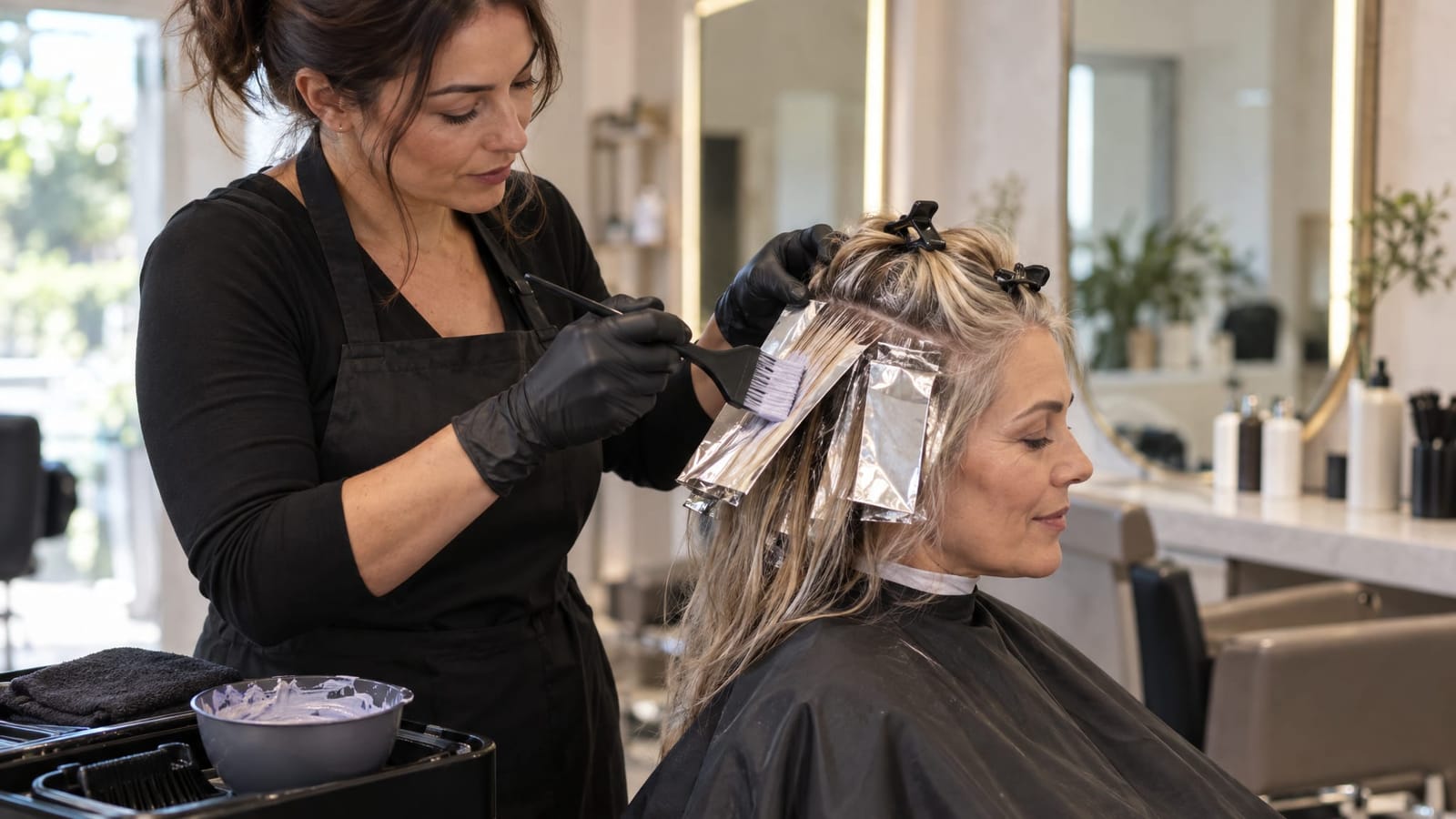
Patchy gray coverage does not always need a darker shade or another all-over application. A professional colorist first identifies where the unevenness is coming from, separates new growth from previously colored hair, and chooses a correction that targets those differences.
The right professional gray hair color approach also depends on your preferred finish: complete coverage or softer blending that leaves some gray visible. Applying the same formula everywhere can deepen already-dark sections without resolving the lighter patches. A more selective plan helps address the unevenness without unnecessarily recoloring the lengths.
Step 1: Identify what looks uneven
Before deciding how to correct the color, distinguish between gray showing through and differences in the surrounding shade. Both can look patchy, but they call for different approaches.
- Scattered bright strands within freshly colored roots: These may reflect resistant gray, incomplete application, or a formula designed to blend rather than fully cover.
- A pale area at the temples or hairline: Gray may be more concentrated there, making translucent coverage more noticeable.
- A continuous lighter strip at the scalp: This may be new growth rather than failed coverage, especially if it appeared after the appointment.
- Dark bands or heavy-looking ends: Repeated applications over previously colored hair can create buildup that makes nearby gray look more prominent.
Look at the hair in even daylight, with your usual part and with the hairline exposed. Note where the unevenness appears and whether it was visible immediately after coloring or developed later. That distinction helps guide the consultation.
Step 2: Share the color history and assess the lengths
A correction starts with more than a shade selection. The colorist needs to understand what is already on the hair, including permanent dye, root touch-ups, highlights, and color-depositing products.
Useful details to bring include:
- The names or packaging of recently used home-color products.
- Whether color was applied only to the roots or pulled through the ends.
- Photos showing the color immediately after application and as it faded.
- A reference photo that shows your preferred amount of visible gray, not just a flattering hairstyle.
The colorist also assesses porosity, meaning how readily different sections absorb and release moisture and color. Previously lightened or weathered ends may take color differently from fresh roots. A strand test can help evaluate how a selected section responds before a broader correction.
At IlonaR Style in Marina del Rey, we offer private, one-on-one appointments and color correction. This individualized approach allows the plan to focus on your existing color, desired finish, and upkeep preferences.
Step 3: Choose full coverage or gray blending
“Natural-looking” can mean different things. For one person, it means an even brunette shade with no visible silver. For another, it means softening the contrast while keeping some gray. Clarifying that goal helps prevent a technically successful application from feeling like the wrong result.
Full coverage for a more uniform shade
Permanent color is commonly used when the goal is opaque gray coverage. The formula needs enough natural-looking depth to cover white strands while creating the intended tone. Simply choosing a darker shade does not solve every coverage problem.
The tradeoff is regrowth contrast. Even coverage can look polished, but a solid dark shade makes new white roots more noticeable as they grow.
Blending for a softer contrast
Gray blending reduces the difference between pigmented and gray strands rather than hiding every silver hair. Demi-permanent color, which gradually fades, can be useful for a more translucent result, depending on the hair and formula.
We also offer Men's Color Camo, a gray-blending service. The same visual principle applies when considering other gray-color options: leaving some variation can create a softer finish. Camouflage and full coverage are different goals, not different levels of quality.
Step 4: Correct each area according to what it needs
Once the goal is clear, the colorist can plan placement, formula selection, and processing according to the product being used. Uneven hair does not necessarily benefit from one formula applied everywhere.
- Missed or resistant root areas: Careful sectioning and thorough saturation help ensure the intended areas receive adequate color. The formula and processing approach also need to suit the coverage goal.
- Roots that are covered but too warm: Adjusting tone may be more appropriate than adding darker color throughout.
- Dark bands from overlapping applications: Depositing more color will not remove the darker pigment. The band needs a separate correction plan.
- Faded lengths with newly covered roots: A separate tonal refresh may connect the shades without repeating the root formula through the ends.
For example, silver temples paired with dark brown lengths call for attention to the temples, not automatically another layer of brown over everything. If the ends are already too dark, the plan also needs to address that contrast.
A toner or gloss can refine tone and refresh the appearance of faded color, but it is not a universal replacement for opaque gray coverage or removal of dark buildup.
Step 5: Maintain the correction without recreating the patchiness
A useful maintenance plan separates routine root upkeep from refreshing the lengths. Repeatedly pulling permanent root color through already-colored hair can recreate the dark bands the correction addressed.
Before the appointment ends, clarify which areas will need attention next time and whether the goal remains full coverage or blending. Mention how often you wash, your styling routine, and how much visible regrowth feels comfortable.
Between visits, photographs taken in similar lighting can help distinguish fading from new growth. Keeping a consistent record is more useful than comparing the color under different bathroom, office, and outdoor lighting.
Frequently asked questions
Can highlights cover gray hair?
Highlights can reduce contrast by placing lighter strands beside gray hair, but they do not create uniform, opaque coverage. They may support a blending plan, while a separate root-color approach addresses areas where fuller coverage is wanted.
Can patchy gray coverage be corrected in one visit?
A localized coverage issue may need a focused adjustment. Uneven roots combined with dark bands or previously lightened ends can require a staged plan. The existing color and condition of the hair determine how much change is practical at once.
What affects the cost of gray hair color correction?
The scope of work matters more than the amount of gray alone. Targeted root coverage differs from correcting several color bands, adjusting dark lengths, and refreshing tone. A useful estimate separates the initial correction from ongoing root maintenance.
A more even result starts with a precise plan
Successful gray correction is about matching the approach to each area, not simply adding more dye. Identifying the unevenness, choosing coverage or blending, and keeping root maintenance separate from the lengths creates a clearer path toward a balanced, natural-looking color.